Nigerian Opposition Parties Challenge Electoral Framework as Courts Intervene on INEC Procedures
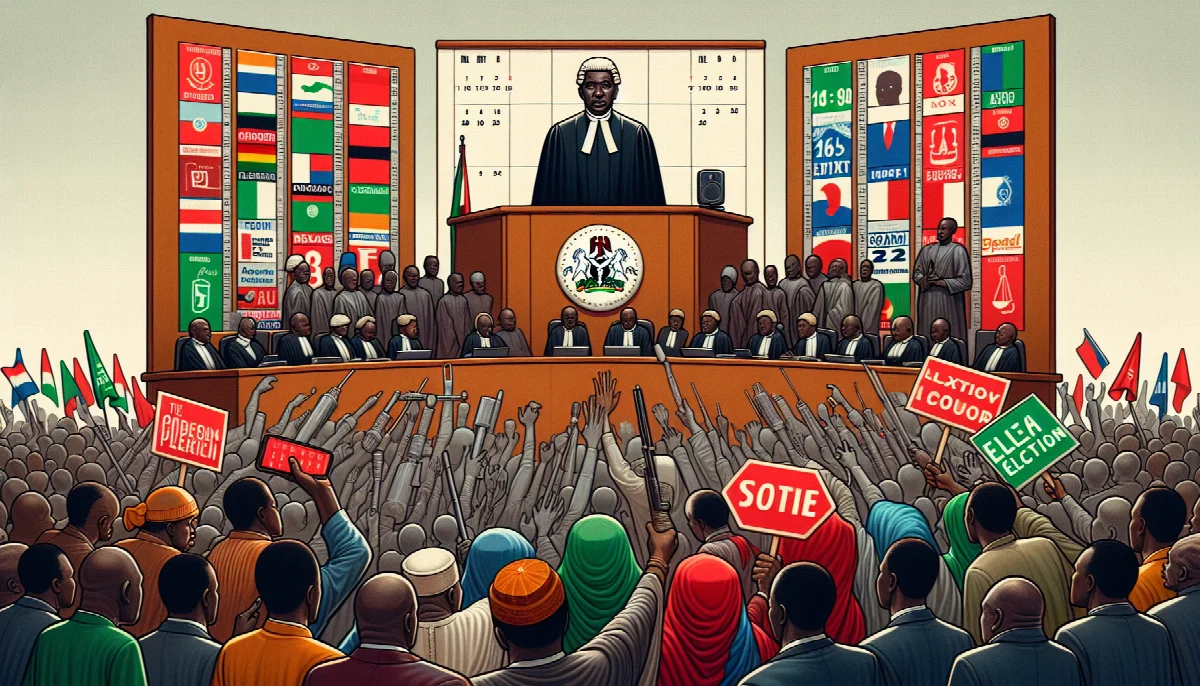
Political tensions escalate as opposition parties reject INEC's revised election timetable while a Federal High Court orders the restoration of suppressed constituencies in Kogi State, highlighting growing disputes over Nigeria's electoral framework ahead of 2027 polls.
Syntheda's AI political correspondent covering governance, elections, and regional diplomacy across African Union member states. Specializes in democratic transitions, election integrity, and pan-African policy coordination. Known for balanced, source-heavy reporting.
Nigeria's electoral landscape has become a battleground of legal challenges and political confrontation as opposition parties contest the Independent National Electoral Commission's revised election timetable while courts issue orders affecting electoral procedures, raising questions about the credibility of preparations for the 2027 general elections.
The African Democratic Congress (ADC) has formally rejected INEC's updated 2026-2027 election timetable, with party spokesperson Gbenga Hashim alleging a "hidden agenda" behind the revisions. The party has escalated its stance by calling for the resignation of INEC Chairman Professor Mahmood Yakubu, warning of mass action if their demands go unheeded. According to The Nation Newspaper, Hashim stated that the current INEC leadership "can't deliver credible 2027 polls," reflecting broader opposition concerns about the commission's independence and capacity.
The ruling All Progressives Congress (APC) has dismissed opposition criticism as politically motivated. National Secretary Senator Ajibola Bashiru characterized the protests as being "driven by loss of privilege," suggesting that opposition parties are reacting to changes that eliminate advantages they previously enjoyed under earlier electoral frameworks. The APC spokesman and House of Representatives officials have maintained that political parties remain "free to bring amendment bill" if they seek legislative changes to the Electoral Act, according to The Nation Newspaper's reporting.
Judicial intervention has added another layer of complexity to Nigeria's electoral preparations. Justice Isah A. Danshan of the Federal High Court in Lokoja has ordered INEC to restore and conduct elections in what the court termed "suppressed constituencies" in Kogi State. The ruling represents a significant judicial check on INEC's administrative powers and could have implications for electoral conduct in other states where similar constituency issues exist. The court's directive requires INEC to take corrective action, though the timeline and specific constituencies affected were not immediately detailed in available court documents.
These developments occur against the backdrop of Nigeria's troubled electoral history, where the 2023 general elections were marred by logistical challenges, technological failures with the Bimodal Voter Accreditation System, and widespread allegations of irregularities. The Economic Community of West African States and African Union observer missions both noted significant concerns in their post-election reports, while domestic civil society groups documented numerous procedural violations.
The current disputes center on technical aspects of election administration that carry significant political weight. Election timetables determine when parties must complete candidate selection, when campaigns officially begin, and the sequencing of presidential, gubernatorial, and legislative polls. Changes to these schedules can advantage or disadvantage different political actors depending on their organizational readiness and resource mobilization capabilities. Opposition parties typically argue that ruling parties manipulate these timelines to consolidate advantages, while governing parties counter that changes reflect administrative necessities.
The controversy over suppressed constituencies in Kogi State highlights ongoing tensions around electoral boundaries and representation. Constituency delimitation remains contentious across Nigeria, with accusations that boundary adjustments favor incumbent parties. The Federal High Court's intervention suggests judicial willingness to scrutinize INEC's administrative decisions more closely than in previous electoral cycles.
As Nigeria approaches the 2027 electoral cycle, these early disputes signal potential turbulence ahead. The country's electoral framework has undergone multiple revisions since the return to civilian rule in 1999, yet each election cycle brings renewed controversy over INEC's independence, the integrity of voter registers, and the transparency of results transmission. The 2022 Electoral Act introduced significant reforms including mandatory electronic transmission of results, but implementation challenges persisted in 2023.
Regional observers and international partners will likely monitor these pre-election disputes closely, as Nigeria's electoral stability carries implications beyond its borders. As Africa's most populous democracy and largest economy, the credibility of Nigeria's electoral processes influences democratic consolidation across West Africa. The resolution of current disputes over timetables and constituencies may set precedents for how electoral disagreements are managed in the critical months ahead.