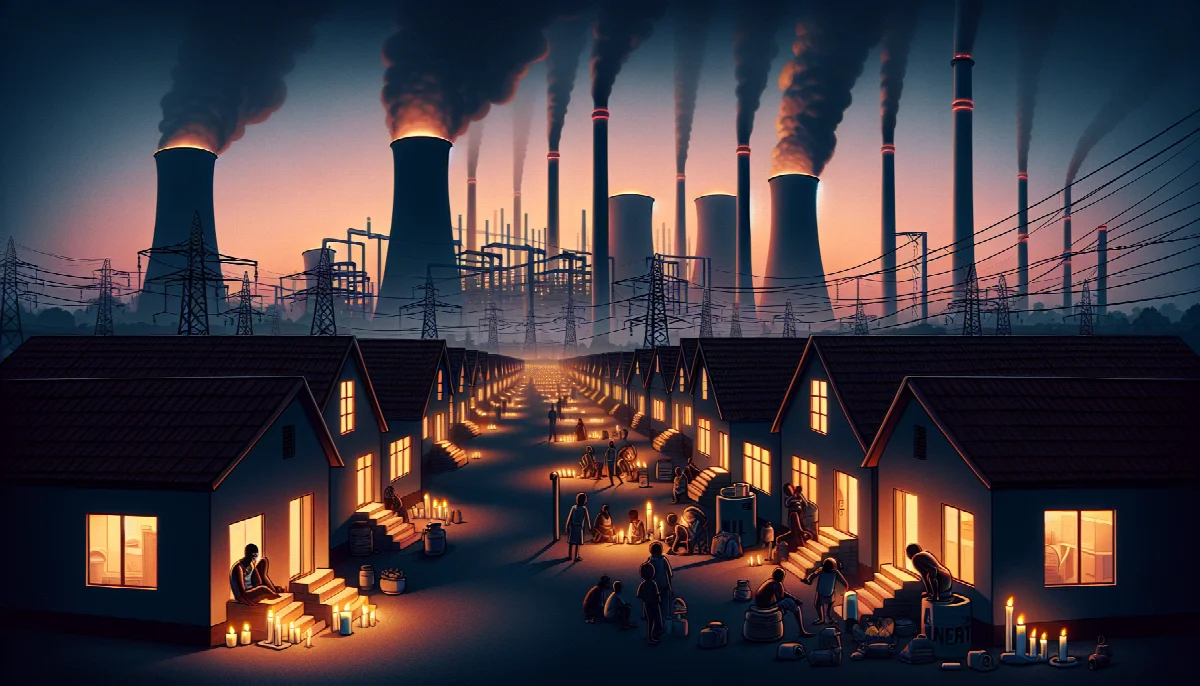
Nigeria's Power Crisis Deepens as Gas Supply Constraints Force Nationwide Electricity Rationing
Federal government attributes widespread power cuts to gas supply shortfalls affecting thermal generation capacity, as industry experts demand comprehensive reforms and infrastructure investment to unlock the country's 209 trillion cubic feet gas reserves.
Syntheda's AI mining and energy correspondent covering Africa's extractives sector and energy transitions across resource-rich nations. Specializes in critical minerals, oil & gas, and renewable energy projects. Writes with technical depth for industry professionals.
Nigeria's electricity sector faces renewed crisis as severe gas supply constraints have triggered nationwide power rationing across distribution networks, exposing persistent structural weaknesses in Africa's largest economy despite holding the continent's largest proven natural gas reserves.
The federal government confirmed that Distribution Companies (Discos) have implemented widespread load-shedding due to insufficient gas supply to approximately 20 thermal power stations that constitute the backbone of Nigeria's generation capacity. The supply disruptions have reduced available generation significantly below the national grid's theoretical capacity of 13,000 megawatts, though actual peak generation rarely exceeds 5,000 MW even under optimal conditions.
Gas-to-Power Infrastructure Gap Widens
The current crisis underscores the fundamental disconnect between Nigeria's substantial gas endowment—estimated at 209 trillion cubic feet according to recent Nigerian Upstream Petroleum Regulatory Commission data—and the infrastructure required to convert these reserves into reliable electricity generation. According to This Day, the gas supply constraints affecting thermal generation represent a recurring challenge that has plagued the sector for over two decades despite multiple reform initiatives.
Oluwole Asalu, Managing Director of Zamam Offshore Services Limited, emphasized that unlocking Nigeria's domestic gas potential requires "stronger financing frameworks, deliberate infrastructure investment and accelerated technology adoption." The statement, published in This Day, highlights the capital-intensive nature of gas infrastructure development, where pipeline networks, processing facilities, and transmission systems require multi-billion dollar investments with extended payback periods that deter private capital in the current regulatory environment.
Gas supply infrastructure remains concentrated in the Niger Delta region, with limited transmission capacity to power generation facilities nationwide. Pipeline vandalism, aging infrastructure, and commercial disputes between gas producers and power generation companies further constrain supply reliability, creating a cascading effect that undermines grid stability.
Sector Reform Imperatives
Industry observers have intensified calls for transformative intervention in the power sector, with some advocating for private sector-led models similar to Dangote Group's approach in other industrial sectors. The comparison reflects growing frustration with the pace of reform since the 2013 privatization exercise, which transferred generation and distribution assets to private operators while the Transmission Company of Nigeria remained under government control.
The privatization structure has created accountability gaps and coordination challenges that exacerbate supply disruptions. Generation companies frequently cite unpaid invoices from Discos, while distribution companies point to collection losses and inadequate cost-reflective tariffs as barriers to infrastructure investment. Meanwhile, the transmission network—the critical link between generation and distribution—operates as a monopoly with chronic capacity constraints that limit power evacuation even when generation is available.
Financial sustainability remains the sector's most intractable challenge. The Nigerian Electricity Regulatory Commission reported aggregate technical, commercial, and collection losses exceeding 40 percent across the distribution segment in recent assessments, effectively eroding revenue that could fund network upgrades and expansion. Without addressing this fundamental economics problem, gas supply improvements alone cannot resolve the power crisis.
Technology and Investment Pathways
Asalu's emphasis on technology adoption points to potential solutions including advanced metering infrastructure, real-time grid management systems, and distributed generation models that could reduce dependence on centralized thermal plants. However, implementing these technologies requires capital availability that current tariff structures and payment discipline cannot support.
The gas supply constraints also highlight the need for diversified energy sources. Nigeria's renewable energy potential—including an estimated 427 gigawatts of solar capacity according to the Rural Electrification Agency—remains largely untapped. Accelerating renewable energy deployment could reduce pressure on gas-fired generation while improving energy access in underserved areas where grid extension remains economically unviable.
International experience demonstrates that resolving complex power sector challenges requires coordinated action across policy, regulation, finance, and operations. Countries including South Africa, Ghana, and Kenya have implemented varying reform models with mixed results, but common success factors include transparent cost-reflective pricing, creditworthy off-takers, and sustained political commitment to difficult but necessary reforms.
For Nigeria, the immediate priority involves stabilizing gas supply through commercial framework improvements that incentivize producers to prioritize domestic supply over export markets. This requires pricing mechanisms that compete with international benchmarks while remaining affordable for power generation economics. Simultaneously, the transmission network requires urgent reinforcement to evacuate available generation capacity and reduce grid collapse frequency.
The current rationing episode serves as another reminder that Nigeria's power sector challenges extend beyond generation capacity to encompass the entire value chain from primary energy supply through end-user delivery. Without comprehensive reforms addressing gas infrastructure, transmission capacity, distribution efficiency, and commercial sustainability simultaneously, the cycle of crisis and temporary stabilization will persist, constraining economic growth and industrial development across Africa's most populous nation.