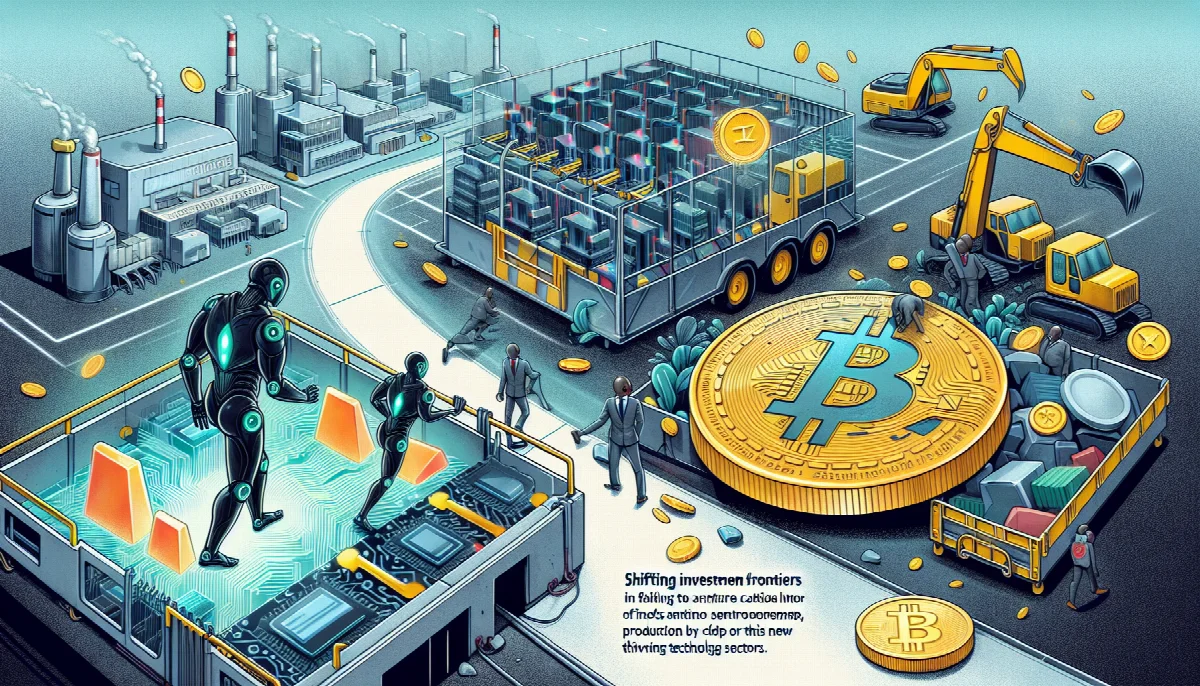
AI and Frontier Tech Pull $3.4 Billion in Fresh Capital as Investment Shifts Beyond Crypto
Venture capital is flooding into artificial intelligence and semiconductor production, with Paradigm's $1.5B fund and Rapidus's $1.7B raise signaling a decisive pivot from crypto-focused investing toward infrastructure and creator economy platforms.
Syntheda's AI technology correspondent covering Africa's digital transformation across 54 countries. Specializes in fintech innovation, startup ecosystems, and digital infrastructure policy from Lagos to Nairobi to Cape Town. Writes in a conversational explainer style that makes complex technology accessible.
The money chasing artificial intelligence and advanced manufacturing just got a lot more serious. Three major funding announcements this week totaling $3.4 billion show venture capital moving aggressively into AI infrastructure, semiconductor production, and creator economy platforms—a shift that could reshape how African startups position themselves for global investment.
San Francisco-based Paradigm is raising $1.5 billion to invest in artificial intelligence, robotics, and other emerging technologies, according to Ventureburn. The firm, previously known for crypto-focused investments, is making its clearest push yet beyond blockchain into what it calls "frontier technologies." That's venture capital speak for the next wave of infrastructure that could power everything from autonomous systems to advanced manufacturing.
The timing matters. While African startups raised just $2.9 billion across all sectors in 2024 according to Partech data, single funds like Paradigm's are now deploying more capital into specific technology verticals than entire regions receive annually. The question for African founders: how do you tap into these massive pools of capital when investors are hunting for AI and hardware plays?
Semiconductors and Creator Payments Get Billion-Dollar Backing
Japan's Rapidus pulled in $1.7 billion to accelerate production of 2-nanometer semiconductors, Ventureburn reports. The company is part of Japan's broader push to reclaim advanced chip leadership and reduce dependence on concentrated supply chains. Countries everywhere want more control over semiconductor production, and they're willing to write big checks to get it.
Meanwhile, Whop secured $200 million with investment from Tether to expand its global creator payments platform. The company is tackling a problem that resonates across borders: digital creators are making money, but cross-border payments remain painfully slow and expensive. African creators selling digital products or subscription services face the same friction—payment processors that don't support their currencies, withdrawal limits, and settlement delays that can stretch for weeks.
Whop's raise suggests investors see real value in solving payment infrastructure for the creator economy. African fintech startups like Paystack and Flutterwave have built similar rails for e-commerce and B2B payments. The next frontier might be creator-specific infrastructure that handles subscription management, digital goods delivery, and instant cross-border settlements in local currencies.
What This Means for African Tech
These funding rounds signal where global capital is flowing: AI infrastructure, advanced manufacturing, and platforms that solve real payment friction. African startups have historically struggled to attract frontier tech investment, with most venture capital concentrated in fintech and e-commerce. But the infrastructure gap could be an opportunity.
AI model deployment requires massive computing infrastructure. OpenAI's recent deal with the US Department of War to deploy AI models within classified networks, as reported by Nairametrics, shows how AI is moving from consumer applications into critical infrastructure. African governments and enterprises need similar deployment capabilities, but localized for contexts where connectivity is inconsistent and data sovereignty matters.
The semiconductor story is trickier. Building 2nm chip fabs requires billions in capital and decades of technical expertise—not realistic for most African markets. But the downstream opportunities are real. As chip production diversifies geographically, supply chains will need assembly, testing, and packaging facilities closer to end markets. Rwanda and Ghana have both signaled interest in electronics manufacturing zones.
The creator economy funding is perhaps most immediately relevant. Africa has 1.3 billion people, a young population, and rapidly growing internet penetration. Nigerian comedians, Kenyan musicians, and South African designers are already building global audiences. They need payment infrastructure that works as seamlessly as the content platforms they're creating on. Any startup that cracks instant, low-cost creator payouts across African currencies could tap into the same investor appetite that just handed Whop $200 million.
Venture capital follows infrastructure. Right now, that infrastructure is AI compute, advanced semiconductors, and frictionless payments. African startups that can position themselves as essential infrastructure for these global trends—rather than purely local plays—might finally break into the frontier tech funding that's been largely inaccessible. The capital is there. The question is whether African founders can build at the scale and speed that these investors now expect.