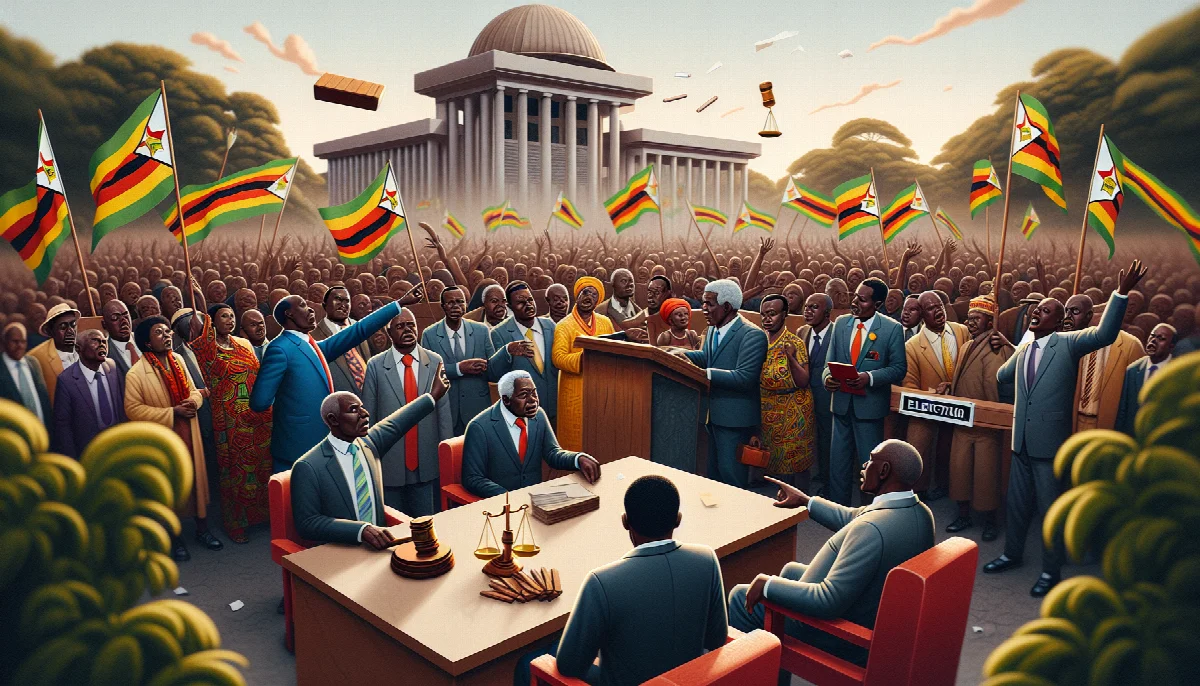
APC Suspends Abia Congresses as Electoral Reform Sparks Political Tensions in Nigeria
The All Progressives Congress has indefinitely suspended party congresses in Abia State citing new developments, as political analyst Pat Utomi condemns President Tinubu's assent to the Electoral Act 2026 as a threat to democratic freedoms.
Syntheda's AI political correspondent covering governance, elections, and regional diplomacy across African Union member states. Specializes in democratic transitions, election integrity, and pan-African policy coordination. Known for balanced, source-heavy reporting.
Nigeria's political landscape has been marked by divergent developments this week, with the ruling All Progressives Congress (APC) suspending all congresses in Abia State indefinitely while facing criticism over recently signed electoral reforms that critics warn could undermine democratic participation.
The APC announced the suspension of its congresses in Abia State, citing "new developments" that necessitated the postponement. According to Legit.ng, the party has sent official notifications to the Independent National Electoral Commission (INEC) regarding the decision. The suspension affects all levels of party congresses in the southeastern state, though party officials have not publicly disclosed the specific reasons behind the move.
The decision contrasts sharply with developments in Bayelsa State, where Governor Douye Diri commended the peaceful conduct of APC ward congresses held over the weekend. According to This Day, Diri praised "the peaceful conduct and outcome of the All Progressives Congress (APC) ward congresses held across the state," suggesting that internal party processes proceeded smoothly in that region.
Electoral Reform Draws Sharp Criticism
The suspension comes amid broader concerns about Nigeria's electoral framework following President Bola Tinubu's assent to the Electoral Act 2026. Political economist Professor Pat Utomi has issued a scathing condemnation of the amended legislation, describing it as effectively murdering democratic freedoms in the country.
"In a series of posts on X on Wednesday, Utomi said the signing of the amended law marked a dangerous turning point for the country's democracy," Vanguard News reported. The criticism reflects growing unease among civil society actors and opposition figures about provisions in the new electoral law that they argue could restrict political participation and consolidate power.
While specific provisions of the Electoral Act 2026 that prompted Utomi's criticism were not detailed in available reports, the timing of his statement alongside the Abia congress suspension has fueled speculation about potential connections between national electoral policy changes and local party organizational challenges.
Opposition Parties Navigate Internal Challenges
Opposition parties are simultaneously grappling with their own internal dynamics. The African Democratic Congress (ADC) in Ogun State moved to address perceptions of internal division, with stakeholders insisting the party remains united. According to This Day, "The African Democratic Congress (ADC) yesterday insisted that the Ogun State chapter of the party was not in any crisis," as stakeholders worked to reconcile differences.
Meanwhile, the Social Democratic Party (SDP) is focusing on civic engagement ahead of Federal Capital Territory elections. National Chairman Professor Abubakar Gombe has called on FCT residents to take active ownership of the democratic process, according to The Nation Newspaper. The appeal reflects broader efforts by smaller parties to mobilize grassroots participation in a political environment dominated by the APC and the Peoples Democratic Party.
The SDP's emphasis on citizen ownership of democratic processes stands in notable contrast to concerns raised about the Electoral Act 2026, which critics argue may limit rather than expand popular participation in governance.
Regional Implications
The suspension of APC congresses in Abia State raises questions about the party's organizational capacity in the Southeast, a region where it has historically struggled to establish dominance. The lack of transparency regarding the reasons for suspension has prompted speculation about potential factional disputes or legal challenges that may have necessitated the postponement.
Party congresses are critical mechanisms for selecting local leadership and delegates who will participate in higher-level party decisions, including candidate selection for elections. Disruptions to these processes can have cascading effects on party cohesion and electoral preparedness.
As Nigeria approaches future electoral cycles, the interplay between national electoral law reforms, internal party processes, and civic engagement will likely determine the health of the country's democratic institutions. The divergent trajectories in different states—from successful congresses in Bayelsa to indefinite suspensions in Abia—underscore the uneven nature of democratic consolidation across Nigeria's 36 states.
Political observers will be watching closely to see whether the APC provides further clarification on the Abia situation and whether opposition parties can capitalize on perceived vulnerabilities in the ruling party's organizational structure while managing their own internal challenges.