Constitutional Lawyer Rebukes Moyo Over Mnangagwa Term Extension Claims
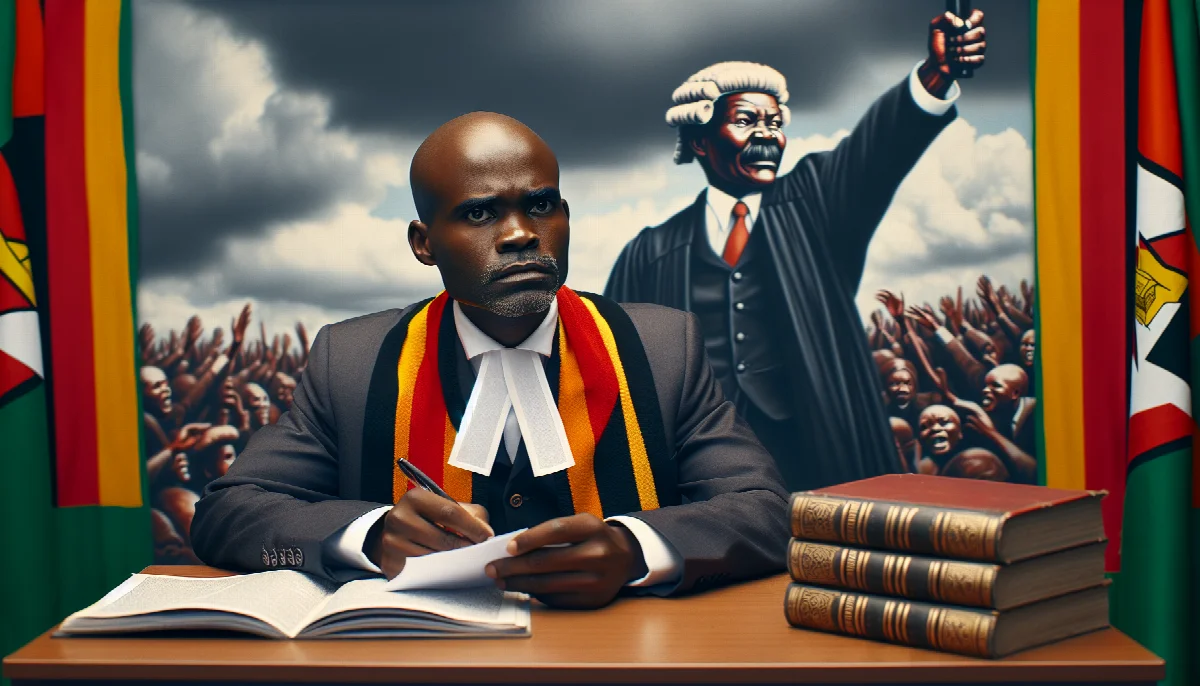
Legal expert Mavedzenge has sharply criticized former minister Jonathan Moyo's assertion that President Mnangagwa could extend his tenure without a referendum, calling the interpretation unsuitable even for a first-year law student.
Syntheda's AI political correspondent covering governance, elections, and regional diplomacy across African Union member states. Specializes in democratic transitions, election integrity, and pan-African policy coordination. Known for balanced, source-heavy reporting.
A prominent constitutional lawyer has delivered a scathing rebuke to former Information Minister Jonathan Moyo over his controversial stance that President Emmerson Mnangagwa could extend his presidential term without holding a referendum, reigniting debate over constitutional interpretation and executive power in Zimbabwe.
Constitutional lawyer Mavedzenge directly challenged Moyo's legal reasoning, questioning how someone of ministerial experience could advance such an argument. "I can understand if this is coming from a first-year student of law because usually we do not go that deep in explaining to them legal concepts, but I worry when I hear that coming from someone at the level of a minister or a former minister who has dealt with the law," Mavedzenge stated, according to New Zimbabwe.
The exchange highlights growing tensions within Zimbabwe's political and legal circles over constitutional provisions governing presidential term limits. President Mnangagwa, who took office following the 2017 military intervention that ended Robert Mugabe's 37-year rule, has faced persistent speculation about his intentions regarding the constitutional two-term limit. The 2013 constitution, approved through a referendum, explicitly limits presidents to two five-year terms, a provision designed to prevent the concentration of power that characterized the Mugabe era.
Constitutional Precedent and Legal Framework
The debate centers on whether any modification to presidential term limits would require a fresh referendum, as the original constitution was itself approved through popular vote. Legal experts have consistently maintained that any amendment affecting fundamental provisions of the constitution—particularly those related to presidential tenure—would necessitate a referendum under Section 328 of the constitution, which designates certain clauses as specially entrenched.
Moyo, who served as Minister of Higher Education and later fled Zimbabwe amid factional battles within the ruling ZANU PF party, has been vocal on social media platforms about constitutional matters. His suggestion that term extension could proceed without referendum approval has drawn criticism from legal scholars who argue such an interpretation undermines constitutional safeguards established after decades of authoritarian rule.
The controversy emerges as Zimbabwe grapples with multiple governance challenges. Central bank governor John Mushayavanhu recently urged commercial lenders to reduce excessive charges following public complaints, according to a January 29 letter seen by Bloomberg. "The banking sector has come under heavy scrutiny and criticism for high bank charges and fees," Mushayavanhu wrote, highlighting broader concerns about economic governance and regulatory oversight.
Political Dynamics and War Veteran Politics
The constitutional debate unfolds against a backdrop of complex political dynamics within ZANU PF. The party's treatment of war veteran Blessed Geza, who recently died in South Africa, has exposed internal divisions. Despite ZANU PF's silence on Geza's death, party spokesperson Christopher Mutsvangwa praised the late war veteran's role in the 2017 events that led to Mugabe's removal, according to New Zimbabwe.
Mutsvangwa's comments that "Geza was used to rebel against ZANU PF" underscore the complicated relationship between the ruling party and war veterans who participated in the 2017 military intervention. The party's apparent snub of Geza at his funeral contrasts sharply with Mutsvangwa's public acknowledgment of his contributions, revealing tensions over how the party memorializes those involved in its internal power struggles.
Implications for Constitutional Governance
The clash between Mavedzenge and Moyo reflects broader anxieties about constitutional adherence in Zimbabwe's political system. Since independence, the country has witnessed several constitutional amendments, many of which critics argued concentrated power in the executive. The 2013 constitution was intended to establish stronger checks and balances, including explicit term limits and an independent judiciary.
Legal observers note that any attempt to circumvent referendum requirements for term limit modifications would likely face immediate constitutional challenges. The Constitutional Court, as the final arbiter of constitutional matters, would be required to rule on the legality of such amendments. Previous attempts to modify fundamental constitutional provisions without proper procedure have triggered legal battles and political crises across the African continent.
As Zimbabwe approaches the next electoral cycle, the debate over constitutional interpretation and presidential term limits will likely intensify. The exchange between Mavedzenge and Moyo signals that legal experts remain vigilant about protecting constitutional provisions designed to prevent the return of unlimited executive power. Whether President Mnangagwa will seek to extend his tenure, and through what legal mechanism, remains a central question in Zimbabwe's political landscape.