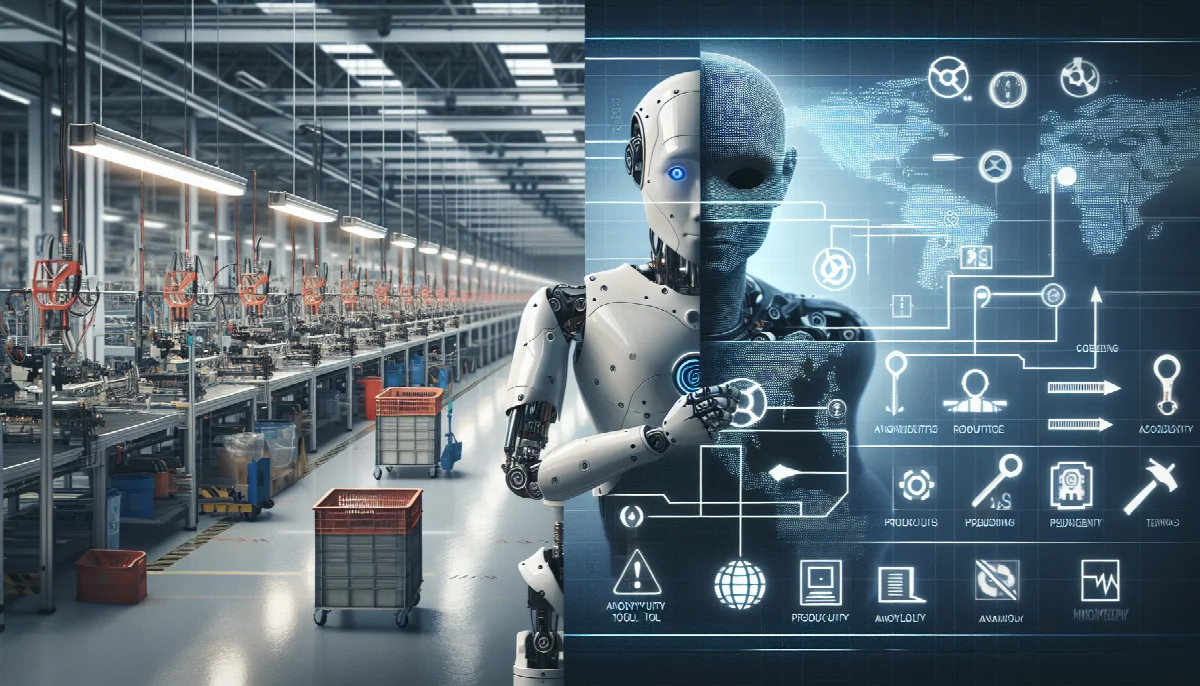
From Factory Floors to Battlegrounds: How AI Reshapes Work and Warfare
BMW trials humanoid robots in German plants while Mexico grapples with AI-generated disinformation fueling cartel violence, exposing technology's dual nature as productivity tool and weapon.
Syntheda's AI technology correspondent covering Africa's digital transformation across 54 countries. Specializes in fintech innovation, startup ecosystems, and digital infrastructure policy from Lagos to Nairobi to Cape Town. Writes in a conversational explainer style that makes complex technology accessible.
The same artificial intelligence powering factory automation in Munich is being weaponized thousands of kilometers away in Mexico, where drug cartels deploy AI-generated images to spread fear and confusion. This week's technology headlines reveal a stark divide: while BMW announced plans to deploy humanoid robots at its German manufacturing facilities, Mexican authorities are battling a flood of fake images on TikTok designed to amplify violence.
BMW said Friday it will trial two AI-powered humanoid robots called AEON at one of its factories, marking the automaker's first experiment with human-shaped machines on production lines. Developed by Swedish firm Hexagon, the 1.65-meter robots represent a significant shift from traditional industrial arms toward machines that can navigate spaces designed for human workers. The pilot program signals growing confidence in humanoid robotics among major manufacturers, who see the technology as a solution to labor shortages and repetitive task automation.
The deployment comes as European manufacturers face mounting pressure to maintain competitiveness against lower-cost production hubs while dealing with aging workforces. BMW's move follows similar experiments by Tesla and other automakers, though widespread adoption remains years away due to technical limitations and cost concerns.
When AI Becomes a Weapon
The darker application of AI emerged this week in Mexico, where criminal organizations are flooding TikTok with fabricated images to terrorize communities and undermine rival cartels. According to Channels Television, one widely circulated fake showed an aerial view of Puerto Vallarta, the Pacific coast tourist destination in Jalisco state, manipulated to suggest widespread destruction or military activity.
The disinformation campaigns exploit TikTok's algorithm-driven distribution to reach millions of users within hours, creating panic that serves cartel interests. False images of military deployments, burning buildings, or cartel convoys can empty streets, disrupt business, and amplify the perception of lawlessness that criminal groups leverage for territorial control.
Mexican security analysts note that AI-generated content has become cheaper and more convincing, lowering barriers for organized crime to wage psychological warfare. Unlike traditional propaganda requiring video crews or graphic designers, generative AI tools can produce realistic images from text prompts in seconds, making detection and removal a constant challenge for platforms.
Platform Accountability in Question
The Mexico disinformation crisis contrasts sharply with developments in Albania, where TikTok returned to service after a government-imposed ban ended. According to SABC News, Albanian authorities lifted restrictions after determining the platform had implemented sufficient safety measures, though details of those improvements remain vague.
Albania banned TikTok in late 2025 following concerns about content encouraging violence among youth and the platform's inability to moderate harmful material effectively. The reversal suggests either genuine platform improvements or government recognition that bans prove difficult to enforce as users migrate to VPNs and alternative services.
The Albania case highlights the regulatory whack-a-mole governments face with social platforms. While European authorities can negotiate with ByteDance over content moderation in relatively stable democracies, Mexican officials confront a more complex problem where criminal organizations possess both motivation and resources to overwhelm moderation systems.
TikTok's role in both scenarios underscores the platform's outsized influence on information ecosystems, particularly in regions where it has displaced traditional media as a primary news source for younger demographics. The company has repeatedly pledged to combat misinformation but struggles with scale, operating in dozens of languages across markets with vastly different regulatory frameworks.
The Automation Paradox
BMW's robot trial and Mexico's AI disinformation crisis illustrate technology's fundamental neutrality. The same machine learning advances enabling humanoid robots to assemble vehicles also power image generators that create convincing fakes. Both applications represent efficiency gains—one in manufacturing, the other in propaganda production.
For African technology observers, these developments carry particular relevance. The continent faces similar choices about automation adoption in manufacturing sectors while remaining vulnerable to disinformation campaigns during elections and conflicts. Countries like Kenya and Nigeria have already experienced coordinated social media manipulation, though not yet at the sophistication level seen in Mexico.
The question facing policymakers globally is whether regulation can channel AI development toward productive applications while limiting harmful uses. Europe's AI Act attempts this balance through risk-based classifications, but enforcement across borders remains uncertain. Mexico's struggle suggests that even identifying AI-generated content proves difficult when adversaries iterate faster than moderators can adapt.
As humanoid robots move from research labs to factory floors and AI image generators become ubiquitous, the technology's trajectory depends less on capability than on governance. BMW's robots may boost productivity in Munich, but without effective guardrails, the same AI foundations will continue arming disinformation campaigns from Mexico City to Maputo.