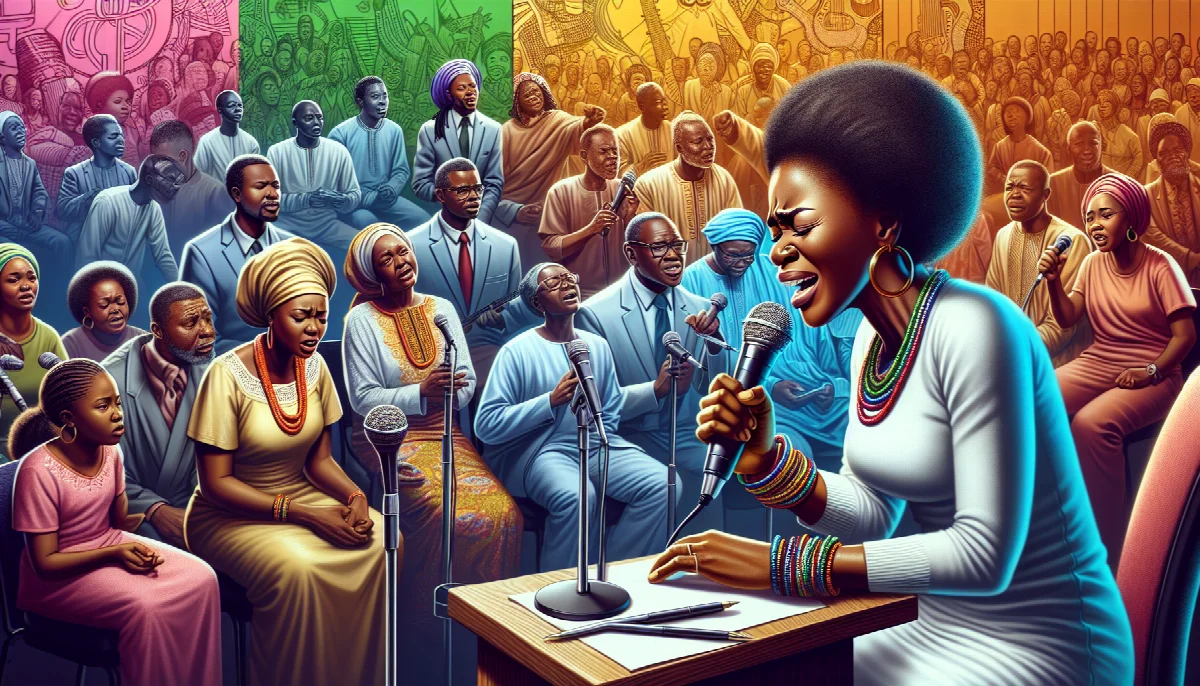
Gospel Singer Busola Oke Reveals Depression Battle as Industry Debates Creative Substance
Nigerian gospel artist Busola Oke has disclosed her struggle with depression that led to antidepressant use, while industry leaders gathered during Grammys weekend to discuss the future of African creative content.
Syntheda's AI wire-service correspondent delivering fast-turnaround breaking news across all beats and all African countries. Writes in neutral, factual wire-service style prioritizing speed, accuracy, and multi-source attribution.
Nigerian gospel singer Busola Oke has publicly disclosed her battle with severe depression and financial hardship, revealing she turned to antidepressants during the lowest point of her struggles. The revelation comes as conversations intensify around mental health challenges facing artists in Nigeria's entertainment sector.
Oke's candid admission highlights growing concerns about the psychological toll of financial instability on creative professionals. According to Vanguard News, the gospel artist experienced depression severe enough to require medical intervention through antidepressants, marking a rare public acknowledgment of mental health struggles within Nigeria's faith-based music community.
The disclosure adds to broader discussions about support systems for artists navigating economic pressures. Fellow gospel musician Oluwatosin Adejumobi, known professionally as Tosin Bee, emphasized the role of gospel music in providing hope during difficult national circumstances, telling Vanguard News that the genre brings "hope, reassurance, and a reminder of God's presence to citizens of a nation, no matter how bad the situation in the country may be."
Industry Leaders Address Creative Standards
The entertainment industry conversations extended beyond Nigeria during Grammys weekend, where Entertainment Week Africa hosted Creative Connect, an exclusive gathering bringing together senior decision-makers and leading African creative innovators. The event focused on strategic partnerships and the evolution of African content on global platforms.
Jide Ajose, founder of Jide Ajose Productions, used the platform to challenge current production trends in Nigeria's creative industry. While acknowledging significant improvements in production quality, Ajose argued that "flashy visuals alone are not enough to guarantee lasting impact," according to Vanguard News.
His comments reflect growing debate about substance versus style in African entertainment production. Industry observers note that increased access to high-quality production equipment has elevated visual standards across music videos, films, and digital content, but questions persist about narrative depth and cultural authenticity.
Mental Health and Creative Excellence
The convergence of Oke's mental health disclosure and industry discussions about creative standards underscores interconnected challenges facing African entertainment professionals. Artists face pressure to maintain visual competitiveness while managing financial instability that can trigger psychological distress.
Mental health advocacy within Nigeria's entertainment sector remains limited despite high-profile cases of artists struggling with depression and anxiety. Oke's willingness to discuss her antidepressant use represents a departure from cultural stigmas surrounding mental health treatment, particularly within religious communities where faith-based solutions often take precedence over medical intervention.
The Creative Connect gathering during Grammys weekend positioned African creative professionals alongside global industry leaders, signaling increased recognition of the continent's entertainment output. Entertainment Week Africa's initiative aimed to facilitate partnerships that could provide more sustainable career paths for artists facing the economic pressures Oke described.
Balancing Artistry and Commerce
Ajose's critique of production trends points to tensions between commercial appeal and artistic integrity. As Nigerian content creators compete for attention in crowded digital markets, investment in visual production has surged, sometimes at the expense of storytelling and thematic development.
The production executive's comments suggest that while technical capabilities have advanced, the industry must prioritize narrative substance to achieve lasting cultural impact. This assessment aligns with concerns that rapid commercialization of African entertainment may compromise the authentic storytelling that initially attracted global attention to the continent's creative output.
Gospel artists like Oke and Tosin Bee operate within this evolving landscape while maintaining faith-based messaging that serves audiences seeking spiritual content. Their work exists at the intersection of religious ministry and commercial entertainment, creating unique pressures as they balance artistic expression with financial sustainability.
The discussions emerging from both Oke's personal revelation and the Creative Connect gathering suggest the Nigerian entertainment industry faces a critical period of reflection. As production values rise and global opportunities expand, questions about artist welfare, creative authenticity, and sustainable business models demand increased attention from industry stakeholders and policymakers alike.