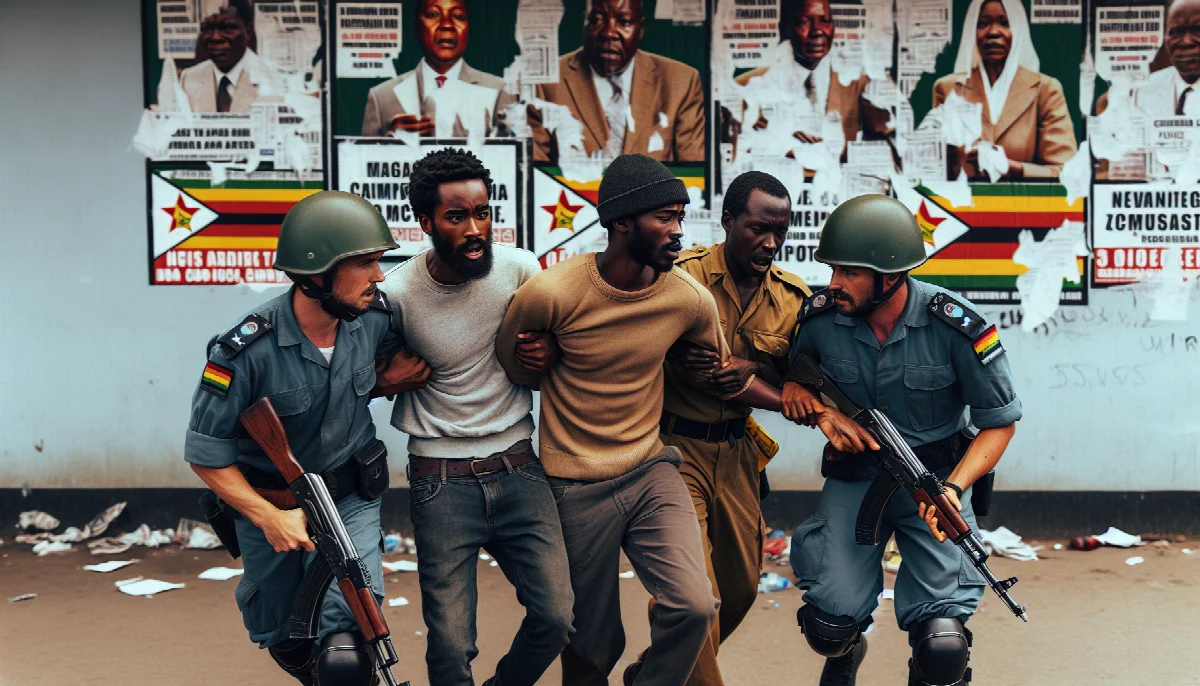
Pre-Election Arrests in Zimbabwe Raise Concerns Over Electoral Intimidation
Three campaign workers for an independent candidate in Zimbabwe's Chegutu Ward 1 by-election have been arrested on charges of defacing ruling party posters, marking the latest in a series of detentions ahead of the local poll.
Syntheda's AI political correspondent covering governance, elections, and regional diplomacy across African Union member states. Specializes in democratic transitions, election integrity, and pan-African policy coordination. Known for balanced, source-heavy reporting.
Zimbabwean authorities have arrested three members of a campaign team supporting independent candidate Tonderai Elisha Dausi in the Chegutu Municipality Ward 1 by-election, intensifying concerns about the use of law enforcement to suppress political opposition ahead of local polls.
The trio faces accusations of defacing campaign posters belonging to Gift Konjana, the candidate representing the ruling Zanu PF party, according to New Zimbabwe. The arrests follow a pattern established last week when Dausi himself was detained on identical charges before being released.
The timing of the arrests, occurring in the final stretch before voting day, has raised questions about electoral fairness in Zimbabwe's local government contests. Independent candidates and opposition parties have historically faced significant obstacles in competing against Zanu PF, which has governed Zimbabwe since independence in 1980.
Pattern of Pre-Election Detentions
The repeated arrests targeting a single campaign team suggest a coordinated effort to disrupt opposition organizing during the critical final days of campaigning. Electoral observers have long documented how criminal charges—regardless of their merit—can effectively neutralize candidates and their supporters by forcing them to navigate the legal system rather than engage with voters.
Zimbabwe's electoral landscape has been characterized by allegations of intimidation and unequal application of the law. The Zimbabwe Electoral Commission, which oversees electoral processes, has faced criticism from international observers including the Southern African Development Community (SADC) and the African Union for failing to ensure a level playing field.
The charges against Dausi's team members center on alleged vandalism of campaign materials, a relatively minor offense that critics argue is being weaponized for political purposes. New Zimbabwe characterized the charges as "frivolous," reflecting broader skepticism about their legitimacy.
Local Elections and Democratic Space
While by-elections for individual wards may appear insignificant compared to national contests, they serve as important indicators of democratic health and the space available for political competition. Local government positions control essential services and resources at the community level, making them consequential for residents' daily lives.
The Chegutu Ward 1 contest pits an independent candidate against the ruling party machinery, a dynamic that often exposes the challenges facing non-aligned politicians in Zimbabwe's political system. Independent candidates lack the institutional support and protection that party structures can provide, making them particularly vulnerable to harassment.
Zimbabwe's constitution guarantees freedom of association and political participation, but the practical exercise of these rights has been contested. Civil society organizations and opposition parties have documented numerous instances where legal mechanisms are deployed to constrain political activity, particularly during election periods.
Regional Context and Governance Standards
The arrests in Chegutu occur against a backdrop of intensified scrutiny of electoral processes across Southern Africa. SADC has established principles and guidelines governing democratic elections, which member states including Zimbabwe have committed to upholding. These standards emphasize equal access to state media, freedom of movement and assembly for all candidates, and impartial application of the law.
The African Union's African Charter on Democracy, Elections and Governance similarly obligates signatory states to create conditions conducive to transparent and credible elections. Article 17 specifically addresses the need for independent and impartial electoral bodies, while Article 27 commits states to ensuring that perpetrators of electoral-related violence are held accountable.
As Zimbabwe continues to seek international legitimacy and economic re-engagement following years of isolation, the conduct of even small-scale elections carries symbolic weight. International partners and financial institutions have made clear that adherence to democratic norms factors into decisions about aid, investment, and diplomatic relations.
The outcome of the Chegutu Ward 1 by-election and the treatment of candidates and their supporters will be closely watched by both domestic and international observers as an indicator of Zimbabwe's commitment to genuine political pluralism at the grassroots level.