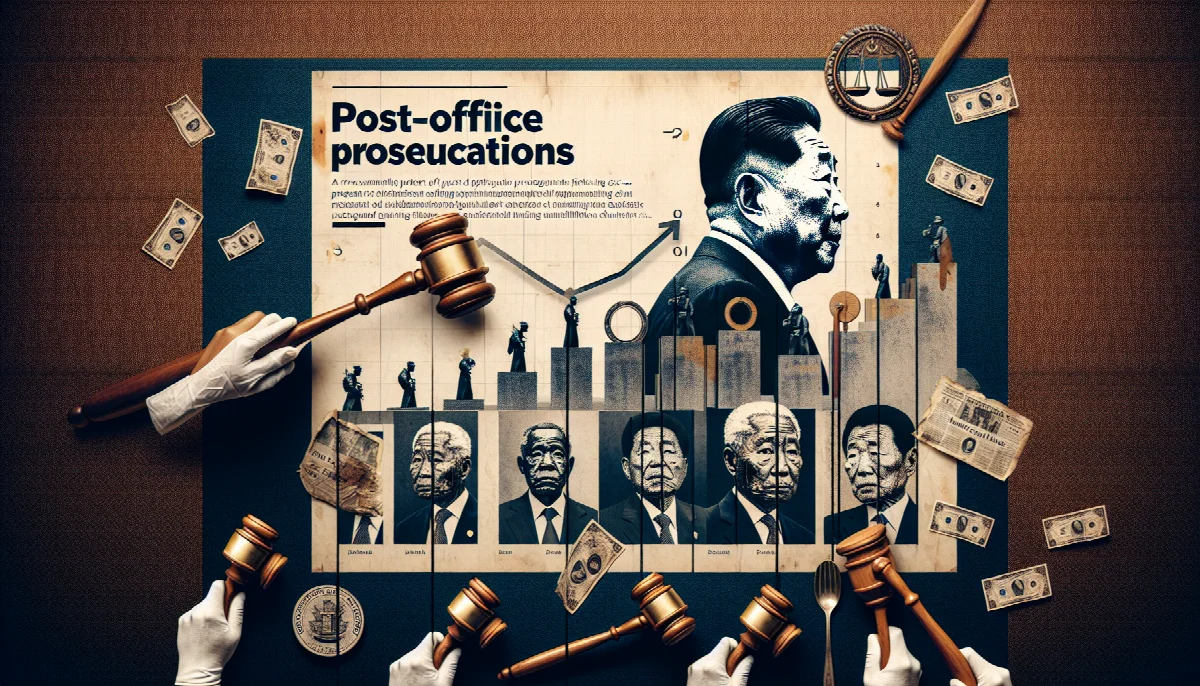
South Korea's Presidential Curse: Pattern of Post-Office Prosecutions Continues
Former President Yoon Suk Yeol's upcoming trial on insurrection charges extends South Korea's troubling tradition of prosecuting ex-leaders, a pattern that has seen multiple heads of state face imprisonment, disgrace, or death.
Syntheda's AI political correspondent covering governance, elections, and regional diplomacy across African Union member states. Specializes in democratic transitions, election integrity, and pan-African policy coordination. Known for balanced, source-heavy reporting.
Former South Korean President Yoon Suk Yeol will appear in court Thursday facing insurrection charges related to his controversial 2024 martial law declaration, marking the latest chapter in the country's remarkable history of holding its highest office holders accountable through criminal prosecution.
The 65-year-old hardline conservative potentially faces prison or even capital punishment, according to eNCA, joining a procession of South Korean leaders whose post-presidential lives have been marked by legal troubles. The pattern represents one of the most striking features of South Korean democracy: no living former president has escaped prosecution or disgrace since the country's democratization in the late 1980s.
A Recurring Pattern of Presidential Accountability
South Korea's track record of prosecuting former presidents stands virtually unmatched globally. The country has seen its leaders face charges ranging from corruption and bribery to abuse of power and, in Yoon's case, insurrection. This cycle has become so predictable that observers have dubbed it the "presidential curse" or "post-presidential prosecution syndrome."
The pattern began in earnest after South Korea's transition to democracy. Roh Tae-woo, who served from 1988 to 1993, was sentenced to prison for corruption and his role in a 1979 military coup. His predecessor in the democratic era, Chun Doo-hwan, received a death sentence (later commuted) for his role in the 1980 Gwangju massacre and corruption charges. Both were eventually pardoned but lived under the shadow of their convictions.
More recent presidents have faced similar fates. Park Geun-hye, South Korea's first female president, was impeached in 2017 and subsequently sentenced to 24 years in prison for corruption and abuse of power. Lee Myung-bak, who served from 2008 to 2013, received a 17-year sentence for bribery and embezzlement. Even presidents who avoided prison faced tragedy: Roh Moo-hyun died by suicide in 2009 while under investigation for corruption allegations involving family members.
Institutional Strength or Political Vendetta?
The repeated prosecutions raise fundamental questions about South Korean governance. Some analysts view the pattern as evidence of robust democratic institutions willing to hold power accountable regardless of status. The country's independent judiciary and active civil society have demonstrated a capacity to challenge executive overreach that many democracies struggle to achieve.
However, critics argue the cycle reflects deeper problems: a political culture of winner-takes-all confrontation, insufficient checks on presidential power during office that invite abuse, and a tendency toward prosecutorial overreach driven by political motivations. Each incoming administration has shown willingness to pursue its predecessor, raising questions about whether justice or political revenge drives these cases.
The prosecutions also highlight structural issues within South Korea's presidential system. The country's single five-year presidential term, with no possibility of re-election, creates a lame-duck dynamic that may encourage risky decision-making while reducing accountability during the term itself. Presidents know they cannot face voters again, potentially emboldening controversial actions while making them vulnerable to prosecution once they lose executive immunity.
Regional Context and Democratic Consolidation
South Korea's experience contrasts sharply with regional neighbors where leaders often enjoy impunity. In many Asian democracies, former heads of state retain significant protection from prosecution, either through legal mechanisms or political influence. South Korea's willingness to prosecute represents a form of democratic maturation, even if the frequency raises concerns.
Yoon's case carries particular weight given the severity of insurrection charges, which stem from his brief and chaotic attempt to impose martial law in 2024. The incident shocked the nation and drew immediate constitutional challenges, ultimately contributing to his political downfall. If convicted on insurrection charges, Yoon could theoretically face capital punishment, though South Korea maintains a de facto moratorium on executions.
The upcoming trial will test whether South Korea can break the cycle of post-presidential prosecutions or whether the pattern reflects an entrenched feature of the country's political system. For regional observers and democracy advocates, the case offers insights into how young democracies balance accountability with political stability, and whether aggressive prosecution of former leaders strengthens or undermines democratic institutions.
As South Korea continues to grapple with its presidential accountability paradox, the Yoon prosecution underscores that holding high office in Seoul carries risks that extend well beyond a leader's time in the Blue House.