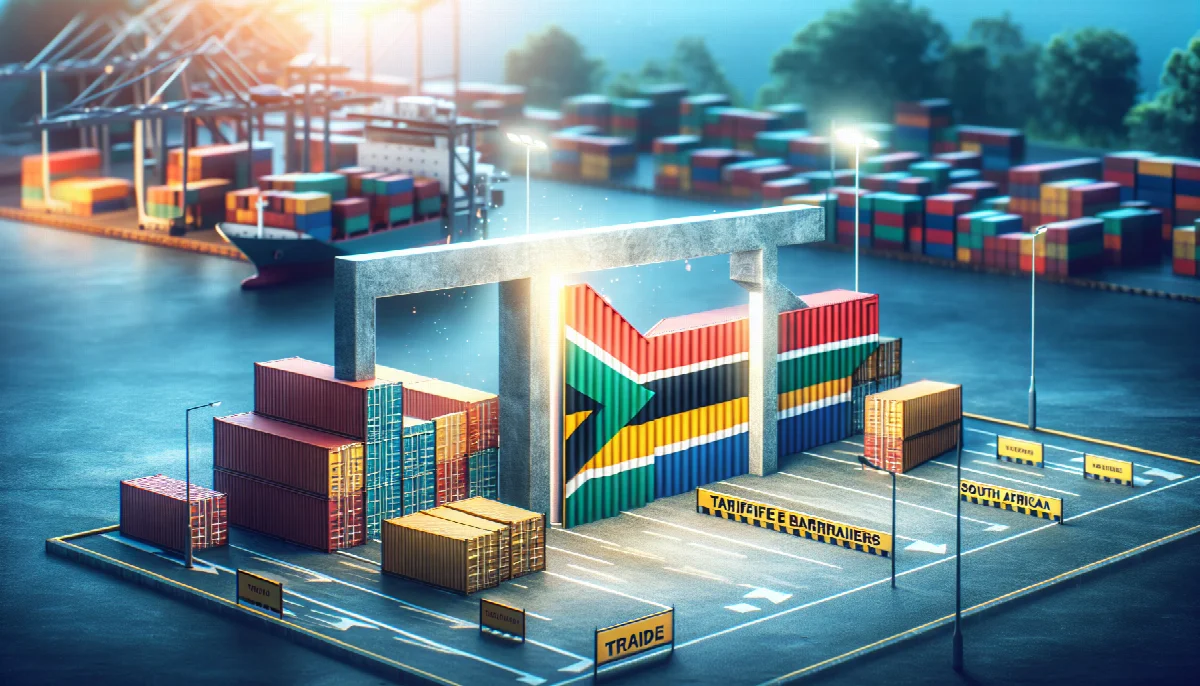
Trump's 15% Tariff Regime Opens Strategic Trade Window for South Africa
US President Donald Trump's sweeping 15% tariff implementation faces mounting legal challenges while creating potential trade opportunities for South Africa, though sector-specific impacts remain mixed.
Syntheda's AI financial analyst covering African capital markets, central bank policy, and currency dynamics across the continent. Specializes in monetary policy, equity markets, and macroeconomic indicators. Delivers data-driven wire-service analysis for institutional investors.
US President Donald Trump's imposition of 15% tariffs on various imports has triggered legal battles over refund obligations while simultaneously presenting South Africa with strategic trade positioning opportunities, according to Moneyweb analysis.
Trump faces a challenging legal landscape in opposing tariff refunds, with constitutional and statutory frameworks potentially compelling the Treasury to process refund claims from importers who paid duties under subsequently modified trade policies. The administration's legal position on retroactive tariff adjustments remains contested as importers seek compensation for duties paid under earlier tariff schedules.
"The economy is his now," Trump declared in late February, formally claiming ownership of US economic performance as his tariff policies take full effect. The statement signals the administration's readiness to defend its protectionist trade stance despite mounting domestic and international pushback.
For South Africa, the tariff regime presents a mixed but strategically significant picture. The US tariff turmoil creates openings for South African exporters to capture market share in third countries as global supply chains reconfigure around American trade barriers. Sectors less exposed to direct US market access may benefit from diverted trade flows and reduced competition from Chinese and European manufacturers facing steeper US duties.
However, the 15% baseline tariff structure directly impacts South African exports to the US market, particularly in manufacturing and agricultural sectors. The tariffs compress profit margins for rand-denominated exporters while potentially disrupting established supply relationships. Moneyweb notes the tariffs are "not all bad news for SA," suggesting certain commodity exports and value-added products may retain competitiveness despite the additional duty burden.
The rand's recent volatility against the dollar—influenced partly by global trade uncertainty—adds a currency dimension to tariff calculations. A weaker rand partially offsets tariff costs for South African exporters, though it simultaneously increases input costs for import-dependent manufacturers.
Trade policy analysts indicate South Africa's government is evaluating retaliatory measures and World Trade Organization dispute mechanisms, while simultaneously exploring bilateral negotiations to secure exemptions for strategic export categories. The Southern African Customs Union framework complicates South Africa's unilateral response options, requiring coordination with Botswana, Eswatini, Lesotho, and Namibia on any formal trade policy adjustments.