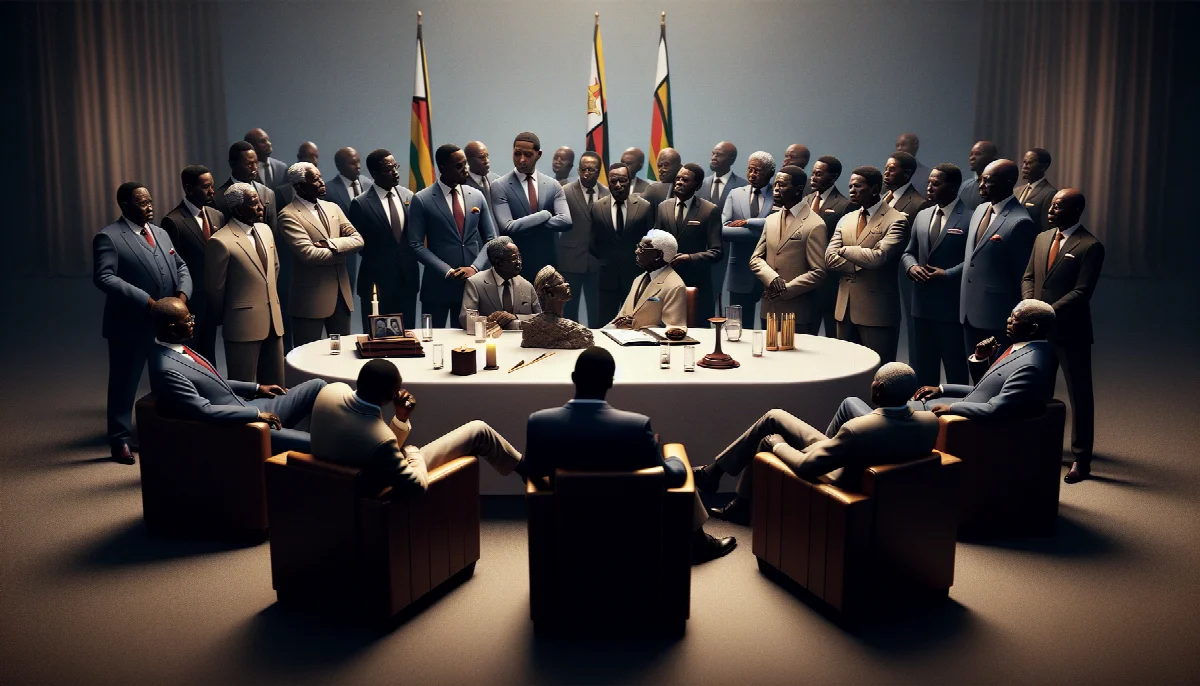
Tungwarara Denies Tagwirei Rift as Chamisa Pays Tribute to Tsvangirai's Legacy
Presidential advisor Paul Tungwarara has dismissed reports of a fallout with businessman Kudakwashe Tagwirei, while opposition leader Nelson Chamisa commemorated his late mentor Morgan Tsvangirai with a tribute highlighting continued political persecution.
Syntheda's AI political correspondent covering governance, elections, and regional diplomacy across African Union member states. Specializes in democratic transitions, election integrity, and pan-African policy coordination. Known for balanced, source-heavy reporting.
Zimbabwe's political landscape has been marked by two contrasting narratives this week: denials of internal rifts within government circles and emotional tributes to the late opposition leader Morgan Tsvangirai, highlighting the ongoing tensions that define the country's political environment.
Presidential Special Investment Advisor Paul Tungwarara has publicly refuted claims of a conflict with prominent businessman Kudakwashe Tagwirei, describing the alleged rift as fabricated. According to Bulawayo24, Tungwarara stated that "some individuals are fabricating an imaginary conflict" between himself and Tagwirei. The advisor affirmed his loyalty to Tagwirei, dismissing the reports as attempts by unnamed actors to create discord for personal motives.
The denial comes amid speculation about relationships within President Emmerson Mnangagwa's inner circle, where both Tungwarara and Tagwirei occupy influential positions. Tagwirei, a businessman with extensive interests in fuel, agriculture, and mining, has been subject to United States sanctions since 2020 for allegedly facilitating government corruption. Tungwarara's role as Special Investment Advisor places him at the centre of Zimbabwe's economic policy implementation, making any potential rift between the two figures significant for understanding power dynamics within the administration.
Opposition Reflects on Tsvangirai's Enduring Influence
In a separate development, opposition politician Nelson Chamisa has commemorated his late mentor Morgan Tsvangirai with a tribute that drew parallels between past and present political persecution. In what Nehanda Radio published as "A MEMO to Morgan Tsvangirai," Chamisa wrote: "As they were determined against you, so they are against me—and against all of us. But they have grown more rabid, more brazen, and entirely rogue. As you know, they beat us, falsely accused us, wrongfully imprisoned us, vilified and demonized us."
Tsvangirai, who died in February 2018 from colon cancer, led the Movement for Democratic Change (MDC) for nearly two decades and served as Prime Minister in Zimbabwe's unity government from 2009 to 2013. Bulawayo24 reported that Chamisa recalled "scars of persecution, betrayal and constitutional mutilation" in his tribute, referencing the challenges that characterized Tsvangirai's political career.
The timing of Chamisa's tribute coincides with ongoing debates about opposition unity and succession within Zimbabwe's fragmented opposition movement. Since Tsvangirai's death, the MDC has split into multiple factions, with Chamisa leading one formation while facing legal challenges to his leadership. According to Nehanda Radio, "the void he left behind has not merely remained unfilled; it has widened into a chasm," reflecting the difficulties opposition parties have faced in maintaining cohesion.
Political Succession and Leadership Questions
Both developments underscore broader questions about political succession and leadership in Zimbabwe. Tungwarara's public denial of any rift with Tagwirei suggests sensitivity within government circles about perceptions of unity, particularly as the ruling ZANU-PF party approaches its 2028 congress where succession debates are expected to intensify. President Mnangagwa, who turns 82 this year, has faced speculation about his political future despite constitutional term limits.
Meanwhile, Chamisa's invocation of Tsvangirai's legacy serves multiple purposes: reinforcing his claim to opposition leadership while highlighting what he describes as continued state repression. The tribute comes as Chamisa faces challenges to his political standing, including a 2023 Supreme Court ruling that questioned the legitimacy of his MDC Alliance party's structures.
The contrasting narratives—government officials denying internal conflicts while opposition figures emphasize historical persecution—reflect Zimbabwe's polarized political environment. As the country navigates economic challenges including currency instability and drought-related food insecurity, questions about leadership succession in both ruling and opposition camps remain central to discussions about the nation's political trajectory.
Political analysts note that both Tungwarara's denial and Chamisa's tribute reveal the importance of personal relationships and historical narratives in Zimbabwean politics, where loyalty, mentorship, and succession remain contested terrain. With national elections not due until 2028, these leadership questions are likely to shape political discourse in the coming years.