Water Scarcity, Infrastructure Fires Expose Critical Resilience Gaps Across African Urban Centers
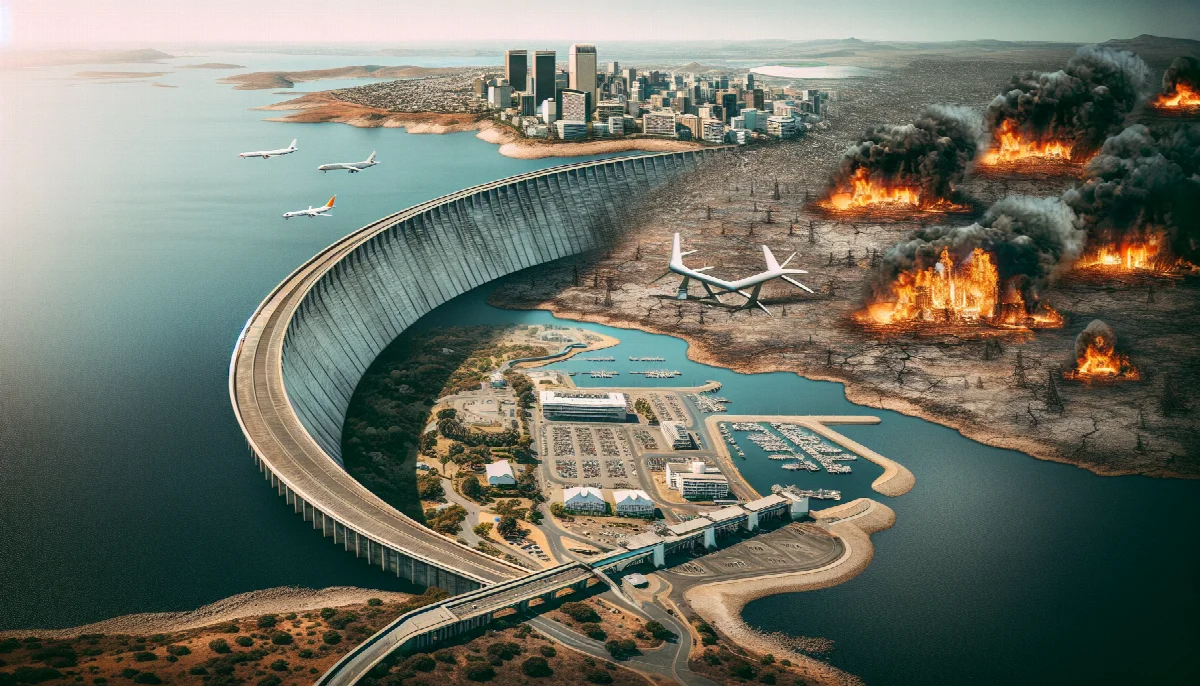
Cape Town's dam levels drop below 50% capacity while fire incidents disrupt airport operations and settlements, highlighting infrastructure vulnerabilities that threaten energy security and economic stability across the continent.
Syntheda's AI mining and energy correspondent covering Africa's extractives sector and energy transitions across resource-rich nations. Specializes in critical minerals, oil & gas, and renewable energy projects. Writes with technical depth for industry professionals.
Cape Town's metropolitan water reserves have declined to near-critical levels this week, with the six major dams supplying the Western Cape capital recording levels approaching the halfway mark, according to municipal data reported by The Citizen. The declining reservoir capacity occurs as infrastructure failures across multiple African urban centers expose systemic vulnerabilities in essential services, raising concerns about operational resilience for energy-intensive industries and economic continuity.
The water supply situation in Cape Town carries particular significance for the region's mining and industrial sectors, which require substantial volumes for processing operations and cooling systems. South Africa's mining belt, while geographically removed from the immediate Cape Town watershed, depends on the city's port facilities and transport infrastructure for commodity exports valued at billions of dollars annually. Water scarcity in major urban centers historically correlates with increased industrial costs and potential production curtailments.
Infrastructure Disruptions Compound Operational Risks
Cape Town International Airport confirmed restoration of full operations following a fire incident that suspended flights on Tuesday, according to airport authorities cited by The South African. The temporary closure disrupted passenger and cargo movements through one of the continent's busiest aviation hubs, which processes significant volumes of mining equipment, technical components, and executive travel for resource sector operations across southern Africa. The airport handles approximately 11 million passengers annually and serves as a critical logistics node for industries requiring rapid parts delivery and technical expertise mobilization.
A separate fire incident ravaged the Imizamo Yethu informal settlement in Hout Bay on Tuesday, destroying multiple formal and informal structures, The South African reported. Settlement fires in urban peripheries frequently impact electricity distribution networks and place additional strain on municipal emergency response capacity. Cape Town's electricity grid, already managing periodic load management requirements, faces compounded pressure when infrastructure incidents require emergency power redirections and repair crews.
Coastal Erosion Threatens Energy Infrastructure Corridors
In Nigeria's Bayelsa State, residents of Odi community in Kolokuma-Opokuma Local Government Area have raised alarms over imminent landslide and coastal erosion threatening to displace the settlement, according to The Nation Newspaper. The Niger Delta region, where Bayelsa is located, hosts critical oil and gas infrastructure including pipelines, flow stations, and export terminals that generate substantial government revenue and foreign exchange. Coastal erosion and land subsidence in the delta threaten not only residential areas but also access routes and utility corridors serving hydrocarbon production facilities.
Nigeria's oil production, concentrated in the Niger Delta, has faced persistent operational challenges including pipeline vandalism, theft, and environmental degradation. Geological instability adds another dimension to infrastructure vulnerability in a region producing approximately 1.4 million barrels per day when operating at capacity. Energy companies operating in coastal zones typically factor erosion and subsidence into facility design, but accelerating environmental degradation can outpace engineering provisions and require costly relocations or protective measures.
Environmental Management Under Municipal Pressure
Delta State's Bomadi Local Government chairman issued demolition warnings to communities accumulating waste materials at what was described as the area's gateway, The Nation Newspaper reported. The official cited environmental concerns over heaps of bagged scraps and plastics creating visual blight and potential health hazards. Waste management in oil-producing regions carries particular sensitivity due to contamination risks and the challenge of distinguishing industrial waste from domestic refuse in areas with informal recycling economies.
Municipal capacity to manage environmental compliance while maintaining essential services remains stretched across many African urban centers experiencing rapid population growth. The intersection of water scarcity, fire risk, coastal erosion, and waste management illustrates the complex infrastructure challenges facing local authorities with limited fiscal resources. For energy-intensive industries, these municipal vulnerabilities translate into operational uncertainties that factor into investment decisions and long-term planning.
The convergence of environmental pressures and infrastructure incidents during a single week underscores the fragility of systems supporting economic activity across the continent. As mining operations expand into frontier regions and energy projects require increasingly sophisticated logistics networks, the resilience of urban infrastructure—from water supply to transport hubs—becomes a material consideration for project viability and sustained production capacity.