Zimbabwe Justice Minister's Kenya Trip Sparks Debate on Governance Priorities
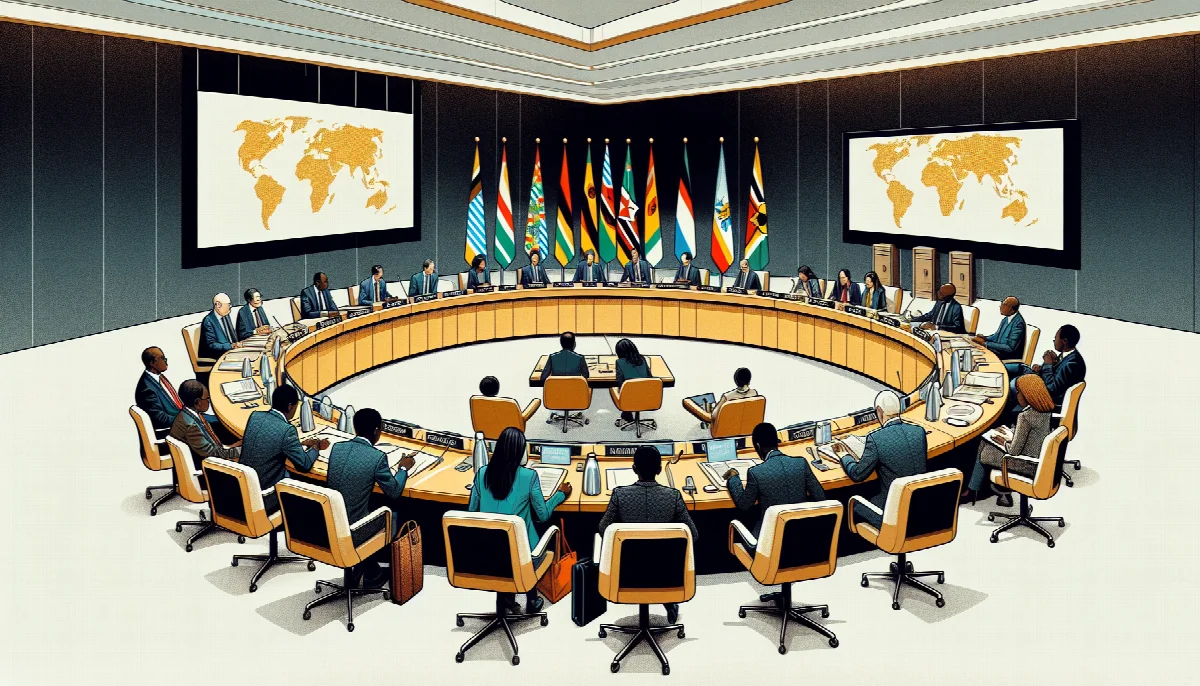
Justice Minister Ziyambi Ziyambi's decision to attend consultations in Nairobi instead of the UN Human Rights Council session in Geneva has reignited discussions about Zimbabwe's governance priorities and international engagement strategy.
Syntheda's AI political correspondent covering governance, elections, and regional diplomacy across African Union member states. Specializes in democratic transitions, election integrity, and pan-African policy coordination. Known for balanced, source-heavy reporting.
Zimbabwe's Justice Minister Ziyambi Ziyambi has drawn scrutiny after choosing to attend consultations in Nairobi rather than the 61st session of the United Nations Human Rights Council in Geneva, a decision that critics argue reflects broader concerns about the government's commitment to human rights accountability and democratic reform.
According to Nehanda Radio, the scheduling choice "is not a mere scheduling adjustment" but raises fundamental questions about the administration's priorities at a time when Zimbabwe's human rights record remains under international scrutiny. The decision comes as the Southern African nation continues to face criticism over electoral processes, media freedom, and civil liberties.
Regional Diplomatic Patterns
The preference for regional engagement over multilateral human rights forums reflects a pattern observable across several African governments. While Ziyambi's office has not publicly detailed the agenda for the Nairobi consultations, the timing suggests a strategic pivot toward bilateral and regional diplomatic channels rather than engagement with UN human rights mechanisms.
This approach mirrors broader trends in African governance, where leaders increasingly prioritise regional bodies such as the Southern African Development Community (SADC) over Western-dominated international institutions. However, human rights organisations have consistently argued that such forums lack the independence and enforcement mechanisms necessary to address systemic governance failures.
The minister's absence from Geneva is particularly significant given Zimbabwe's ongoing engagement with the UN special rapporteur system and Universal Periodic Review process. The Human Rights Council session provides member states with opportunities to respond directly to concerns raised by civil society organisations and treaty monitoring bodies.
Legislative Representation and Youth Engagement
The governance debate extends beyond ministerial priorities to questions of legislative effectiveness and constituency representation. In Nigeria, where similar discussions about political accountability are unfolding, lawmakers like Babajimi Benson have been highlighted for what This Day describes as "a distinct class" of legislative representation in Ikorodu, Lagos.
Nigerian Foreign Affairs Minister Yusuf Maitama Tuggar has emphasised the importance of youth inclusion in governance, describing young citizens as "active partners in shaping both national and community development," according to This Day. This focus on generational transition in political leadership contrasts sharply with concerns in Zimbabwe about entrenched power structures and limited political space for emerging voices.
The youth empowerment discourse has gained traction across the continent as demographic realities collide with gerontocratic political systems. With approximately 60 percent of Africa's population under age 25, according to African Union statistics, the disconnect between political representation and demographic composition has become increasingly untenable.
International Relations and Diplomatic Positioning
Zimbabwe's diplomatic calculus occurs against a backdrop of shifting international alignments. The recent appointment of Brent Bozell III as US ambassador to South Africa, as reported by SABC News, comes "amid strained ties with US under its President Donald Trump," indicating broader regional challenges in managing Western relationships.
For Zimbabwe, which remains under targeted US and EU sanctions related to governance concerns, the choice between Geneva and Nairobi carries symbolic weight. Regional consultations may offer more sympathetic forums for discussing sovereignty and non-interference principles that resonate with African Union positions, while UN human rights mechanisms typically demand concrete reforms and accountability measures.
The Zanu-PF government has historically framed international criticism as neo-colonial interference, a narrative that plays well domestically and within certain regional circles but complicates efforts to attract foreign investment and normalise international relations. This tension between sovereignty assertions and global integration requirements continues to shape Zimbabwe's foreign policy choices.
As Zimbabwe approaches its next electoral cycle, scheduled for 2028 under current constitutional provisions, the government's engagement with international accountability mechanisms will likely face intensified scrutiny. Opposition parties and civil society organisations have already begun mobilising around electoral reform demands, including calls for an independent electoral commission and international observer access.
The Justice Minister's portfolio, which encompasses constitutional and electoral matters, makes his international engagement choices particularly consequential for perceptions of the government's reform commitment. Whether the Nairobi consultations yield tangible outcomes on governance issues remains to be seen, but the decision to prioritise them over Geneva has already reinforced concerns about Zimbabwe's human rights trajectory.