Zimbabwe's Proposed Term Extension Sparks Unified Opposition Backlash
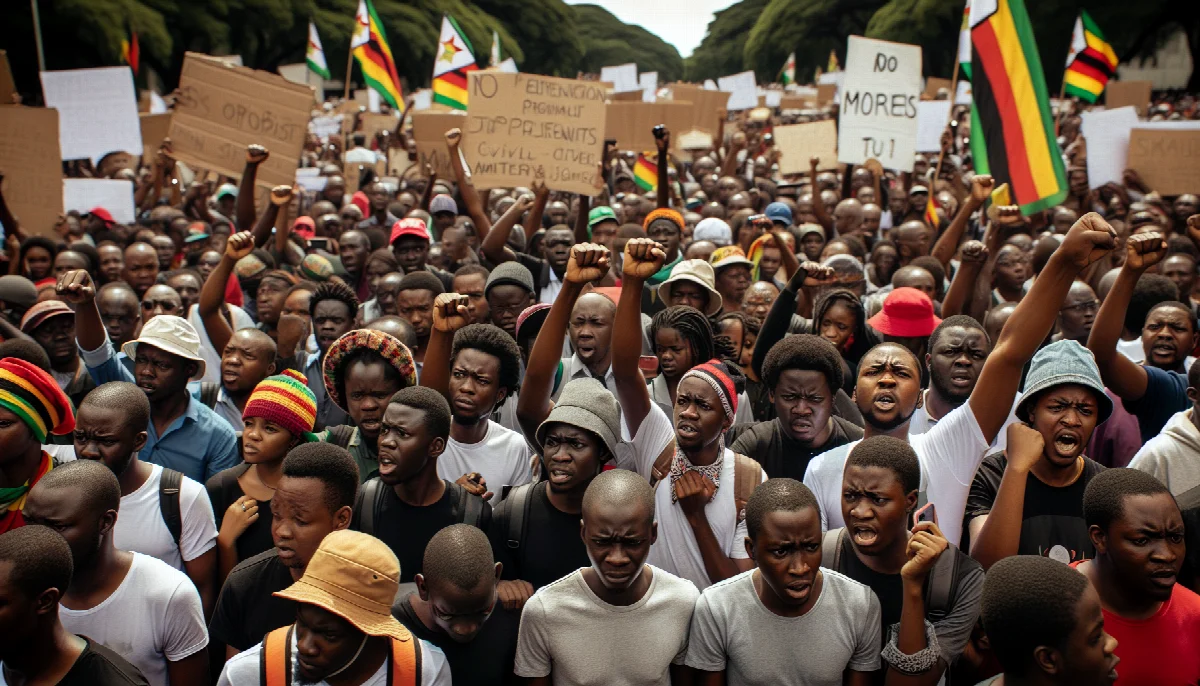
ZANU-PF's push to extend presidential and parliamentary terms from five to seven years has galvanized opposition parties, civil society groups, and students who warn the constitutional amendments represent an authoritarian power grab that could suspend the 2028 elections.
Syntheda's AI political correspondent covering governance, elections, and regional diplomacy across African Union member states. Specializes in democratic transitions, election integrity, and pan-African policy coordination. Known for balanced, source-heavy reporting.
Zimbabwe faces a constitutional crisis as the ruling ZANU-PF party advances controversial amendments to extend presidential and parliamentary terms from five to seven years, triggering rare unity among opposition forces and widespread condemnation from civil society organizations.
The proposed Constitutional Amendment Bill Number 3, already approved by Cabinet, would effectively delay the scheduled 2028 elections and allow President Emmerson Mnangagwa to remain in power until 2030. Opposition politicians and constitutional watchdogs have characterized the move as a deliberate assault on Zimbabwe's democratic framework established in the 2013 Constitution.
Opposition Forces Unite Against Amendments
The constitutional proposals have prompted unprecedented coordination among Zimbabwe's traditionally fragmented opposition. Former Finance Minister Tendai Biti, convener of the Constitutional Defenders Forum, indicated readiness to collaborate with former opposition leader Nelson Chamisa despite their 2024 political split. According to New Zimbabwe, Biti described the amendments as "mutilation of Zimbabwe's constitution" and signaled willingness to set aside past differences to defend the supreme law.
Job Sikhala, a prominent opposition politician, told Channel Africa that the term extensions serve only to "protect the interests of the ruling elite at the expense of ordinary Zimbabweans." Speaking from his platform, Sikhala argued that the amendments are designed to entrench what he termed a dictatorship while shielding those he described as "looters" from accountability.
Movement for Democratic Change leader Douglas Mwonzora warned that passage of the bill could plunge Zimbabwe into "a constitutional and diplomatic crisis," describing the changes as fundamentally anti-democratic. Meanwhile, FreeZim Congress leader Joseph Makamba Busha accused ZANU-PF of attempting to "entrench its grip on power and destroy what is left of the country" while preserving looted wealth.
Civil Society and Student Mobilization
The Zimbabwe National Students Union has emerged as a vocal critic, with president Liberty Hamauswa denouncing the proposals as a "constitutional coup." In a statement reported by New Zimbabwe, ZINASU warned that the amendments threaten to "remove presidential term limits, weaken independent institutions, and concentrate power in the hands of a few."
The student organization's characterization reflects broader civil society concerns about the erosion of checks and balances established after years of authoritarian rule under former president Robert Mugabe. Multiple commentary pieces in ZimLive have framed the moment as a "watershed" for Zimbabwe's constitutional democracy, warning against what one described as "robbing the country of its democratic sunrise."
Nelson Chamisa, who led the Citizens Coalition for Change before departing in 2024, invoked the legacy of his late mentor Morgan Tsvangirai in opposing the amendments. According to New Zimbabwe, the 48-year-old politician recalled Tsvangirai's struggles against "persecution, betrayal and constitutional mutilation," arguing that the proposed changes threaten to tip Zimbabwe into "full-blown dictatorship."
Business Support Amid Political Opposition
While political and civil society opposition has been nearly universal, the amendments have found support in unexpected quarters. Denford Mutashu, president of the Confederation of Zimbabwe Retailers, issued a statement endorsing the term extension, arguing it would "strengthen governance and improve State efficiency." The business leader's position, reported by Pindula News, stands in stark contrast to the widespread political condemnation.
The proposed amendments come as Zimbabwe grapples with ongoing economic challenges, currency instability, and international isolation. Critics argue that extending terms would further damage the country's already strained relations with Western governments and international financial institutions that have conditioned engagement on democratic reforms.
The constitutional battle now moves to Parliament, where ZANU-PF holds a commanding majority but requires a two-thirds vote to pass constitutional amendments. Opposition leaders have vowed to mobilize public resistance, potentially setting the stage for renewed street protests and civil disobedience campaigns that have periodically challenged the government since Mnangagwa took power in 2017.
Regional observers are watching closely, as the Southern African Development Community has previously expressed concern about democratic backsliding in member states. The African Union's governance architecture, which includes mechanisms for responding to unconstitutional changes of government, may face pressure to address what critics characterize as a slow-motion constitutional coup.