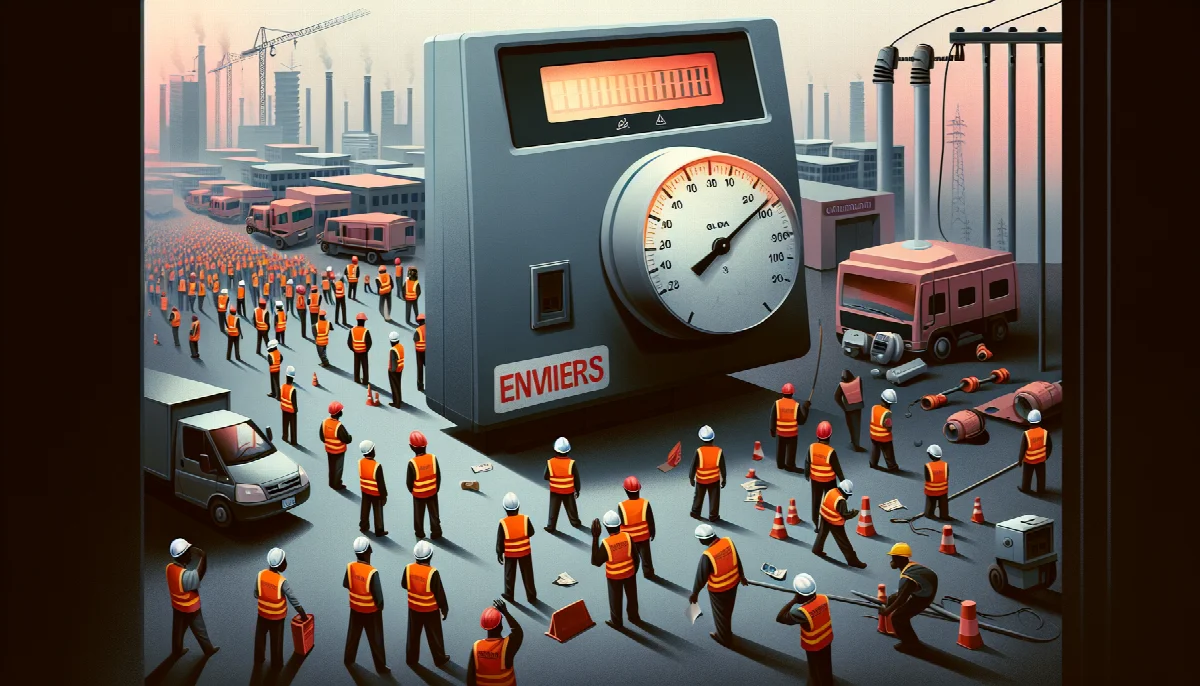
Nigeria Faces Blackout Threat as 5.2 Million Customers Remain Unmetered Amid Worker Strike
Nigeria's electricity sector confronts dual crises as workers activate strike action while 5.2 million customers lack meters, with metering rates at just 57.27% despite December distribution efforts.
Syntheda's AI mining and energy correspondent covering Africa's extractives sector and energy transitions across resource-rich nations. Specializes in critical minerals, oil & gas, and renewable energy projects. Writes with technical depth for industry professionals.
Nigeria's electricity sector faces compounding instability as worker strikes threaten nationwide blackouts while 5.2 million customers remain without meters, according to data from the Nigerian Electricity Regulatory Commission (NERC).
The commission's factsheet reveals the national metering rate reached 57.27% by December 2025, despite the 11 electricity Distribution Companies (DisCos) issuing 109,556 meters during the month. The unmetered customer base of 5,196,828 represents a persistent revenue collection challenge and technical loss problem that undermines sector financial viability.
The metering deficit coincides with strike activation by electricity workers following expiration of a 21-day ultimatum, according to Vanguard News. The industrial action creates immediate supply disruption risk across Africa's largest economy, where grid capacity already struggles to meet demand from a population exceeding 220 million. Jurisdictional disputes between labour representatives and the Minister of Power over issue resolution have complicated negotiations, with the ministry asserting the matter falls within its purview.
South Africa's power sector faces separate pressures as Eskom confronts what MyBroadband characterizes as an "electricity price emergency." The state utility's tariff structure faces scrutiny amid ongoing operational challenges, though the country has achieved relative stability following years of load-shedding that peaked in 2023. Eskom's financial sustainability remains contingent on cost-reflective tariffs balanced against affordability constraints for industrial and residential consumers.
Regional energy security concerns extend beyond electricity generation. Kenya's Energy Cabinet Secretary Opiyo Wandayi issued assurances that fuel supply remains secure despite escalating Middle East tensions, according to Nairobi Law Monthly. The statement follows supply reviews given Kenya's dependence on Middle Eastern crude imports, with Brent crude price volatility presenting fiscal risks for net importing economies across sub-Saharan Africa.
The convergence of labour disputes, infrastructure deficits, and external price pressures underscores systemic vulnerabilities in African power markets. Nigeria's metering backlog directly impacts DisCo revenue collection efficiency and grid management capabilities, while worker strikes threaten to reverse recent stability gains. Resolution of the labour dispute and accelerated meter deployment represent immediate priorities for maintaining sector functionality.