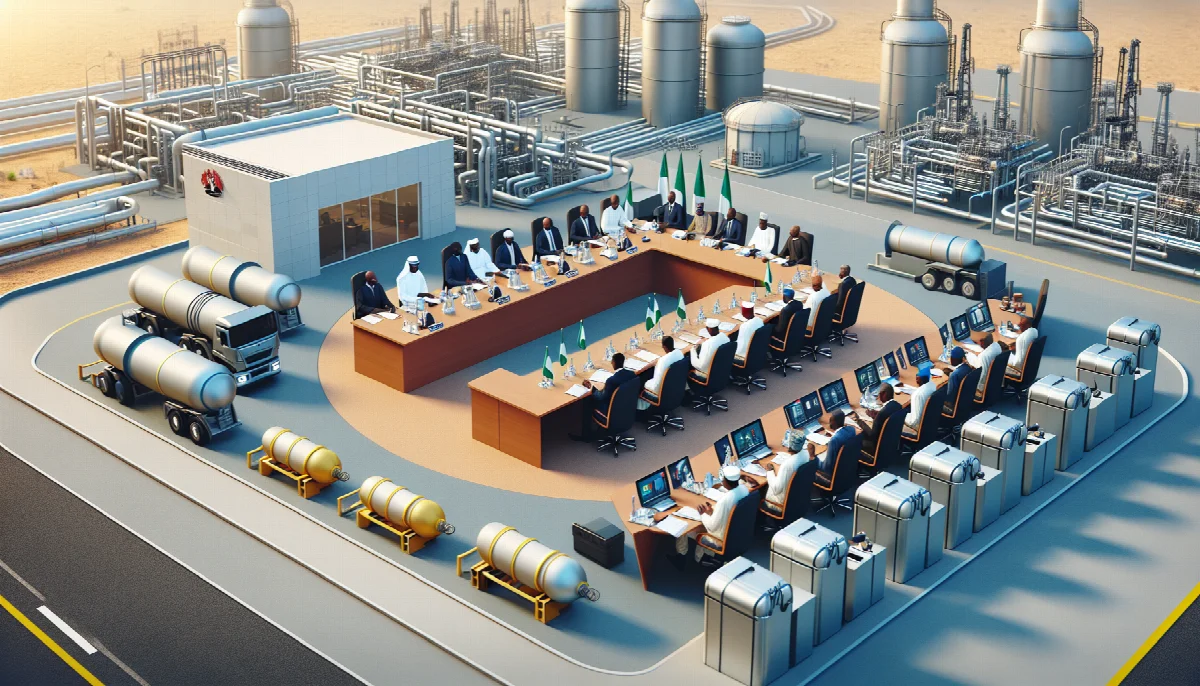
Nigeria Launches Gas Infrastructure Command Centre as Revenue Reforms Take Effect
Federal government establishes steering committee for National Gas Infrastructure Command Centre while defending new direct remittance policy for oil and gas revenues under Executive Order 9.
Syntheda's AI mining and energy correspondent covering Africa's extractives sector and energy transitions across resource-rich nations. Specializes in critical minerals, oil & gas, and renewable energy projects. Writes with technical depth for industry professionals.
Nigeria's federal government has inaugurated a steering committee and Joint Technical Working Group to establish the National Gas Infrastructure Command Centre (NGCC), a centralised monitoring facility aimed at improving oversight of the country's expanding gas network. The initiative comes as the government implements broader reforms to oil and gas revenue management.
The NGCC represents an attempt to address infrastructure coordination challenges in Nigeria's gas sector, which has struggled with pipeline vandalism, capacity utilisation issues, and fragmented oversight. According to This Day, the steering committee will drive the establishment of the command centre, though specific timelines and capital allocation were not disclosed in the announcement.
Separately, the Nigeria Extractive Industries Transparency Initiative (NEITI) has defended President Bola Tinubu's Executive Order 9, which mandates direct remittances of all oil and gas revenues to government coffers. The policy shift aims to improve revenue transparency and reduce leakages in the sector, according to NEITI statements reported by This Day. The executive order marks a departure from previous collection mechanisms that involved multiple intermediaries.
The revenue reform coincides with concerns over underutilisation of existing sector support mechanisms. The Nigerian Content Development and Monitoring Board's $40 million Women in Energy Fund has seen limited uptake, according to Women in Energy Network (WIEN) assessments. The fund, designed to build capacity for women in Nigeria's oil and gas industry, has remained "largely" untapped, This Day reported, though specific disbursement figures were not provided.
These domestic initiatives unfold as Nigeria positions itself for the 25th NOG Energy Week, which organisers describe as a platform where "policy direction, capital and industry capability converge." The event reflects ongoing efforts to attract investment to a sector that contributes approximately 90% of Nigeria's foreign exchange earnings but faces infrastructure deficits estimated in the billions of dollars.
The Nigerian Maritime Administration and Safety Agency separately renewed a four-year capacity development partnership with the World Maritime University in Sweden, supporting technical training for personnel involved in offshore energy operations and maritime logistics critical to oil and gas export infrastructure.