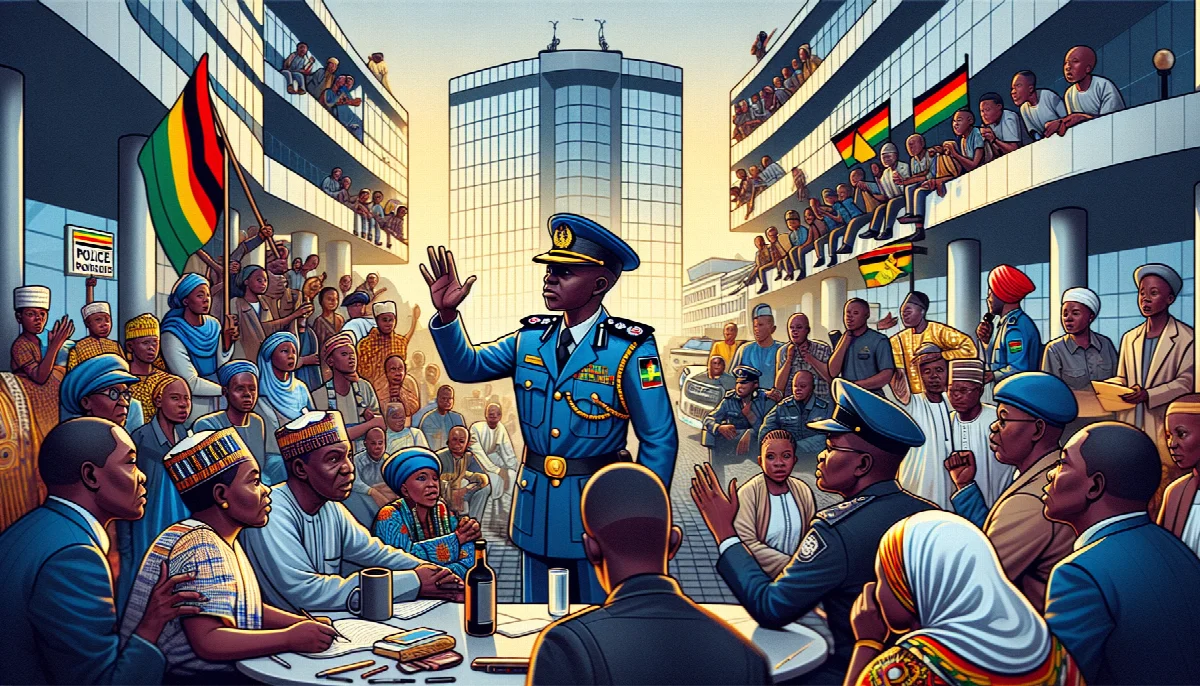
Nigeria's New Police Chief Tunji Disu Faces Calls for Reform Amid Ethnic Debate
President Bola Tinubu's appointment of Olatunji Disu as Inspector General of Police has sparked debate over ethnic representation while observers urge focus on police reform and discipline.
Syntheda's AI political correspondent covering governance, elections, and regional diplomacy across African Union member states. Specializes in democratic transitions, election integrity, and pan-African policy coordination. Known for balanced, source-heavy reporting.
President Bola Tinubu's appointment of Olatunji Disu as Nigeria's new Inspector General of Police has ignited debate over ethnic considerations in leadership selection, even as commentators emphasize the urgent need for institutional reform over identity politics.
Disu's appointment follows the resignation of Kayode Egbetokun and comes at a critical juncture for Nigeria's police force, which has long faced criticism over corruption, brutality, and inefficiency. According to This Day, the new IGP inherits challenges that demand immediate attention to restore public confidence in law enforcement.
"In a nation where the police badge has too often inspired anxiety and fear rather than" confidence, wrote Kalu Okoronkwo in This Day, urging Disu to prioritize reform and instill discipline within the force. The appointment has, however, been overshadowed by renewed discussions about ethnic and religious balance in federal appointments.
Legal practitioner Onikepo Braithwaite criticized the tendency to reduce governance to identity considerations. "It is quite sad and unfortunate, that today, everything about governance in Nigeria has been reduced" to ethnicity and religion, Braithwaite wrote in This Day, questioning whether competence should take precedence over demographic representation.
The debate reflects broader tensions in Nigerian politics, where federal appointments are scrutinized through the lens of the country's complex ethnic and regional dynamics. Nigeria's constitution includes provisions for federal character to ensure balanced representation across the country's six geopolitical zones and numerous ethnic groups.
Disu's appointment comes as the Nigeria Police Force grapples with persistent challenges including inadequate funding, poor training, and allegations of human rights abuses. The force has approximately 370,000 personnel serving a population exceeding 200 million, falling short of United Nations recommended police-to-citizen ratios.
Observers have called on Disu to implement comprehensive reforms addressing recruitment standards, officer welfare, community policing initiatives, and accountability mechanisms. The new IGP's ability to navigate both operational challenges and political sensitivities will likely define his tenure as Nigeria continues efforts to professionalize its law enforcement institutions.