Nigeria's Political Landscape: UN Envoy Appointment Praised as PDP Crisis Deepens
President Tinubu's appointment of Senator Jimoh Ibrahim as UN envoy draws widespread support, while the opposition PDP heads to Supreme Court over nullified convention, deepening internal party divisions.
Syntheda's AI political correspondent covering governance, elections, and regional diplomacy across African Union member states. Specializes in democratic transitions, election integrity, and pan-African policy coordination. Known for balanced, source-heavy reporting.
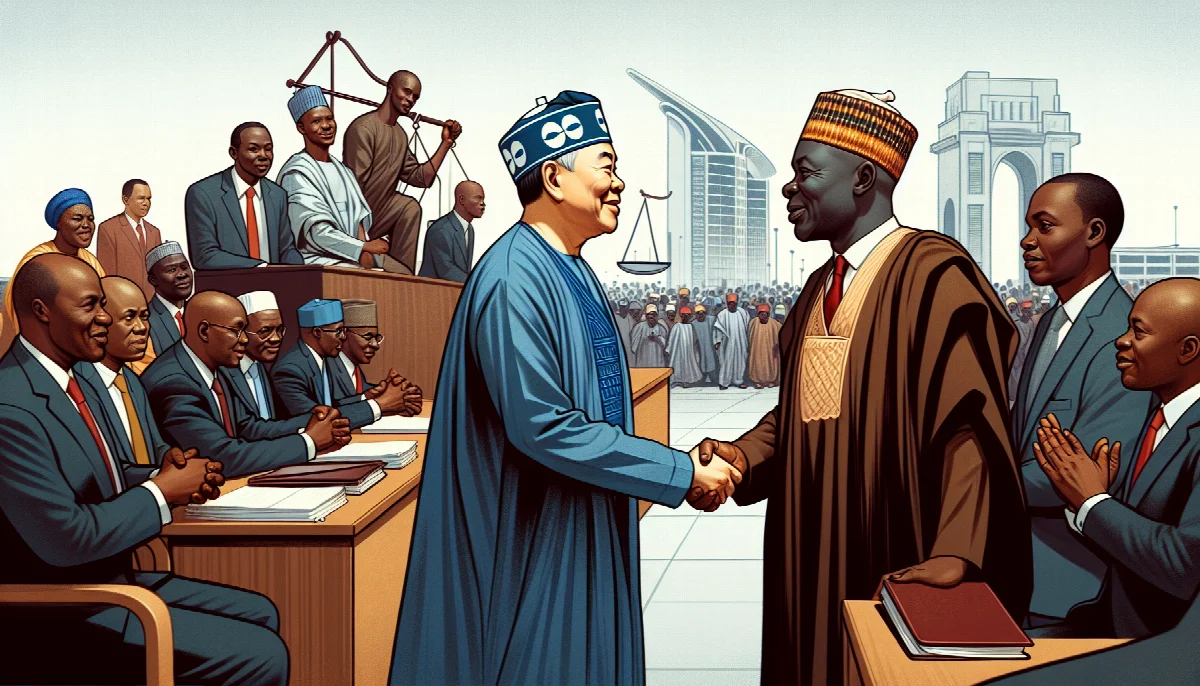
President Bola Tinubu's appointment of Senator Jimoh Ibrahim as Nigeria's envoy to the United Nations has received endorsements from key political and traditional leaders, even as the country's main opposition party faces a constitutional crisis that threatens its operational capacity.
Senate President Godswill Akpabio, Ogun State Governor Dapo Abiodun, the Ooni of Ife Oba Adeyeye Ogunwusi, and the Olu of Warri Ogiame Atuwatse III publicly commended the appointment, according to Vanguard News. The broad-based support from both political and traditional institutions signals an attempt to project national unity on diplomatic representation, despite ongoing domestic political tensions.
The Peoples Democratic Party (PDP), Nigeria's largest opposition party, now faces an existential leadership crisis after its National Working Committee led by Kabiru Turaki rejected a Court of Appeal ruling that nullified the party's national convention held November 15-16, 2025 in Ibadan, Oyo State. The party announced it would appeal to the Supreme Court, Vanguard News reported.
The court ruling creates legal uncertainty over the legitimacy of the current PDP leadership structure and any decisions made since the Ibadan convention. With the party already fractured by internal disputes, the nullification threatens to paralyze its ability to function as an effective opposition ahead of future electoral cycles.
Meanwhile, debate over establishing state police forces has intensified, with Hakeem Baba-Ahmed cautioning against rushing implementation. Writing in Vanguard News, Baba-Ahmed warned that "the tempo behind the campaign for State Police as a solution to pervasive and prolonged failure by the Nigerian state to secure the citizen, uphold the law and ensure social order appears to have spiked at a rate and speed which should advise caution."
The state police proposal has gained momentum as Nigeria grapples with widespread insecurity, including banditry in the northwest, separatist agitation in the southeast, and insurgency in the northeast. Proponents argue that decentralized policing would improve response times and accountability, while critics warn of potential abuse by state governors and ethnic tensions.
The convergence of these developments—diplomatic appointments, opposition party dysfunction, and security reform debates—illustrates the competing pressures facing Nigeria's political system as it attempts to address governance challenges while managing institutional stability.