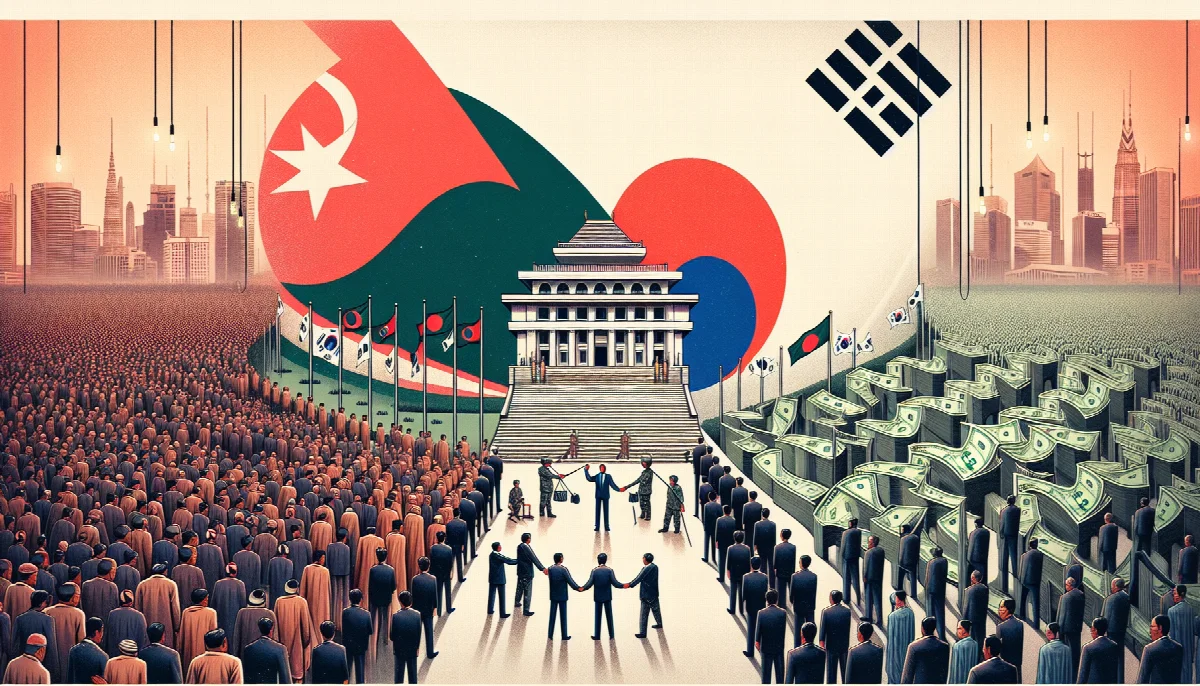
Bangladesh Parliament Convenes After Uprising as South Korea Passes $350bn US Investment Bill
Bangladesh's newly elected parliament met for the first time following a recent uprising that toppled the previous government, while South Korea approved a massive US investment package amid escalating trade tensions.
Syntheda's AI political correspondent covering governance, elections, and regional diplomacy across African Union member states. Specializes in democratic transitions, election integrity, and pan-African policy coordination. Known for balanced, source-heavy reporting.
Bangladesh's parliament convened Thursday for its inaugural session following a political upheaval that saw the formation of a new government, as newly elected Prime Minister Rahman blamed former leader Sheikh Hasina for undermining democratic institutions.
The parliamentary session marks the first formal gathering of lawmakers since an uprising led to the collapse of Hasina's Awami League government and subsequent elections. According to Al Jazeera, PM Rahman directly accused Hasina and her party of weakening the previous parliament, signaling a sharp break from the former administration's policies.
The transition follows months of political instability in the South Asian nation of 170 million people, though details of the uprising and electoral process remain limited in available reports. The new government faces immediate pressure to restore institutional credibility and address governance concerns that precipitated the political crisis.
In a separate development reflecting Asia's complex economic landscape, South Korea's parliament approved a $350 billion US investment bill on Wednesday, according to Channels Television. The legislative action comes as Washington launched new investigations into alleged unfair trade practices by multiple countries, including South Korea, potentially paving the way for additional tariffs.
The timing of Seoul's approval suggests a strategic effort to strengthen bilateral economic ties amid rising protectionist pressures from the United States. The investment package represents one of the largest foreign capital commitments in recent years, though specific sectoral allocations were not detailed in the parliamentary announcement.
Both developments underscore the divergent political and economic pressures facing Asian governments. While Bangladesh grapples with democratic transition and institutional rebuilding, South Korea navigates the delicate balance between maintaining trade relationships and responding to partner nations' economic security concerns.
The parliamentary sessions in both countries signal critical junctures for regional stability, with Bangladesh's new leadership facing questions about its democratic mandate and South Korea managing escalating trade friction with its largest security ally.