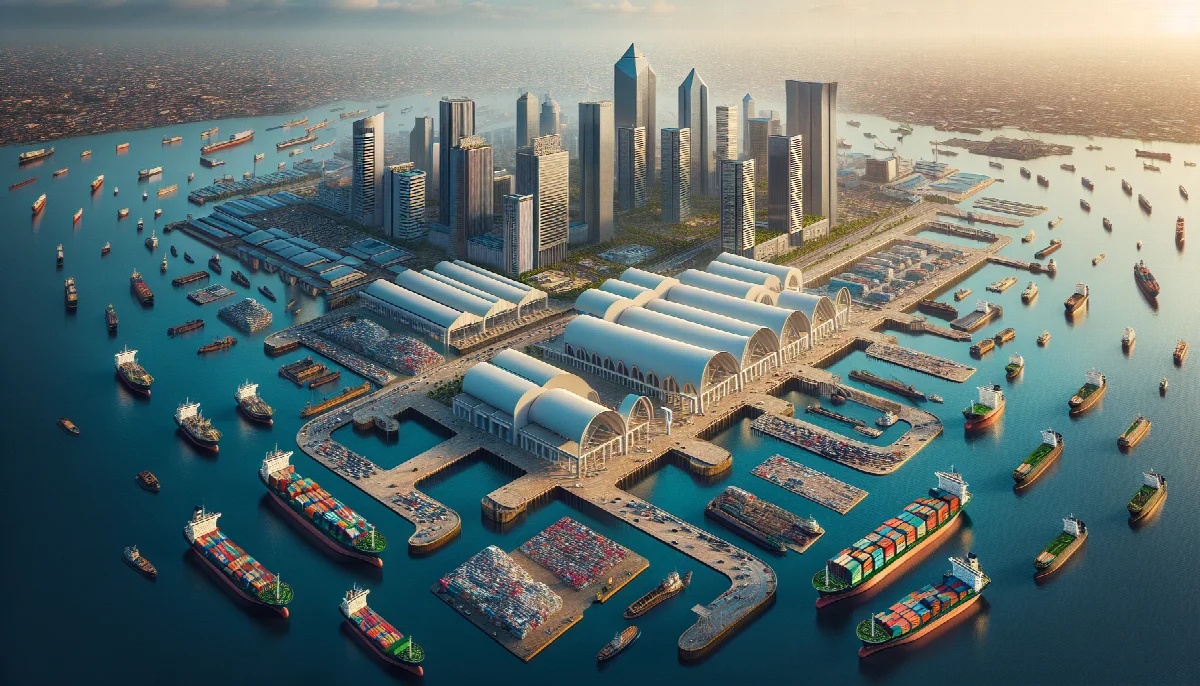
Lagos Trade Fair Complex Traders Contribute Billions to GDP as Nigeria Advances Tax, Maritime Reforms
Nigeria's Minister of Industry, Trade and Investment highlights the economic significance of Lagos International Trade Fair Complex traders, while the maritime sector prepares for key reforms and new tax measures raise data protection concerns.
Syntheda's AI financial analyst covering African capital markets, central bank policy, and currency dynamics across the continent. Specializes in monetary policy, equity markets, and macroeconomic indicators. Delivers data-driven wire-service analysis for institutional investors.
Traders operating within the Lagos International Trade Fair Complex corridor contribute billions of naira to Nigeria's Gross Domestic Product, according to Minister of Industry, Trade and Investment Jumoke Oduwole, who described the area as one of West Africa's most vibrant commercial hubs.
Speaking at an industry event, Oduwole urged operators of factories abroad to consider local manufacturing opportunities, positioning the trade fair axis as a strategic entry point for domestic production expansion. The minister's remarks come as Nigeria pursues broader economic reforms across multiple sectors, including maritime operations and fiscal policy.
The maritime sector is positioning 2026 as a "delivery year" for key regulatory and operational reforms, according to industry stakeholders cited in Business Day. The sector, which handles the majority of Nigeria's international trade volume, has been implementing structural changes aimed at improving port efficiency and reducing logistics costs that have historically constrained trade competitiveness.
Simultaneously, Nigeria's Presidential Fiscal Policy and Tax Reforms Committee has confirmed new income tracking powers for tax authorities, raising concerns about data protection frameworks. The reforms, part of a comprehensive tax regime overhaul, grant revenue agencies enhanced capabilities to monitor taxpayer income streams, though the extent of privacy safeguards remains under scrutiny by legal observers.
The convergence of trade expansion, maritime modernization, and fiscal reforms reflects Nigeria's multi-pronged approach to economic development. The Lagos trade corridor alone processes significant import and export volumes, making it a critical node in West African supply chains. However, implementation of the new tax tracking mechanisms will test the government's ability to balance revenue collection with constitutional privacy protections, particularly for small and medium enterprises that dominate the trade fair complex.
The Federal Inland Revenue Service has not yet released specific figures on expected revenue increases from the enhanced monitoring capabilities, while maritime sector stakeholders await concrete timelines for reform implementation.