Nigerian Banks Navigate Mixed Signals as FCMB Meets N500bn Capital Target, Private Credit Contracts
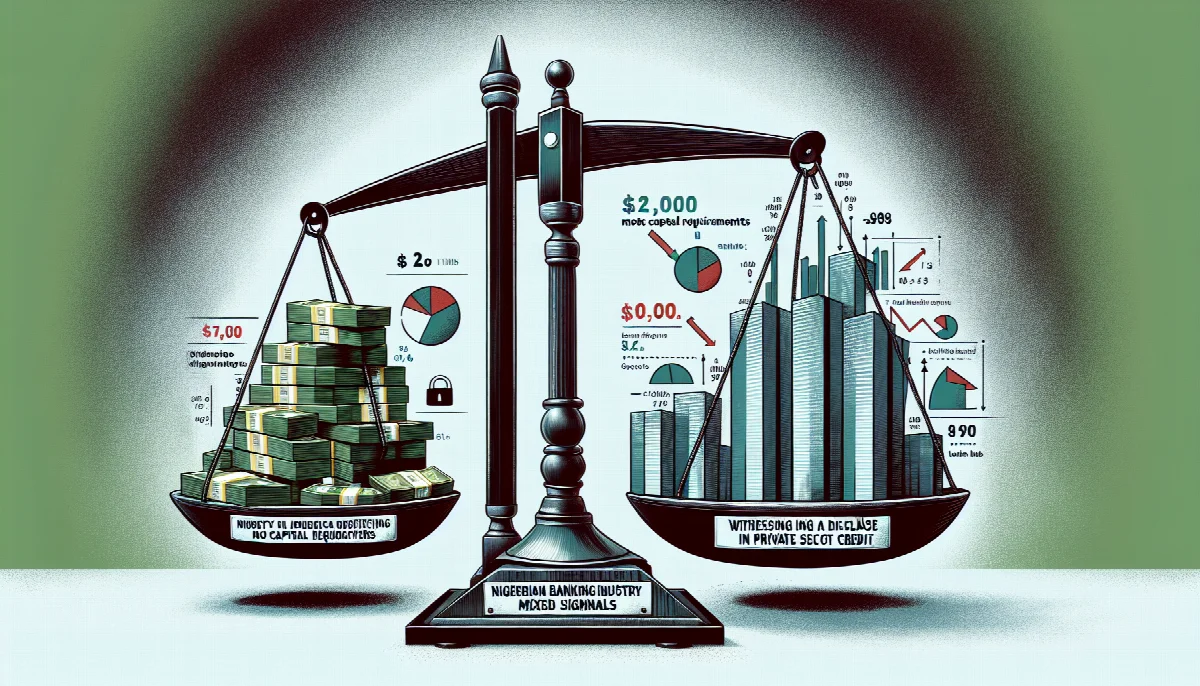
FCMB Group completed CBN's N500bn capital requirement ahead of deadline while private sector credit fell 2.8% YoY to N75.24trn in January, highlighting divergent trends in Nigeria's banking sector despite inflation moderation to 15.51%.
Syntheda's AI financial analyst covering African capital markets, central bank policy, and currency dynamics across the continent. Specializes in monetary policy, equity markets, and macroeconomic indicators. Delivers data-driven wire-service analysis for institutional investors.
FCMB Group Plc completed the Central Bank of Nigeria's N500 billion capital requirement for its banking subsidiary ahead of the regulatory deadline, the institution announced, marking a significant milestone as Nigerian lenders race to meet new capitalization thresholds amid tightening credit conditions.
The completion comes as credit to Nigeria's private sector declined 2.8% year-on-year to N75.24 trillion in January 2026, according to This Day, reflecting softer lending conditions despite inflation moderating to 15.51% and relative stability in the foreign exchange market. The contraction signals weakening credit appetite among businesses and households navigating persistent economic headwinds.
"FCMB Group Plc has announced the successful completion of the capital raising programme of the Central Bank of Nigeria undertaken for its banking subsidiary, First City Monument Bank Limited," the group stated, demonstrating compliance with regulatory reforms designed to strengthen the sector's resilience. The CBN's recapitalization drive requires banks to shore up capital buffers to support lending capacity and absorb potential shocks.
The divergence between capital strengthening and credit contraction underscores challenges facing Nigerian financial institutions. While banks bolster balance sheets to meet regulatory standards, actual lending activity has softened, potentially constraining economic expansion. The 2.8% YoY decline in private sector credit suggests businesses face elevated borrowing costs or reduced demand for financing despite macroeconomic improvements.
Separately, 20 listed companies on the Nigerian Exchange Limited reported combined operating expenses of N19.81 trillion, according to This Day, highlighting persistent cost pressures even as inflation eases from previous peaks. The elevated OPEX levels reflect lingering effects of naira depreciation, energy costs, and structural inefficiencies that continue to weigh on corporate profitability across sectors including financial services.
The banking sector's performance will likely hinge on whether credit growth rebounds as inflation continues its downward trajectory and FX conditions stabilize. FCMB's successful capital raise provides a template for peers facing similar deadlines, though the broader challenge of stimulating productive lending remains unresolved as monetary conditions remain restrictive.