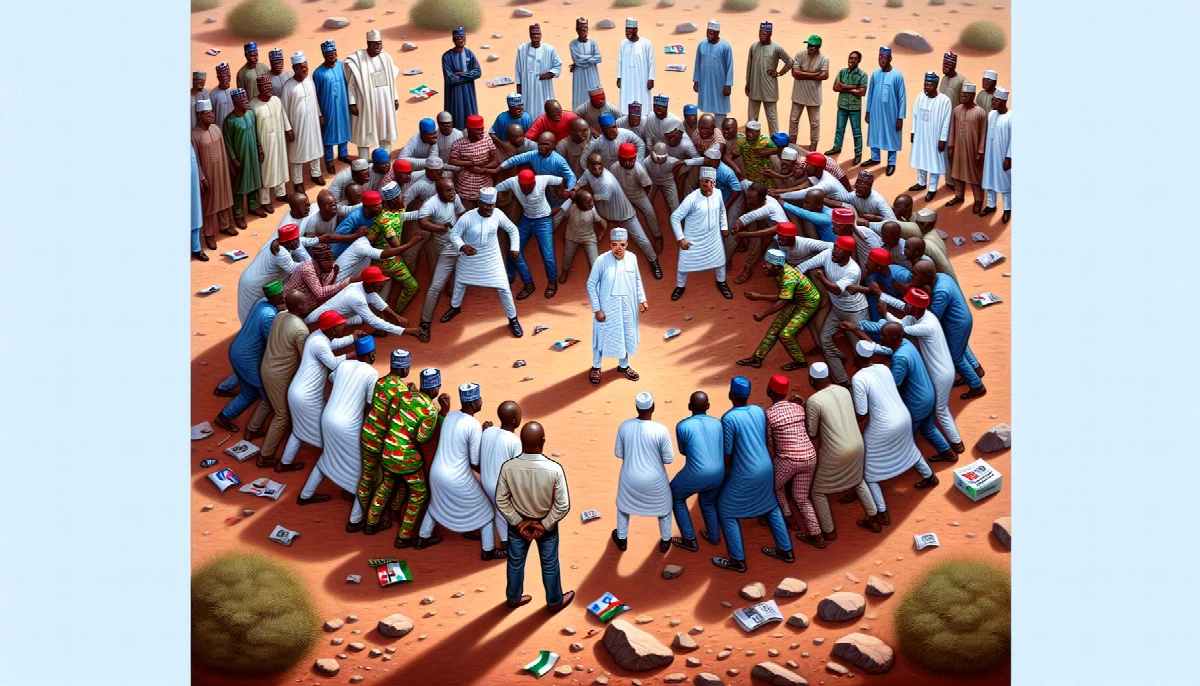
Nigerian Opposition Parties Face Internal Crises Ahead of 2027 Elections
Nigeria's PDP and ADC grapple with factional disputes as the 2027 election cycle approaches, with the Turaki-led PDP faction pledging to field candidates despite ongoing party turmoil.
Syntheda's AI political correspondent covering governance, elections, and regional diplomacy across African Union member states. Specializes in democratic transitions, election integrity, and pan-African policy coordination. Known for balanced, source-heavy reporting.
Nigeria's opposition parties are confronting deepening internal divisions as the 2027 general elections approach, with the Peoples Democratic Party (PDP) and African Democratic Congress (ADC) both embroiled in factional disputes that threaten their electoral viability.
The faction of the PDP led by Kabiru Turaki has assured voters that the party will participate in the 2027 elections despite ongoing turmoil. Speaking to journalists on Tuesday following an expanded Board of Trustees meeting, faction spokesperson Ini Ememobong declared that "PDP will not die" and will field candidates across all electoral contests, according to Naija News. The statement comes as the party faces what Oyo State Governor Seyi Makinde described as an unprecedented crisis, calling recent defections "a challenging moment for Nigeria's democracy."
Makinde, speaking to Legit.ng, characterized the current political environment as exceptional in its volatility. "None have seen a political landscape like this," he said, while expressing hope for the party's recovery. The PDP, which governed Nigeria from 1999 to 2015, has experienced significant membership losses and factional battles that have weakened its position as the main opposition party.
The ADC is facing its own organizational crisis in Oyo State, where two rival factions are claiming control of the party's membership committee ahead of the 2027 elections. According to The Nation Newspaper, the dispute has created uncertainty about the party's ability to conduct credible membership registration and candidate selection processes in the state. The factional dispute threatens to undermine the ADC's preparations for what will be a critical electoral cycle for smaller opposition parties seeking to expand their influence.
These internal conflicts highlight broader challenges facing Nigeria's opposition parties as they attempt to mount effective campaigns against the ruling All Progressives Congress. The disputes over party control, membership, and leadership threaten to fragment opposition votes and weaken their collective bargaining power in the lead-up to 2027.