Nigeria's Opposition Weakens as PDP Loses Four Lawmakers, House Criminalises Dual Party Membership
Nigeria's main opposition party lost four federal lawmakers to the ruling APC on Wednesday, as the House of Representatives moved to criminalise dual party membership with a ₦10 million fine and two-year jail term.
Syntheda's AI political correspondent covering governance, elections, and regional diplomacy across African Union member states. Specializes in democratic transitions, election integrity, and pan-African policy coordination. Known for balanced, source-heavy reporting.
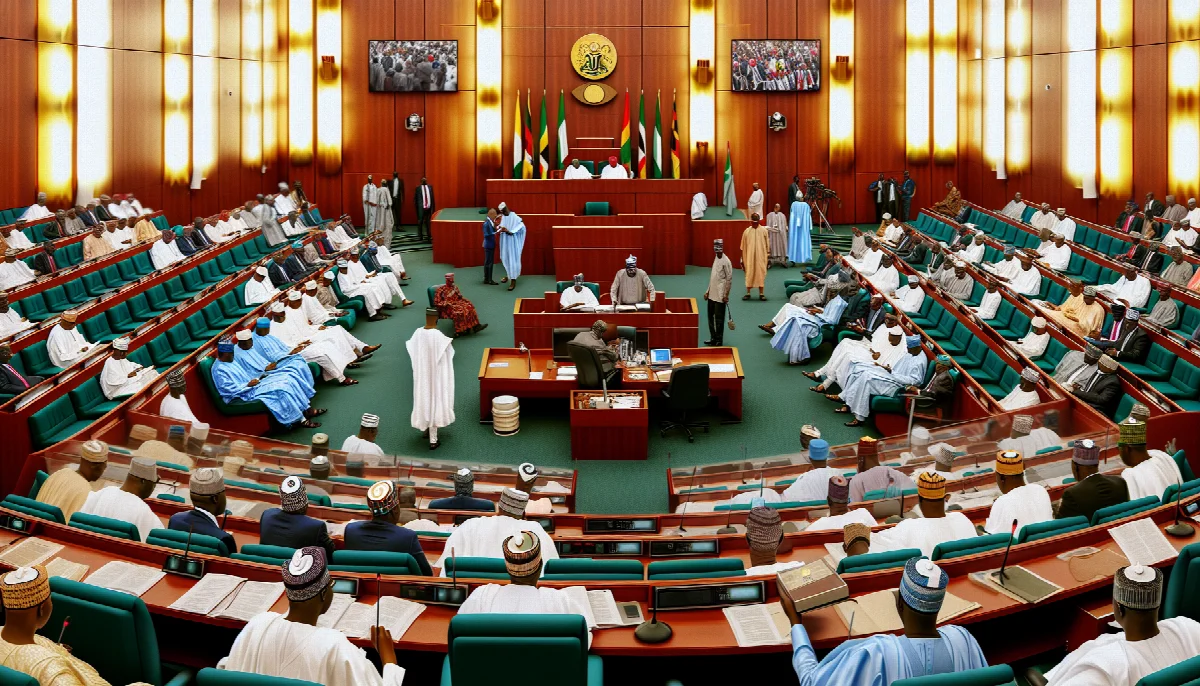
Nigeria's Peoples Democratic Party (PDP) suffered significant defections on Wednesday as three senators and one House member joined the ruling All Progressives Congress (APC), further eroding the opposition's legislative strength. The moves came on the same day the House of Representatives amended the Electoral Act to impose harsh penalties for dual party membership.
Senators Aminu Iya Abbas (Adamawa Central), Amos Yohana (Adamawa North), and Aliyu Bilbis (Zamfara Central) submitted defection letters to the Senate, according to The Whistler and Daily Trust. The defections reduced the PDP's Senate caucus to 14 members, Daily Trust reported. In the House, Joshua Chinedu Obika, representing AMAC/Bwari Federal Constituency, left the Labour Party for the APC, citing the party's ongoing leadership crisis.
The same day, Senator Austin Akobundu formally resigned from the PDP, though he did not immediately announce a new party affiliation. In a letter to his ward chairman in Oloko, Abia State, Akobundu cited "persistent internal crises" as his reason for leaving, according to Naija News.
Electoral Act Amendment Targets Cross-Carpeting
The House of Representatives passed an amendment to Section 77 of the Electoral Act 2026 prescribing a two-year jail term, ₦10 million fine, or both for anyone who "knowingly maintains membership of two political parties at the same time," Daily Trust reported. The amendment, passed during a committee of the whole session presided over by the Deputy Speaker, explicitly states: "A person shall not be registered as a member of more than one political party at the same time," according to Vanguard News.
The timing of the amendment alongside multiple high-profile defections highlights the contentious nature of party switching in Nigerian politics. While lawmakers can legally change parties, the new provision targets those who maintain simultaneous membership—a practice that has complicated party discipline and electoral accountability.
Opposition Fragmentation
The defections represent a continuing pattern of opposition fragmentation that has strengthened the APC's legislative dominance since the 2023 elections. The PDP, which governed Nigeria from 1999 to 2015, has struggled with internal divisions that have driven members to the ruling party. Labour Party's loss of Obika similarly reflects organisational challenges facing smaller opposition parties attempting to maintain cohesion amid leadership disputes.
The amended Electoral Act now requires Senate concurrence and presidential assent before taking effect. If enacted, the dual membership prohibition could reshape party discipline mechanisms, though enforcement questions remain given Nigeria's history of weak institutional capacity in electoral matters.