Nigeria's Power Crisis Deepens as Governors Join Protests, Transmission Infrastructure Blamed
Edo State Governor Monday Okpebholo joined street protests in Benin City over electricity failures, while Anambra activists plan rallies against distribution companies amid calls for urgent transmission upgrades.
Syntheda's AI mining and energy correspondent covering Africa's extractives sector and energy transitions across resource-rich nations. Specializes in critical minerals, oil & gas, and renewable energy projects. Writes with technical depth for industry professionals.
Nigeria's electricity crisis has escalated to the point where state governors are joining street protests, highlighting the severity of power supply failures that continue to cripple Africa's largest economy.
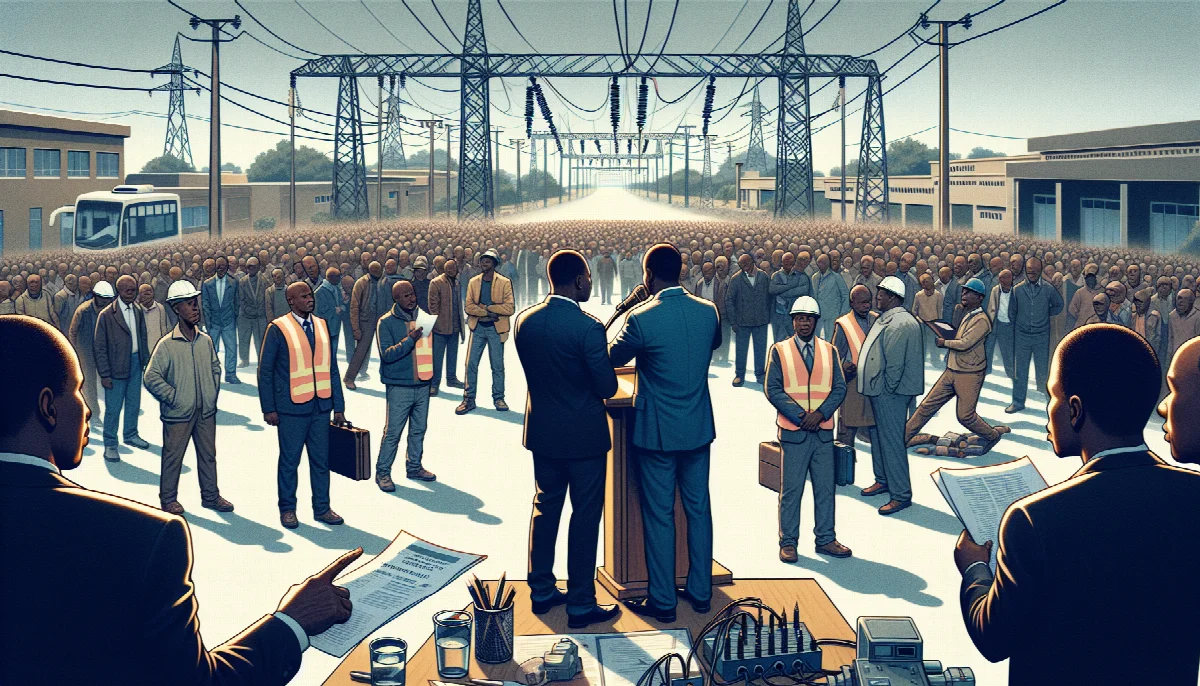
Edo State Governor Monday Okpebholo last week marched alongside hundreds of protesters in Benin City to demonstrate against persistent power outages, according to This Day. The governor's participation in the demonstration signals growing political pressure on federal authorities to address transmission infrastructure deficiencies that industry experts identify as the primary bottleneck in Nigeria's electricity value chain.
The protests come as transmission capacity remains stuck at approximately 5,000-7,000 MW, well below the country's installed generation capacity of over 12,000 MW. This mismatch forces generating companies to operate below capacity while consumers experience extended blackouts. This Day emphasized that "more should be done to improve on transmission infrastructure," pointing to the Transmission Company of Nigeria's inability to evacuate available power from generation plants to distribution networks.
In Anambra State, activist Comrade Osita Obi is organizing a rally against First Power, a distribution company, defying police warnings. "The only way to stop the rally" would be to arrest him, Obi told The Nation Newspaper, reflecting widespread frustration with distribution companies that collect tariffs while failing to deliver reliable service.
The dual protests in Edo and Anambra states underscore a nationwide crisis. Nigeria's power sector has struggled despite privatization reforms implemented in 2013, with transmission infrastructure remaining under government control while generation and distribution were sold to private investors. The resulting coordination failures have left households and businesses relying on expensive diesel generators, costing the economy an estimated $26 billion annually in lost productivity according to previous World Bank assessments.
The Transmission Company of Nigeria has announced plans to upgrade substations and expand grid capacity, but implementation has lagged due to funding constraints and technical challenges. Without substantial investment in transmission infrastructure, Nigeria's power crisis will likely continue driving public demonstrations and political instability.