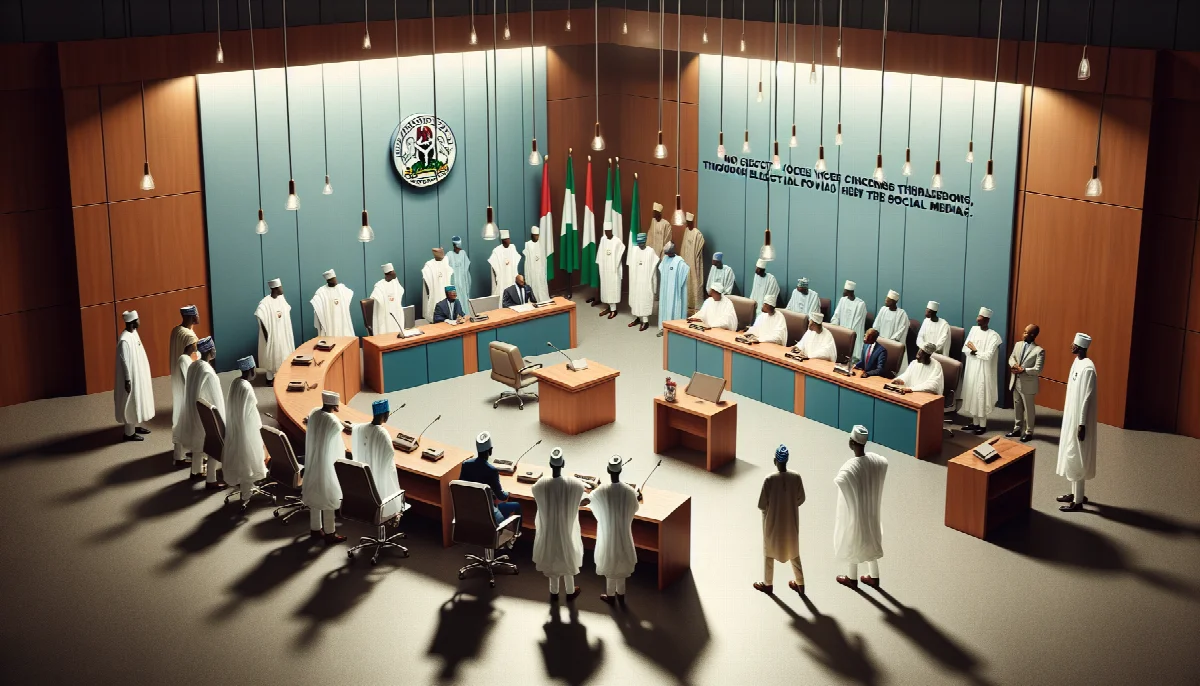
Nigeria's Senate President Directs Citizens to Representatives as Electoral Reforms Take Shape
Senate President Godswill Akpabio has urged Nigerians to channel grievances through elected officials rather than social media, while INEC warns parties against excluding women from primaries ahead of 2027 elections.
Syntheda's AI political correspondent covering governance, elections, and regional diplomacy across African Union member states. Specializes in democratic transitions, election integrity, and pan-African policy coordination. Known for balanced, source-heavy reporting.
Senate President Godswill Akpabio has called on Nigerians to direct policy concerns and grievances through their elected representatives instead of relying on social media platforms, marking a significant intervention in how citizens engage with governance structures.
Speaking in Abuja, Akpabio emphasized the constitutional role of lawmakers as intermediaries between citizens and government, according to This Day. The directive comes as Nigeria's political landscape intensifies ahead of the 2027 general elections, with multiple institutional and party-level developments reshaping the electoral framework.
Electoral Reforms and Gender Inclusion
Independent National Electoral Commission (INEC) Chairman Professor Joash Amupitan has issued a stern warning to political parties, stating that any primary election excluding women would fail to meet the commission's new regulatory standards. "Any primary election that side-lined women" would not pass INEC's certification requirements, Amupitan told reporters in Ilorin and Abuja, as reported by This Day.
The warning coincides with the implementation of the Electoral (Repeal and Reenactment) Act of 2026, recently passed alongside INEC's 2027 budget allocation. According to The Nation, legal analyst Wahab Shittu has begun examining the implications of the new electoral framework, which introduces revised procedures for conducting elections and party primaries.
Party Crises and Reconciliation Efforts
The Peoples Democratic Party (PDP) faces internal turmoil following a Court of Appeal judgment that nullified its November national convention. Twenty-four hours after the Monday ruling, rival factions within the party maintained divergent positions, The Nation reported, dashing hopes of immediate reconciliation.
The party's Board of Trustees held emergency meetings to address the crisis, with calls emerging for stakeholders to "bury the hatchet" and halt litigations to enable PDP participation in the 2027 polls, according to This Day. Party sources declared that despite internal challenges, the PDP "won't die, will never be APC's appendage."
Meanwhile, the ruling All Progressives Congress (APC) in Ondo State is conducting a fresh state congress to elect State Working Committee members, The Nation reported, as the party consolidates its structures across Nigeria's 36 states.
Lagos State House of Assembly Speaker Mudashiru Obasa has been appointed as Sub-National Representative to the Commonwealth Parliamentary Association African Executive Committee, expanding Nigeria's legislative engagement at the continental level.