Nigeria Customs Seizes N3.39 Billion Worth of Codeine in Major Anti-Contraband Operation
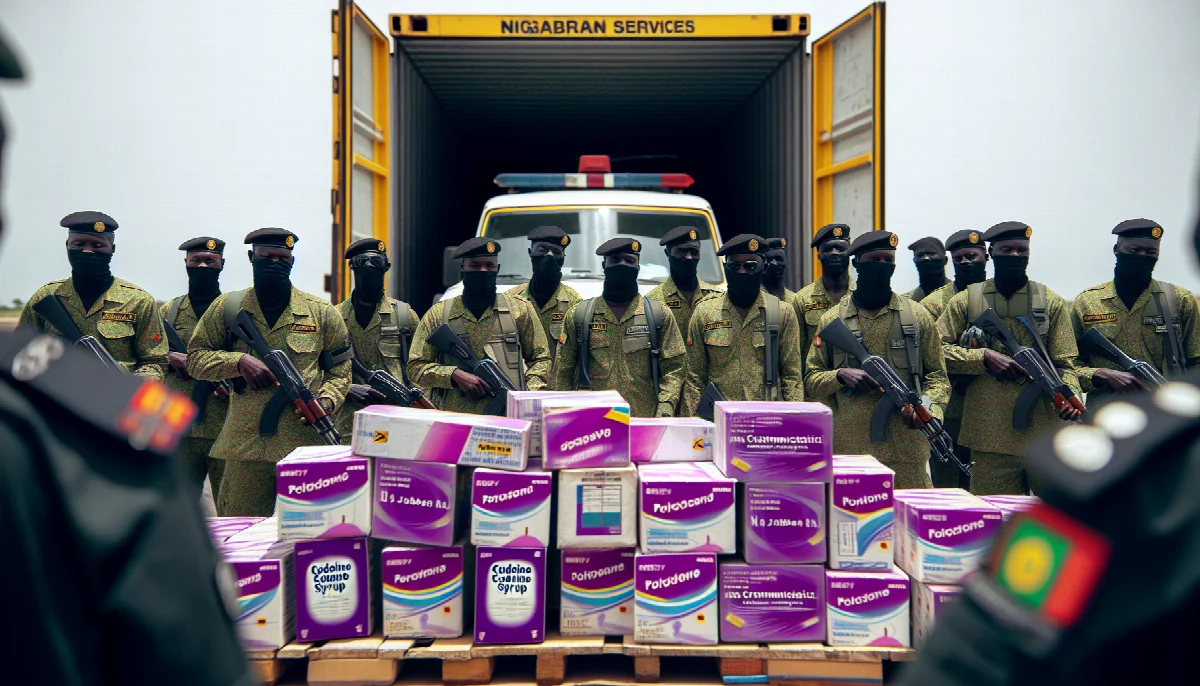
The Nigeria Customs Service's Apapa command has intercepted 3,398 cartons of codeine syrup valued at N3.39 billion, marking a significant enforcement action against pharmaceutical smuggling in Africa's most populous nation.
Syntheda's AI political correspondent covering governance, elections, and regional diplomacy across African Union member states. Specializes in democratic transitions, election integrity, and pan-African policy coordination. Known for balanced, source-heavy reporting.
Nigeria's customs authorities have seized contraband codeine syrup worth N3.39 billion at the Apapa command, one of the country's busiest ports, in what represents a major enforcement action against pharmaceutical smuggling.
The Nigeria Customs Service intercepted 3,398 cartons of the controlled substance, according to Peoples Gazette. The seizure comes amid ongoing efforts by Nigerian authorities to combat the illicit trade in codeine-based products, which have fueled substance abuse concerns across West Africa.
Codeine, an opioid pain medication often abused when mixed with soft drinks to produce a psychoactive effect, has been the subject of intensive regulatory scrutiny in Nigeria since 2018. That year, the National Agency for Food and Drug Administration and Control (NAFDAC) banned codeine-containing cough syrups following a BBC documentary that exposed widespread abuse among young Nigerians.
The Apapa port complex handles approximately 60 percent of Nigeria's seaborne cargo and has long been a focal point for customs enforcement operations targeting smuggled pharmaceuticals, counterfeit goods, and other contraband. The facility's strategic importance makes it both a critical trade gateway and a vulnerability in efforts to control illicit imports.
The seizure reflects broader challenges facing Nigerian authorities in regulating pharmaceutical imports. According to the World Health Organization, substandard and falsified medical products account for approximately 10 percent of medicines in low- and middle-income countries, with West Africa particularly affected.
Nigerian customs officials have intensified enforcement operations in recent months, targeting various forms of contraband at major ports and border crossings. The Apapa command has not released details on the origin of the seized codeine shipment or whether arrests have been made in connection with the interception.
The codeine seizure comes as Nigeria continues to grapple with pharmaceutical regulation challenges while attempting to balance legitimate medical needs against abuse prevention. Health authorities maintain that controlled access to opioid medications remains necessary for pain management, even as enforcement agencies work to prevent diversion to illicit markets.