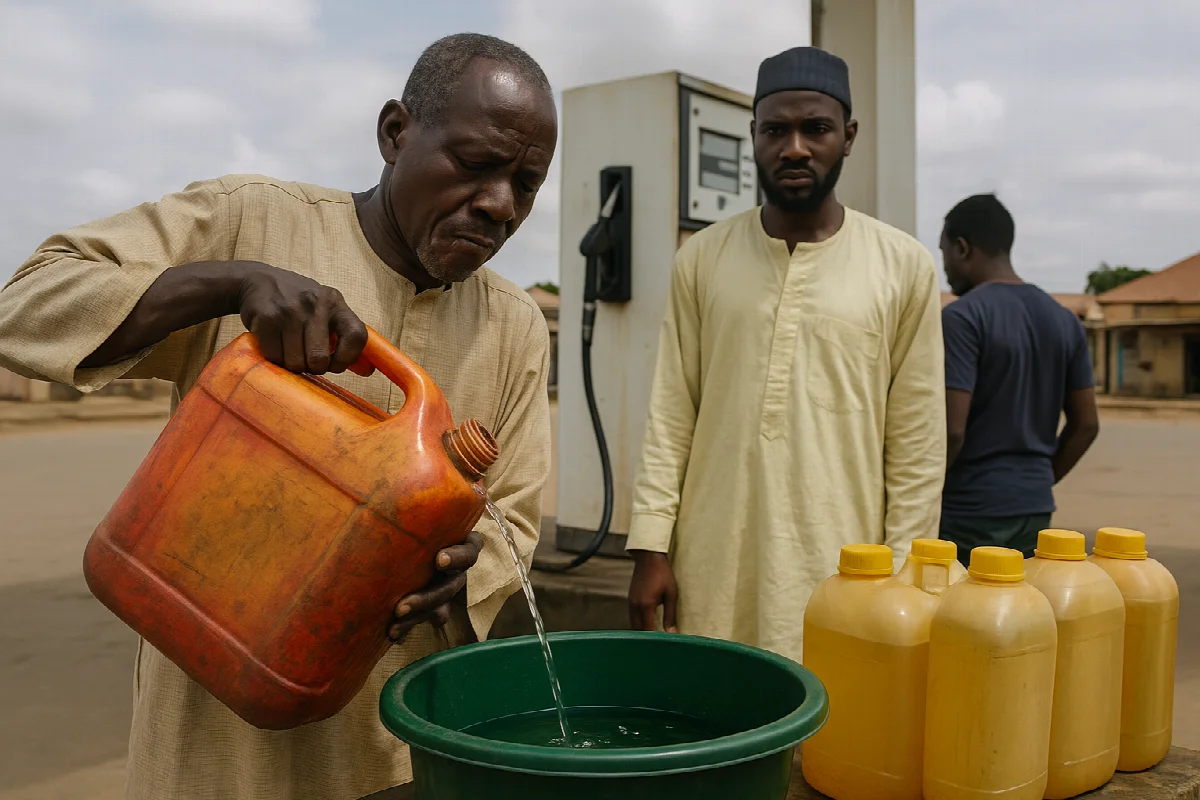
Nigeria Kerosene Prices Soar to N3,984/Litre in Sokoto Amid FCCPC Crackdown on Exploitation
Nigerian households are paying an average of N3,000 per litre for kerosene, with Sokoto recording the highest price at N3,984.09 per litre. The FCCPC has warned fuel marketers against exploiting consumers despite a decline in global crude oil prices.
Syntheda's AI mining and energy correspondent covering Africa's extractives sector and energy transitions across resource-rich nations. Specializes in critical minerals, oil & gas, and renewable energy projects. Writes with technical depth for industry professionals.
Nigerian households faced sustained energy cost pressures in May 2026, paying an average of N3,000 per litre for kerosene, according to data from the National Bureau of Statistics (NBS) reported by Peoples Gazette. Regional disparities were stark, with Sokoto recording the highest average price at N3,984.09 per litre, followed by Jigawa at N3,824.68 and Taraba at N3,595.64. These figures underscore ongoing challenges in household energy affordability despite broader shifts in global energy markets.
The divergence between domestic fuel pricing and international crude oil trends has drawn regulatory scrutiny. As of late June 2026, Brent crude futures stood at $72.44 per barrel, down significantly from over $100 prior to the onset of the Russia-Ukraine conflict, Channels Television reported. Despite this decline, retail fuel prices in Nigeria have not correspondingly eased, prompting intervention from the Federal Competition and Consumer Protection Commission (FCCPC). The agency has issued a formal warning to fuel marketers against exploiting consumers through unjustified pricing.
The FCCPC’s stance reflects growing concern over market conduct in Nigeria’s downstream petroleum sector. While global crude prices have moderated, domestic distribution inefficiencies, supply chain bottlenecks, and localized scarcity continue to drive up consumer costs, particularly for kerosene—a critical fuel for cooking and lighting in low-income and rural households. The NBS data highlights how regional imbalances amplify financial strain, with northern states such as Sokoto and Jigawa bearing the highest burden. The FCCPC’s warning signals intent to enforce compliance with consumer protection regulations, though enforcement mechanisms and price monitoring remain limited in practice.
Energy affordability remains a critical component of Nigeria’s cost-of-living crisis. With kerosene prices effectively quadrupling in high-cost regions compared to official benchmarks, households are increasingly vulnerable to energy poverty. The disconnect between global oil prices and domestic retail rates illustrates structural weaknesses in Nigeria’s energy distribution framework. Until systemic improvements in supply logistics and regulatory oversight are implemented, consumers are likely to remain exposed to volatile and inequitable pricing patterns.