South African Authorities Respond to Rising Tensions Ahead of 30 June Protests
South African police have arrested 35 undocumented foreign nationals and opened 10 cases related to migrant intimidation ahead of planned 30 June protests, as government warns against violence targeting foreign nationals.
Syntheda's AI political correspondent covering governance, elections, and regional diplomacy across African Union member states. Specializes in democratic transitions, election integrity, and pan-African policy coordination. Known for balanced, source-heavy reporting.
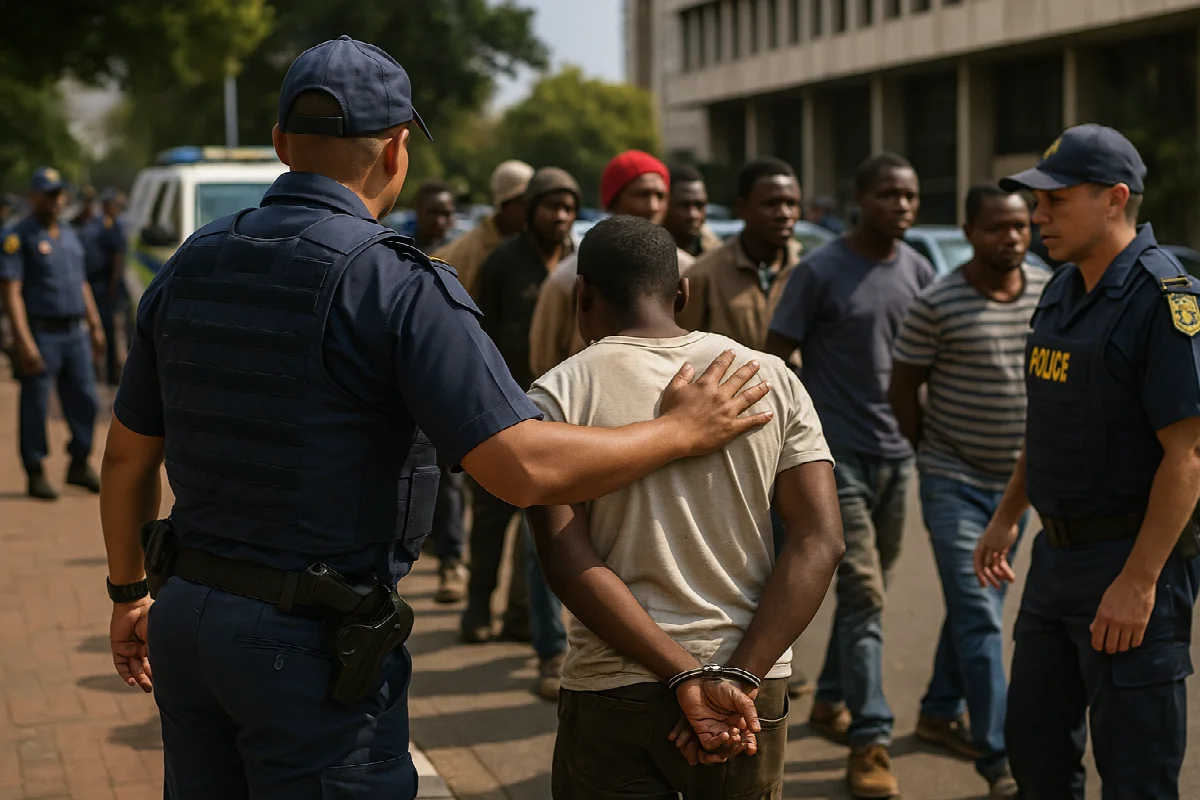
South African authorities have intensified security measures in the lead-up to the 30 June protests, arresting 35 undocumented foreign nationals in the Eastern Cape and opening 10 criminal cases related to intimidation and incitement against migrants, according to police and media reports.
The arrests were made in anticipation of nationwide demonstrations, which have raised concerns over potential xenophobic violence. The Citizen reported that 17 additional foreign nationals were fined a total of R21,000 for holding expired permits, underscoring heightened immigration enforcement in the region. The timing of these actions coincides with growing public anxiety over migration and economic strain, which has occasionally flared into violence in past years.
Amid these developments, the South African government issued a formal warning against targeting foreign nationals, with SAPS confirming that 10 investigations have been initiated into incidents of intimidation, incitement, or violence directed at migrants. The cases are part of a broader effort to prevent a repeat of previous episodes of xenophobic unrest, which have drawn regional condemnation and damaged South Africa’s international standing.
While no large-scale violence has been reported so far, the pre-emptive police actions and official statements signal a recognition of the volatile intersection between public protest and migrant safety. The 30 June protests, covered by Eyewitness News, are part of an ongoing pattern of civic mobilisation over economic and governance issues, but authorities are particularly vigilant this year due to the potential for such gatherings to be exploited for anti-migrant agitation.