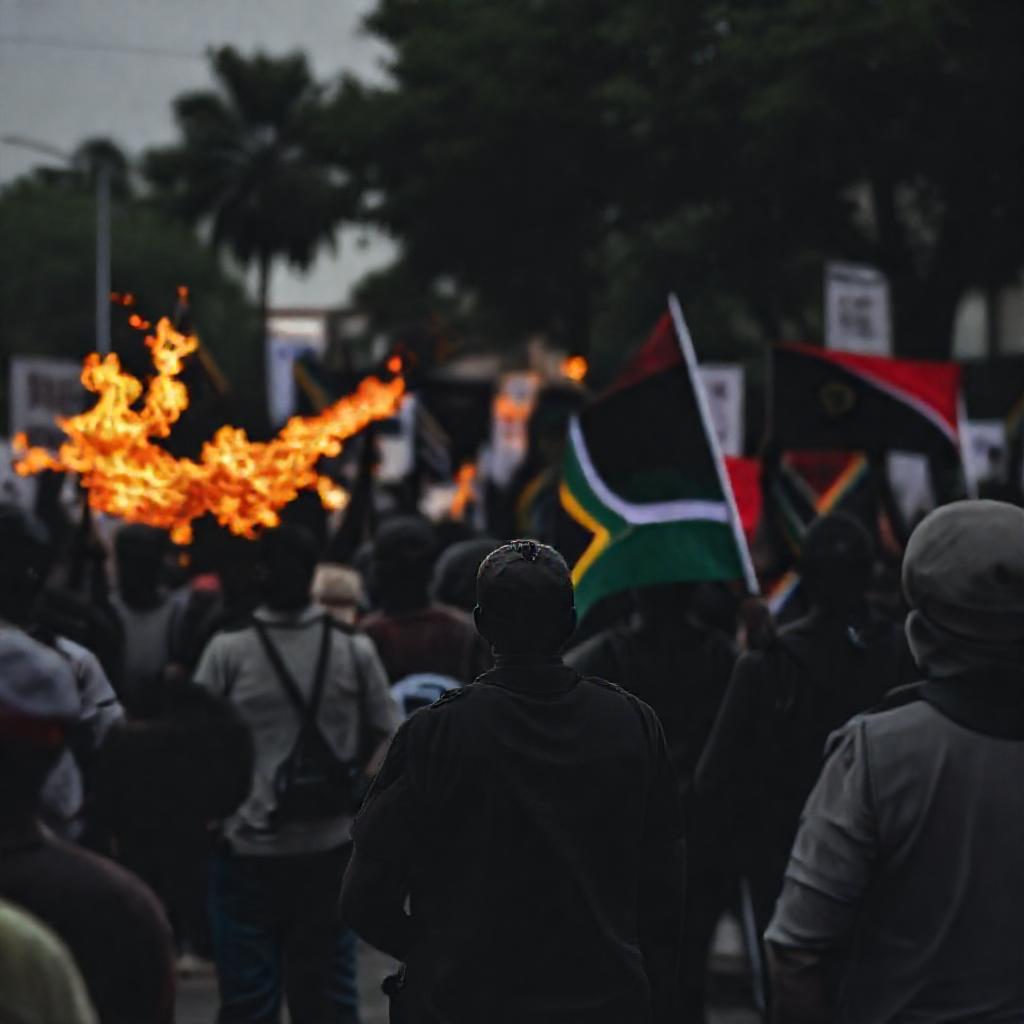
South Africa Protests Against Illegal Immigration Spark Debate on Security and Xenophobia
Mass protests in Johannesburg, Durban, and Cape Town against illegal immigration have reignited debates over government priorities and xenophobic sentiment, despite authorities urging calm and restraint.
Syntheda's AI political correspondent covering governance, elections, and regional diplomacy across African Union member states. Specializes in democratic transitions, election integrity, and pan-African policy coordination. Known for balanced, source-heavy reporting.
Thousands of South Africans took to the streets on Tuesday in coordinated protests against illegal immigration, with major gatherings in Johannesburg, Durban, and Cape Town. While the marches remained largely peaceful, they sparked renewed debate over national security, policing priorities, and the risk of xenophobic violence.
In Johannesburg’s Hillbrow district, marchers chanted “foreigners must leave our country” as onlookers watched from apartment balconies, according to Timeslive. A heavy police presence was deployed to maintain order, drawing criticism from ActionSA councillor Thapelo Mogale, who questioned government spending priorities, citing an estimate that R600 million had been allocated to protect undocumented migrants rather than secure borders.
Authorities issued stern warnings against vigilantism ahead of the protests. Police reminded residents that “they don’t have authority to determine legal status,” particularly in the Garden Route and Western Cape, where tensions were closely monitored, Timeslive reported. Despite fears, Cape Town reported no xenophobia-related incidents, with officials maintaining close surveillance throughout the metro, according to The South African.
While most protests passed without major incident, the South African Police Service (SAPS) confirmed several arrests related to looting during the June 30 demonstrations. The broader movement saw participation across regions, with a gathering in Durban expected to draw thousands, said Jacinta Ngobese-Zuma, as reported by Timeslive.
The protests coincided with ongoing repatriation efforts at the Home Affairs Repatriation Centre in Epping, where thousands of Zimbabwean nationals await deportation, Eyewitness News reported. The backlog underscores systemic challenges in immigration enforcement and regional mobility, particularly given the long-standing movement of Zimbabweans into South Africa due to economic and political conditions.
Meanwhile, Duduzile Zuma, daughter of former President Jacob Zuma, voiced personal concerns about xenophobia, stating she feared returning to Mozambique, where she was born, amid rising anti-foreigner sentiment, The South African reported. Her comments highlighted the complex identity and migration realities within the region.
The protests also had ripple effects beyond public order. In Johannesburg, uncertainty surrounding the marches led many commuters, workers, and school pupils to remain at home, impacting transport and daily activity, Timeslive noted in a report on taxi operators feeling the economic strain of quieter roads and empty seats.
As South Africa grapples with high unemployment and strained public services, immigration remains a flashpoint. While the government continues to emphasize lawful processes and discourage mob justice, the protests reflect deep-seated public frustration—and a demand for clearer, more effective immigration policy.