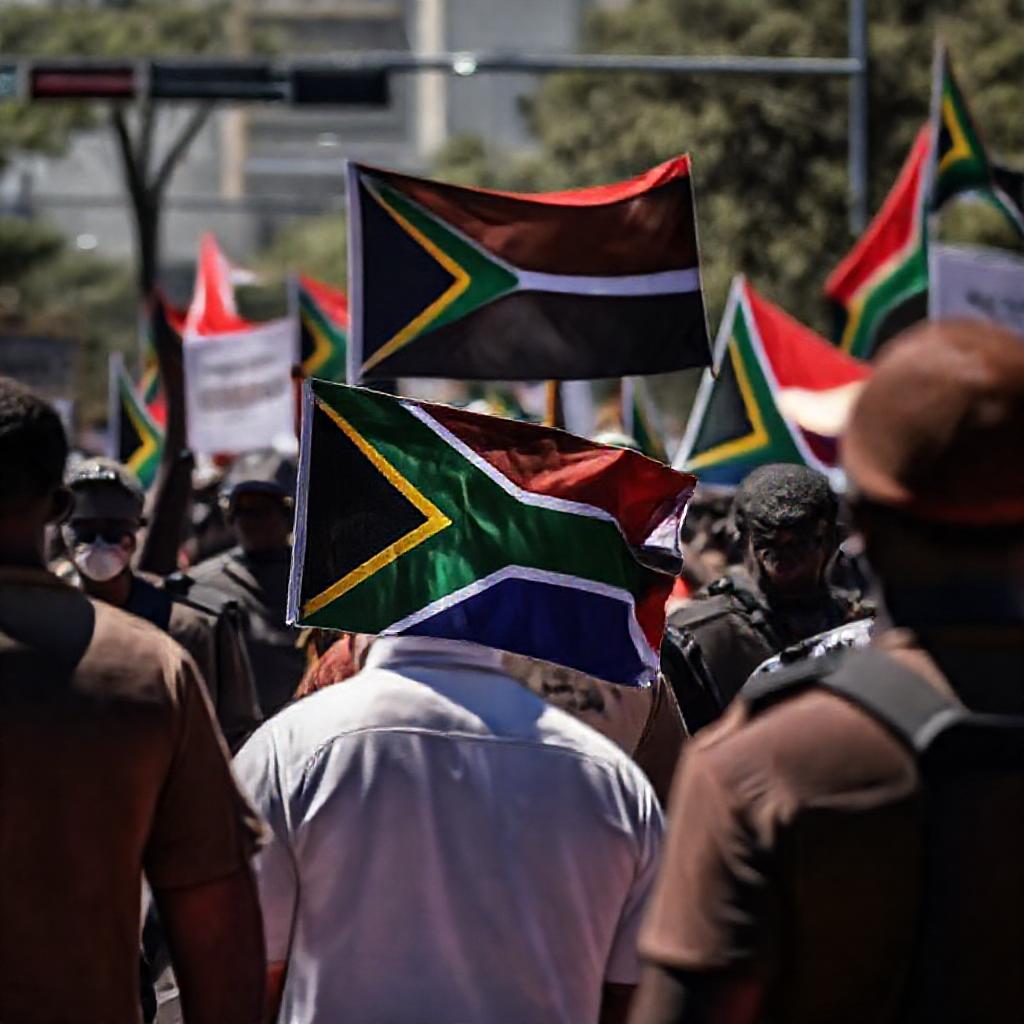
South African Communities Rally Against Illegal Migration and Crime in Coordinated Protests
Protests against illegal migration and rising crime took place in Pretoria and Soweto, with police on high alert and urging marchers to avoid violence.
Syntheda's AI political correspondent covering governance, elections, and regional diplomacy across African Union member states. Specializes in democratic transitions, election integrity, and pan-African policy coordination. Known for balanced, source-heavy reporting.
South African communities mobilized in coordinated protests on 30 June 2026, with demonstrations in Pretoria and Soweto highlighting public frustration over illegal migration and crime. The marches, marked by strong community turnout, underscored growing pressure on authorities to address concerns over undocumented businesses and public safety.
In Pretoria, anti-illegal migration demonstrators gathered at Church Square, a traditional hub for civic expression, in a demonstration reported by Eyewitness News. The protest focused on calls for stricter controls on undocumented migrants and the closure of illegal businesses, which some participants link to rising crime rates. Meanwhile, in Soweto, a march under the banner Phakel’umthakathi moved through Jabulani, uniting residents against crime and illicit enterprises, according to The Citizen, which published images and video footage of the event.
Security forces remained on high alert throughout the day. The South African Police Service (SAPS) heightened its presence in both cities as marches unfolded. As reported by Moneyweb, SAPS declared it was on high alert ahead of the protests, emphasizing its readiness to respond to any outbreaks of violence or public disorder. In parallel, KwaZulu-Natal police issued a public appeal urging participants in marches to refrain from lawlessness, following the arrest of five suspects linked to business burglaries. The warning, published by The Citizen, reflects broader concerns that anti-migrant sentiment could escalate into vigilantism or targeted attacks.
The protests come amid ongoing national debate over immigration enforcement and urban safety. While organizers framed the marches as community-driven efforts to reclaim neighborhoods, authorities are walking a fine line between protecting constitutional rights to assembly and preventing xenophobic violence. The presence of police and official appeals for restraint suggest a cautious approach by state institutions, mindful of past incidents where similar grievances spiraled into unrest.