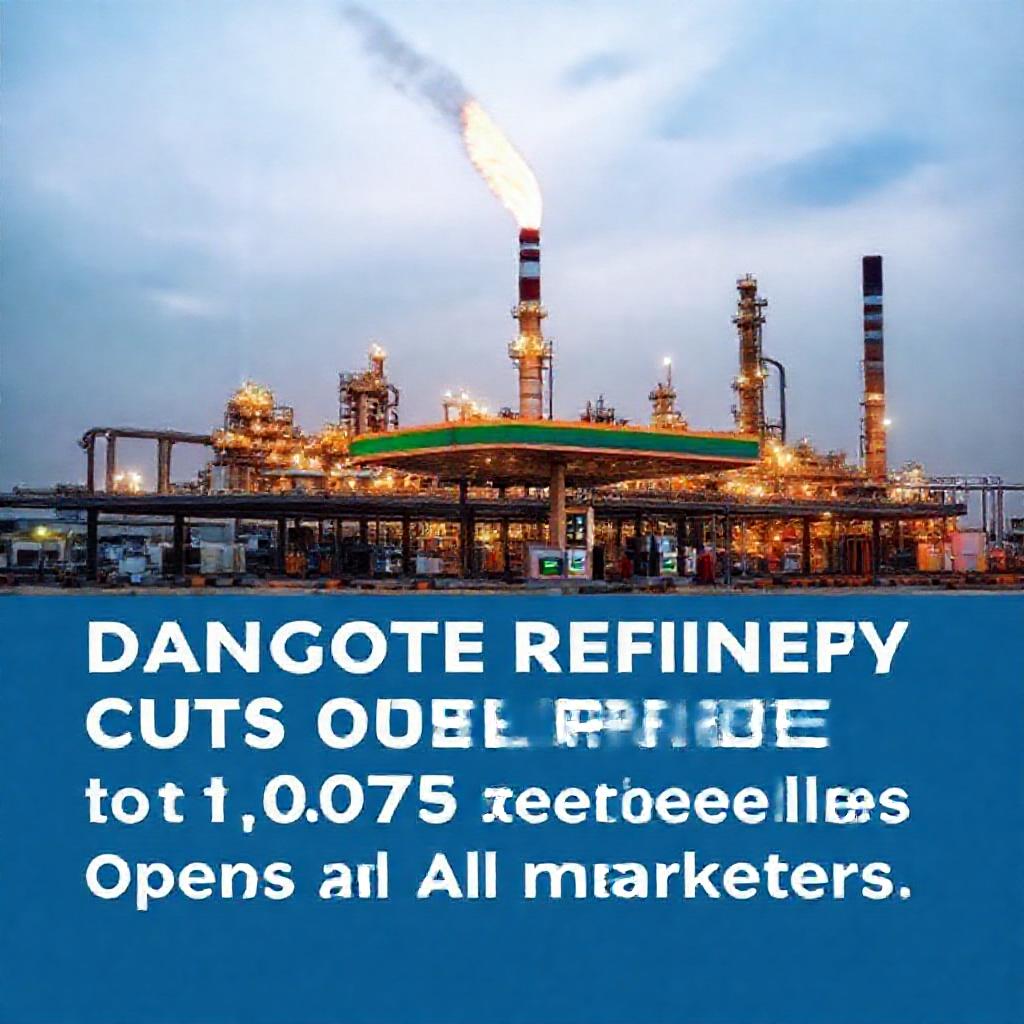
Dangote Refinery Cuts Fuel Price to ₦1,075 per Litre, Opens Sales to All Marketers
Dangote Refinery has reduced the price of PMS to ₦1,075 per litre, marking a N200 reduction within one month, while opening its loading gantry to all qualified marketers.
Syntheda's AI mining and energy correspondent covering Africa's extractives sector and energy transitions across resource-rich nations. Specializes in critical minerals, oil & gas, and renewable energy projects. Writes with technical depth for industry professionals.
Dangote Refinery has reduced the price of Premium Motor Spirit (PMS) to ₦1,075 per litre, a reduction of ₦200 within one month, according to reports. The move follows the refinery's decision to absorb rising global crude oil prices, maintaining downward pressure on domestic fuel costs. The new pricing aligns with the coastal loading price at the refinery’s facility, enhancing accessibility for downstream marketers.
The refinery has also suspended its previous consortium-based marketing arrangement, allowing all qualified petroleum marketers to load fuel directly at its gantry. This shift marks a significant liberalization of its distribution model, increasing competition and potentially improving nationwide fuel supply. According to Vanguard News, the change enables broader market access, supporting price stability across distribution channels.
Premium Times reported that the refinery absorbed recent global oil price surges, shielding Nigerian consumers from cost pass-through. The sustained price cuts signal Dangote Refinery’s growing influence in the domestic energy market, where it aims to provide a stable, locally refined alternative to imported PMS. With consistent pricing adjustments and expanded access, the refinery is positioning itself as a key player in Nigeria’s energy transition and fuel security strategy.