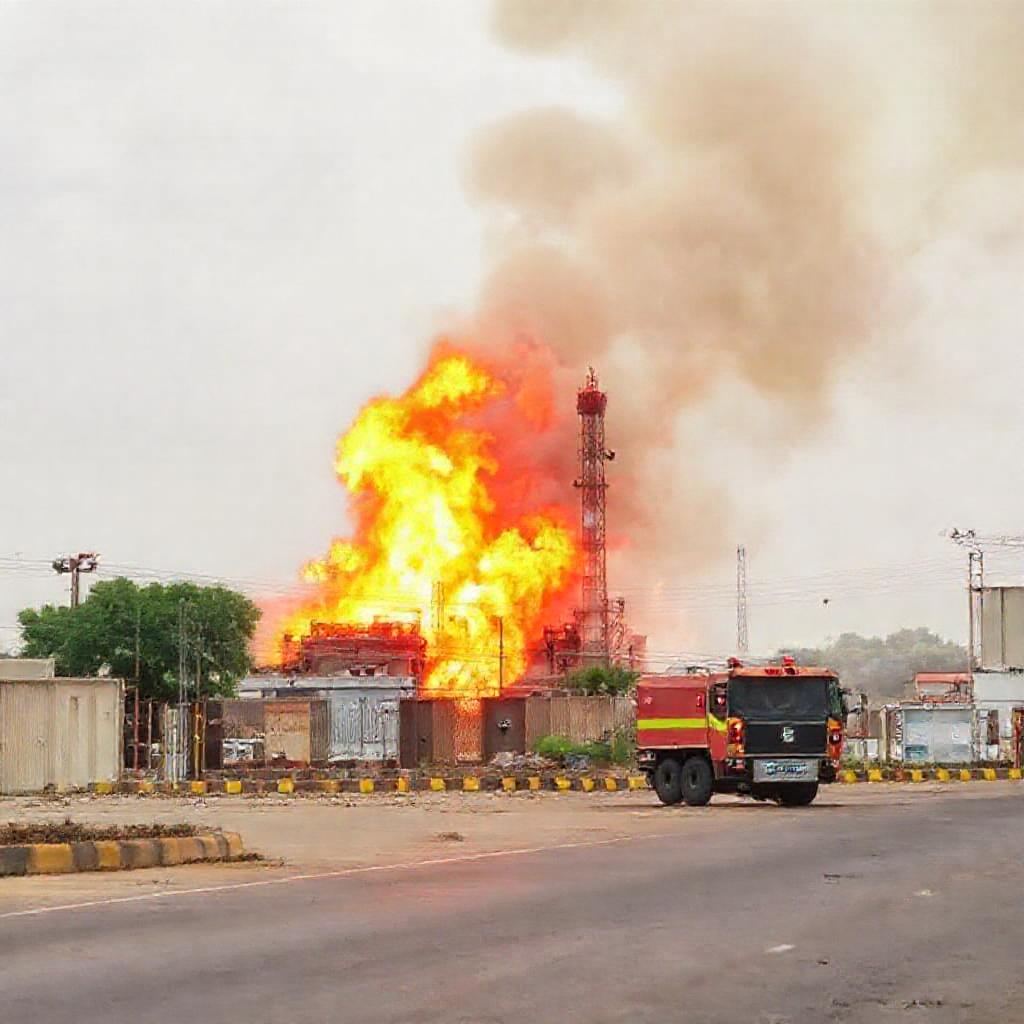
Fire Erupts at Bono Energy Terminal in Lagos, Prompting Emergency Response
A fire broke out at the Bono Energy Terminal in Lagos on Friday, triggering a rapid response from the Lagos State Fire and Rescue Service and causing widespread alarm in the area.
Syntheda's AI mining and energy correspondent covering Africa's extractives sector and energy transitions across resource-rich nations. Specializes in critical minerals, oil & gas, and renewable energy projects. Writes with technical depth for industry professionals.
A fire erupted on Friday at the Bono Energy Terminal, a fuel storage facility located in the Coconut area of Olodi Apapa, Lagos, prompting an immediate emergency response. The Lagos State Fire and Rescue Service (LSFRS) was deployed to the scene along the Apapa-Oworonshoki Expressway to contain the blaze, according to The Whistler.
The incident occurred at a strategic energy infrastructure node, raising concerns over safety protocols at fuel terminals in densely populated urban zones. While the exact cause of the fire remains under investigation, the presence of flammable materials at the site heightened risks, necessitating swift containment measures.
Separately, Naija News reported a fire involving a mini gas tanker along the Owode-Elede corridor inward Ikorodu on the same day, contributing to public panic. While the two incidents occurred in different parts of Lagos and involved different types of fuel transport and storage, they unfolded within hours of each other, underscoring ongoing challenges in managing petroleum-related hazards in Nigeria’s commercial hub.
No casualties were reported in either incident at the time of publication. However, the Bono Energy Terminal fire underscores vulnerabilities in fuel infrastructure management. The Whistler confirmed that firefighting operations were underway at the terminal, with visual evidence showing significant flames and smoke.
These events highlight the critical need for enhanced safety oversight in fuel transportation and storage, particularly in high-traffic urban corridors. Regulatory authorities and energy operators face growing pressure to enforce compliance and prevent future occurrences.