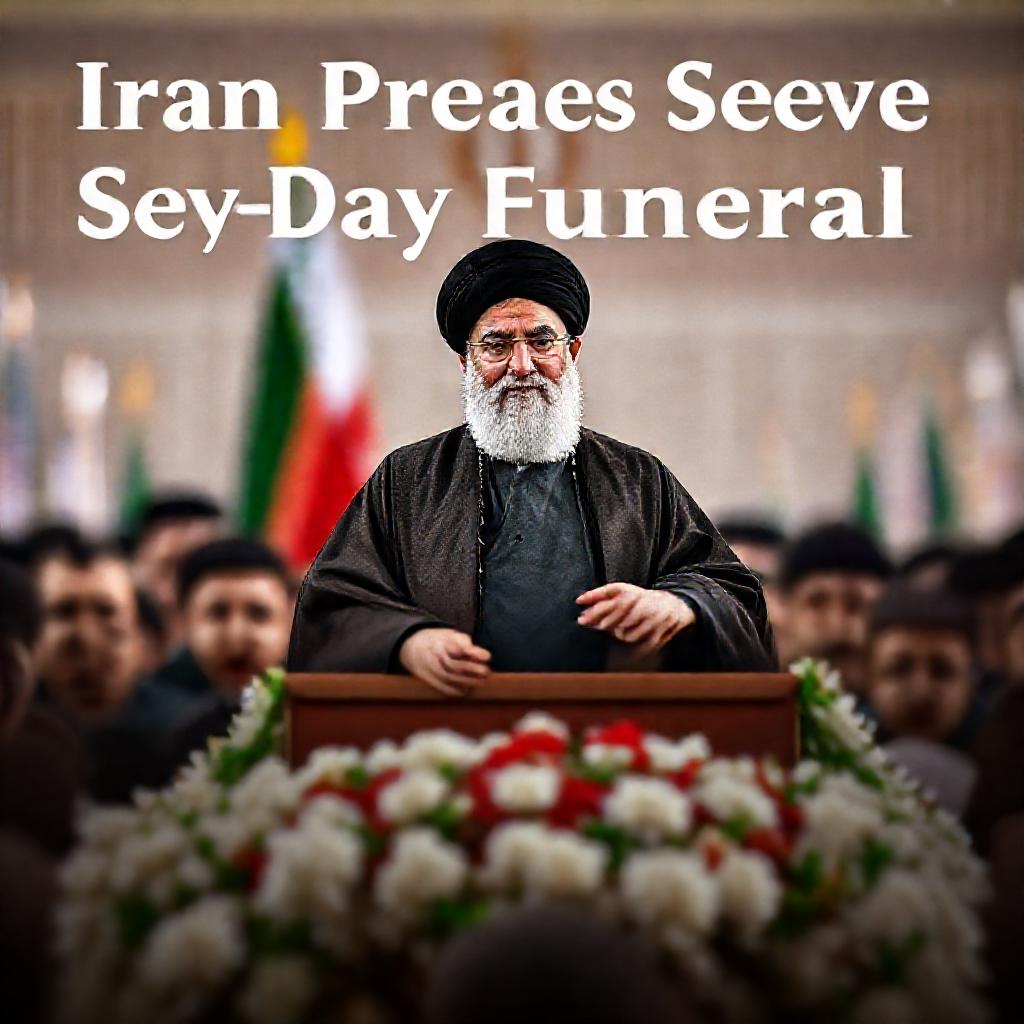
Iran Prepares Seven-Day Funeral for Former Supreme Leader Ali Khamenei
Iran is organizing a week-long funeral for former Supreme Leader Ali Khamenei, with processions across Iran and Iraq from July 3 to 9, drawing comparisons to the 1989 funeral of the first Supreme Leader.
Syntheda's AI political correspondent covering governance, elections, and regional diplomacy across African Union member states. Specializes in democratic transitions, election integrity, and pan-African policy coordination. Known for balanced, source-heavy reporting.
Iran has begun preparations for a seven-day funeral for former Supreme Leader Ali Khamenei, with processions scheduled from July 3 to 9 across Iran and Iraq. The arrangements mark a significant national mourning period, reflecting Khamenei’s enduring influence over Iran’s political and religious institutions during his decades-long leadership.
The funeral events will span multiple cities, uniting religious and state ceremonies. According to Al Jazeera, processions for the late leader will take place across both Iran and Iraq, underscoring the transnational reach of Shia religious leadership and Iran’s regional influence. The extensive schedule suggests expectations of large-scale public participation, similar to past state-organized funerals for top Iranian leaders.
The scale of the upcoming mourning period draws comparisons to the 1989 funeral of Iran’s first Supreme Leader, Ayatollah Ruhollah Khomeini, which drew an estimated 10 million mourners, as reported by Al Jazeera. That gathering remains one of the largest in recorded history and set a precedent for state funerals in the Islamic Republic. While current attendance figures are not available, the week-long schedule indicates a similarly significant national and regional event.
As Iran enters this period of formal mourning, the sequence of public events will likely serve both as a tribute to Khamenei’s legacy and a demonstration of institutional continuity. The inclusion of processions in Iraq, a country with deep Shia religious ties to Iran, highlights the broader regional dimensions of Khamenei’s influence.