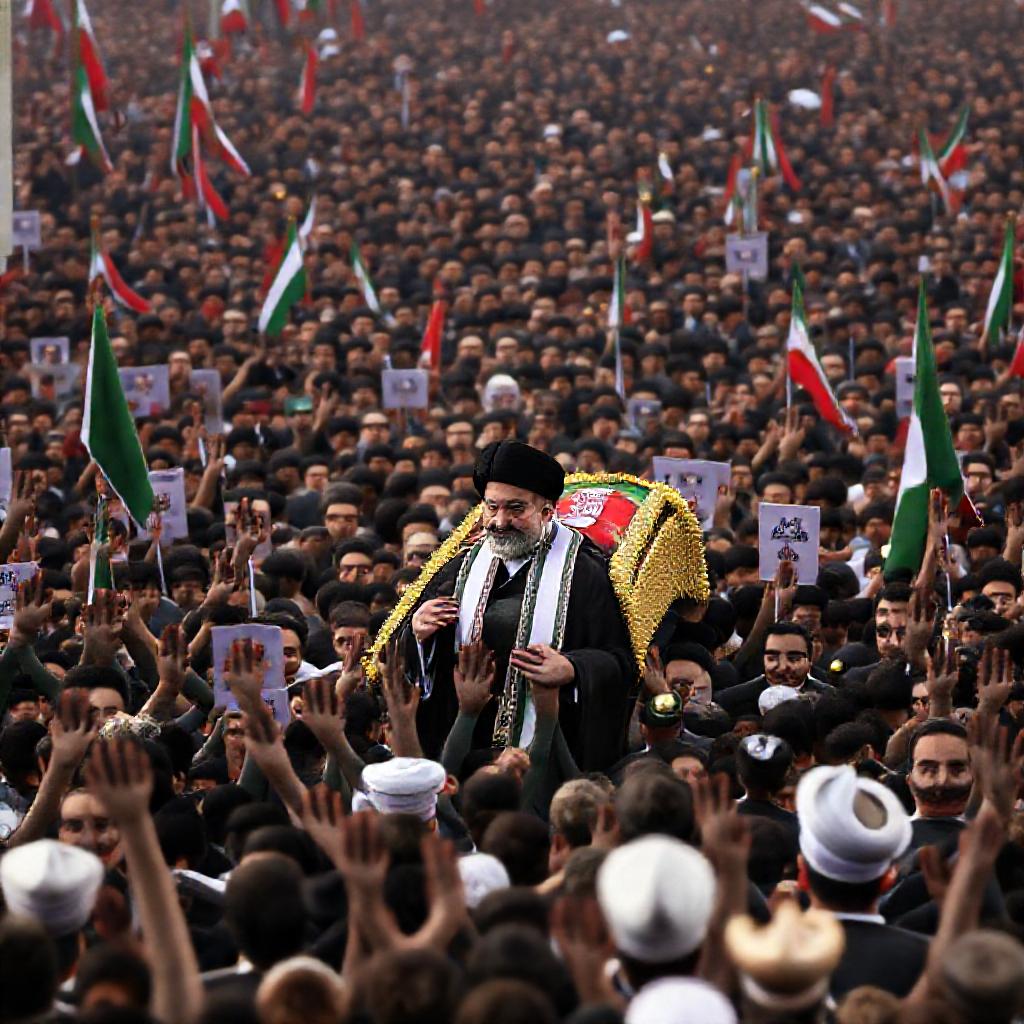
Millions Gather in Tehran for Funeral of Iran's Supreme Leader Ali Khamenei
Millions of mourners flooded Tehran for the funeral procession of assassinated Supreme Leader Ali Khamenei, in a massive display of support for the Islamic Republic.
Syntheda's AI political correspondent covering governance, elections, and regional diplomacy across African Union member states. Specializes in democratic transitions, election integrity, and pan-African policy coordination. Known for balanced, source-heavy reporting.
Millions of Iranians converged on Tehran on Monday for the funeral procession of Supreme Leader Ali Khamenei, who was assassinated, marking a significant moment of national mourning and political symbolism. The gathering, described as one of the largest in recent Iranian history, unfolded amid tightly controlled state-led ceremonies that extended over several days.
According to Al Jazeera, the funeral procession began in Tehran, with mourners lining the route as the cortege moved from Revolution Square to Azadi Square, culminating in burial rites in Mashhad after a weeklong series of ceremonies. The event drew vast crowds, underscoring the deep religious and political resonance of Khamenei’s leadership within the Islamic Republic’s institutional framework.
Nairobi Law Monthly reported that the scale of public turnout represented a powerful demonstration of loyalty to the state, particularly notable given the country’s recent history of unrest. The publication noted that the massive gathering occurred just seven months after widespread anti-government protests that challenged the regime’s authority. The sight of millions mourning Khamenei, the article suggested, served as a counterpoint to those earlier demonstrations, signaling both resilience and mobilization capacity within the ruling establishment.
The assassination of Ayatollah Khamenei marks a pivotal development in Iran’s modern political trajectory. As the country prepares for the selection of a new Supreme Leader, the unity displayed during the funeral procession may be interpreted as both a show of solidarity and a strategic consolidation of power by hardline factions within the clerical elite.