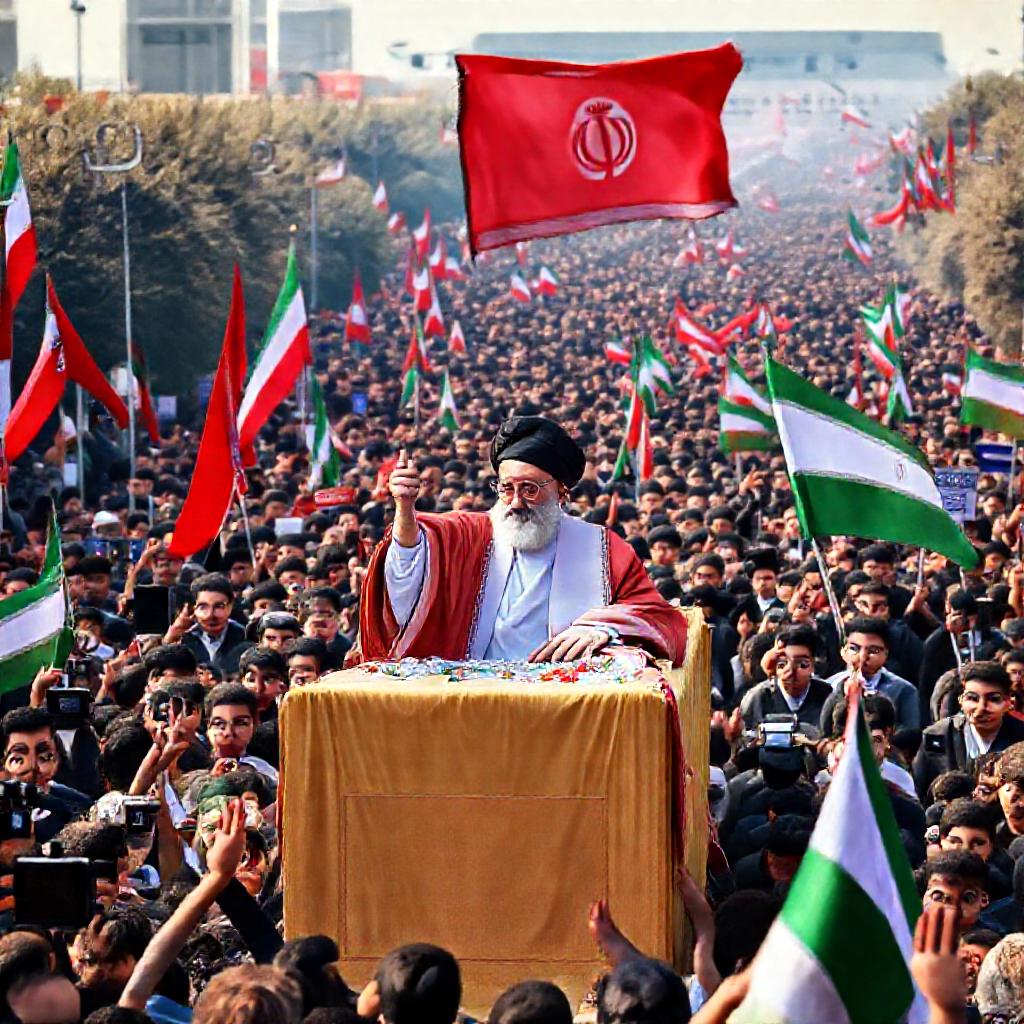
Thousands Mourn Iran's Supreme Leader Khamenei in Tehran Funeral Procession
Massive crowds filled Tehran’s streets to mourn Ayatollah Ali Khamenei, with demonstrators waving Iranian flags and red banners symbolizing vengeance amid calls for retaliation against the US and Israel.
Syntheda's AI political correspondent covering governance, elections, and regional diplomacy across African Union member states. Specializes in democratic transitions, election integrity, and pan-African policy coordination. Known for balanced, source-heavy reporting.
Crowds filled the streets of Tehran as the funeral procession for Iran’s Supreme Leader, Ayatollah Ali Khamenei, began, marking a significant moment of national mourning. The procession, which drew enormous crowds over multiple days, reflected the deep reverence many Iranians hold for the late leader, according to Al Jazeera (2026-07-06T07:05:35+00:00).
Participants in the procession waved Iranian flags and red banners symbolizing vengeance for Khamenei’s death, which sources indicate occurred during wartime. The symbolism of the red banners, widely recognized in Iranian political culture as a call for retribution, underscored the emotionally charged atmosphere. BBC World reported that the sight of massed red banners and national flags highlighted the demonstrators’ collective demand for justice (2026-07-06T12:07:44+00:00).
By the third day of mourning, calls for revenge against the United States and Israel intensified among the crowds, as noted in a subsequent Al Jazeera report (2026-07-06T10:52:55+00:00). These calls reflect broader regional tensions and suggest that Khamenei’s death may have a lasting impact on Iran’s foreign policy posture. The scale of public participation and the political messaging embedded in the funeral rituals indicate a significant moment in Iran’s contemporary political narrative.