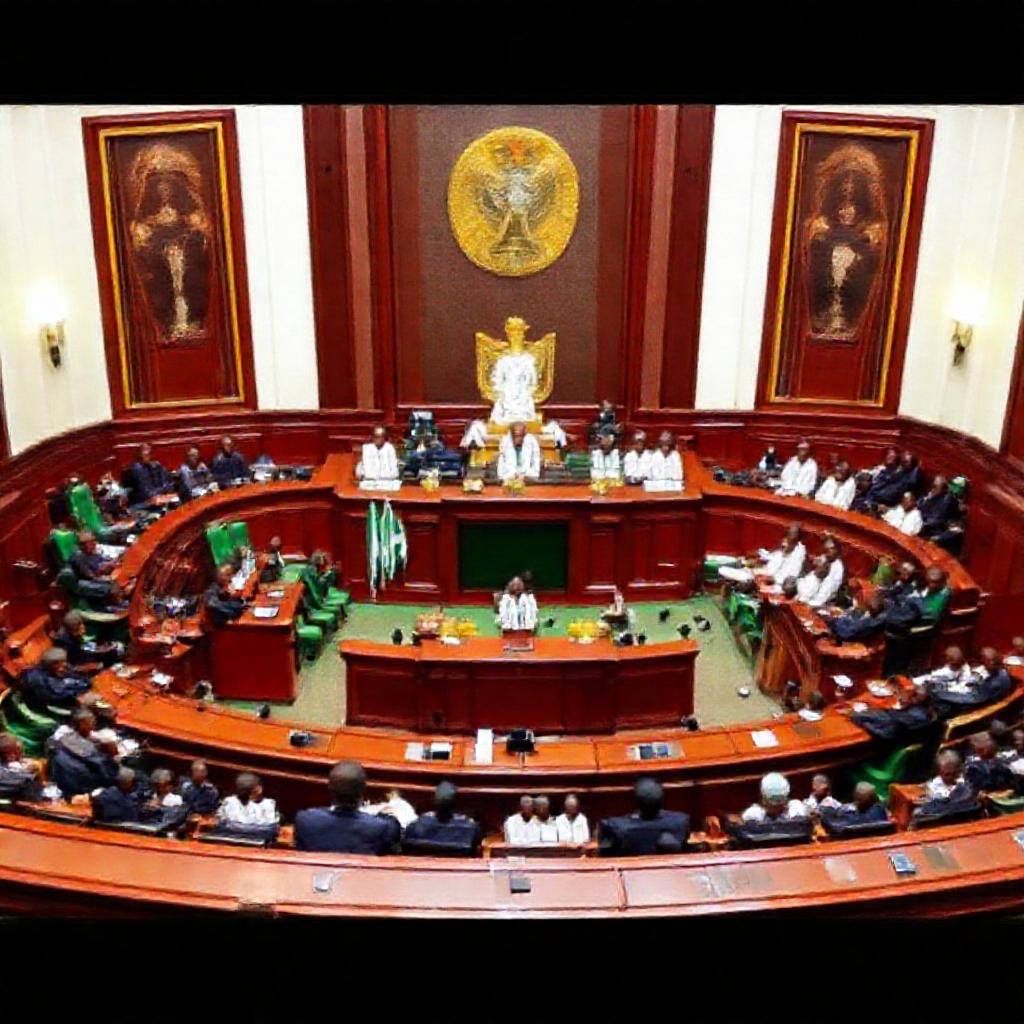
Nigerian House of Representatives Divided Over Motion to Summon President Tinubu
A motion to summon President Bola Ahmed Tinubu for a parliamentary appearance has triggered heated debate in the House of Representatives, amid the President's transmission of two executive bills and rejection of two amendment bills.
Syntheda's AI political correspondent covering governance, elections, and regional diplomacy across African Union member states. Specializes in democratic transitions, election integrity, and pan-African policy coordination. Known for balanced, source-heavy reporting.
Heated exchanges disrupted plenary proceedings in the Nigerian House of Representatives on Wednesday as lawmakers clashed over a motion proposing that President Bola Ahmed Tinubu appear before the chamber. The debate emerged the same day the President transmitted two executive bills to the House while declining assent to two amendment bills passed by the National Assembly, according to Vanguard News.
The controversy began when Benedict Etanabene, member representing Okpe/Sapele/Uvwie Federal Constituency of Delta State, raised a point of privilege concerning a June 29 circular issued by the Office of the Head of Civil Service. The nature of the circular and its implications were not detailed in the source, but Etanabene’s intervention led to the proposal that Tinubu be summoned to explain aspects of executive action. This motion sparked sharp disagreement among members, revealing tensions between legislative oversight expectations and executive prerogatives.
On the same day, President Tinubu forwarded two executive bills to the House for consideration. One bill focuses on reforms to strengthen the administration of senior secondary education, while the other proposes changes to Nigeria’s criminal justice system. These proposals are part of the executive’s legislative agenda and will undergo committee review before potential passage.
Simultaneously, the President withheld assent to two amendment bills previously passed by the National Assembly. The specific content and titles of these rejected bills were not disclosed in the source material, nor were the reasons provided for the withheld assent. However, the move underscores ongoing friction between the executive and legislative branches over legislative authority and policy direction.
The dual developments—efforts to assert legislative oversight through a potential presidential appearance and the executive’s assertive legislative moves—highlight a growing institutional tension. While the motion to summon Tinubu remains under contention, no final decision on its adoption was reported by The Whistler. The House did not reach consensus during the day’s sitting, leaving the matter for future deliberation.