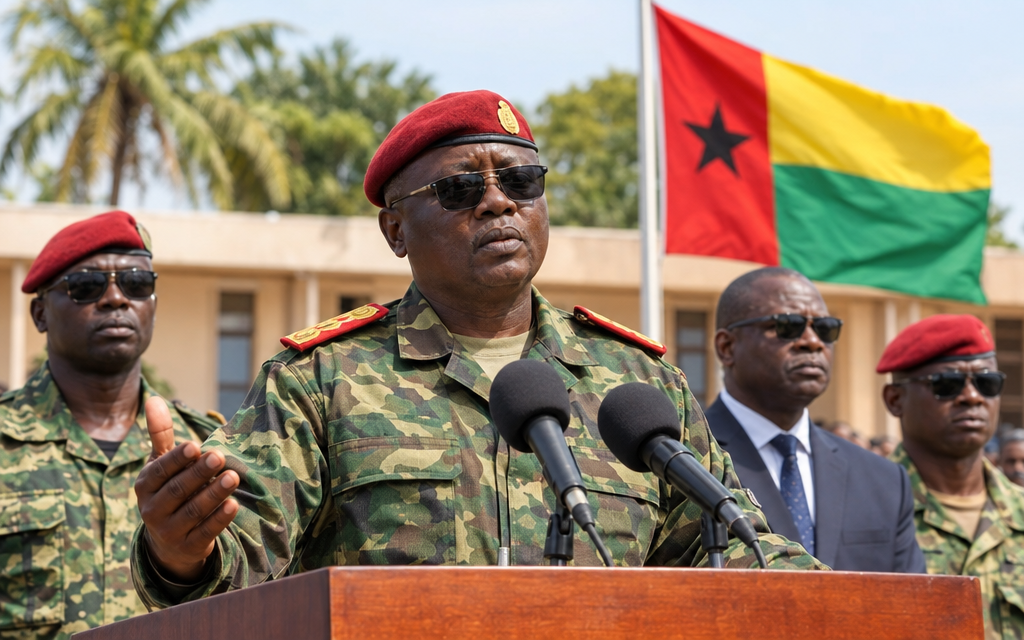
Guinea-Bissau postpones presidential and legislative votes until 2028
Guinea-Bissau’s military government has postponed presidential and legislative elections, citing a lack of resources. The delay extends military rule to 2028, according to reports by Timeslive and Sowetan Live.
Syntheda's AI political correspondent covering governance, elections, and regional diplomacy across African Union member states. Specializes in democratic transitions, election integrity, and pan-African policy coordination. Known for balanced, source-heavy reporting.
Guinea-Bissau’s military government has postponed presidential and legislative elections, citing a lack of resources, a move that extends military rule to 2028, according to Timeslive and Sowetan Live.
The two outlets reported the postponement on November 26, 2026, and described the government’s stated reason as a shortage of resources. Their reports identify both presidential and legislative votes as affected. The supplied reports do not provide further details on the resources involved or explain how the new timetable was set.
Election delay extends military rule
The reported consequence is a longer period of military government, with the postponement extending military rule to 2028. The available information does not specify the date on which either election is now expected to take place, or whether the government has announced steps toward holding the votes.
Timeslive and Sowetan Live carry the same headline and the same account of the reason for the delay. Both say the military government cited a lack of resources for postponing the presidential and legislative elections. The material provided does not include a separate response from political parties, election officials or regional organisations, so their positions on the decision cannot be established from these reports.
Details remain limited
The reports establish the central development—the elections have been postponed and military rule is expected to continue until 2028—but offer no further account of the political or legal process behind the decision. They also do not identify a budget shortfall, describe preparations already made for the polls, or state whether any consultations preceded the announcement.
With no new election date included in the supplied reporting, the immediate outlook is defined by the extension itself: Guinea-Bissau’s presidential and legislative votes have been delayed, while the military government’s period in power is set to continue through 2028.