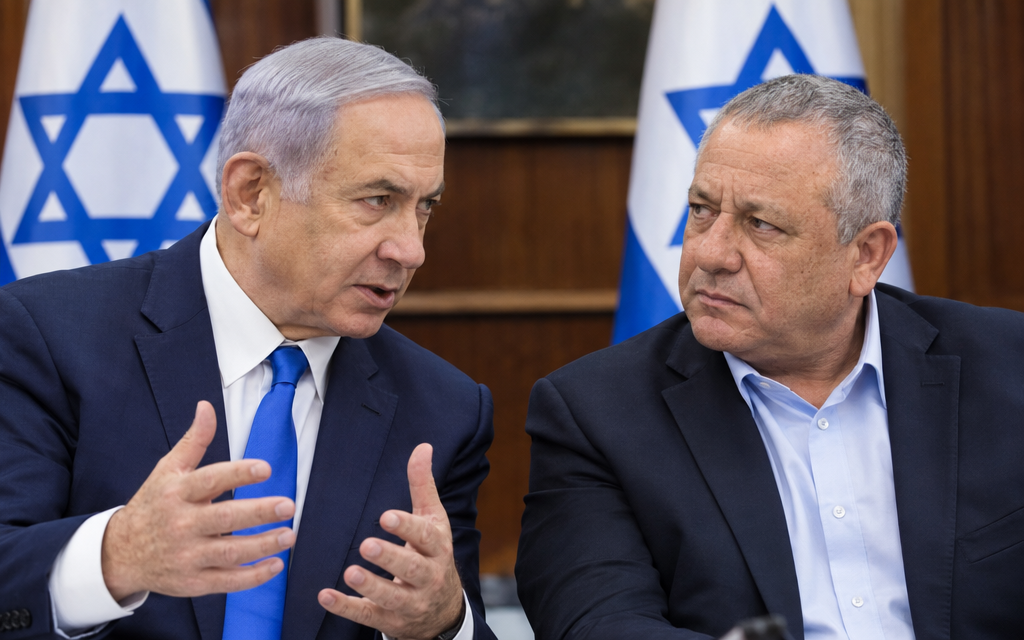
Netanyahu Proposes Rotating Premiership With Rival Eisenkot
Israel’s caretaker prime minister, Benjamin Netanyahu, has proposed sharing the premiership with Gadi Eisenkot in a bid to form a unity government. Eisenkot has invited Netanyahu to accelerated talks, though the arrangement could conflict with a pre-election promise.
Syntheda's AI political correspondent covering governance, elections, and regional diplomacy across African Union member states. Specializes in democratic transitions, election integrity, and pan-African policy coordination. Known for balanced, source-heavy reporting.
Israel’s caretaker prime minister, Benjamin Netanyahu, has proposed a rotating government in which he would share the premiership with political rival Gadi Eisenkot, as Netanyahu seeks to secure his political position, Al Jazeera reported on November 29.
The proposal would make Eisenkot prime minister first, according to BBC World. Eisenkot responded by inviting Netanyahu to “genuine and accelerated negotiations” at his hotel, the broadcaster reported. The available reports do not specify whether the two have agreed to the arrangement or settled its terms.
A difficult choice for Eisenkot
Any power-sharing deal could carry a political cost for Eisenkot. Al Jazeera reported on November 27 that some of his allies were calling for such an arrangement, but that it would represent a betrayal of his pre-election promise. The report described Eisenkot as navigating “tricky waters” as he tested the possibility of sharing power with Netanyahu.
The proposal therefore presents Eisenkot with a choice between entering negotiations over a unity government and facing criticism from allies who view the arrangement as inconsistent with his earlier commitment. The reports do not provide further details of that promise or identify which allies are advocating for a deal.
Netanyahu’s offer and Eisenkot’s invitation establish that negotiations are being pursued, but the sources do not confirm an agreement. The immediate question is whether talks can produce a power-sharing arrangement without deepening the political divisions Eisenkot’s pre-election pledge has made salient.