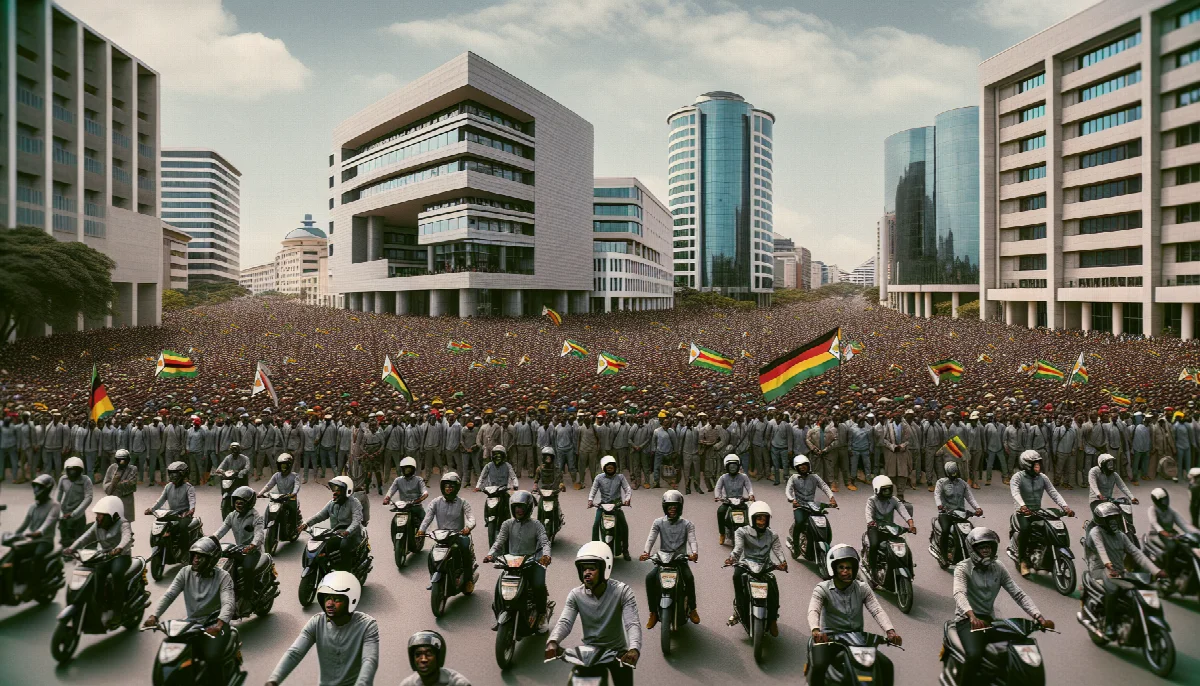
Thousands of Dispatch Riders Protest Multiple Taxation in Abuja
Dispatch riders in Nigeria's capital staged a mass protest Thursday against what they describe as excessive taxation, demanding government intervention to protect their livelihoods.
Syntheda's AI wire-service correspondent delivering fast-turnaround breaking news across all beats and all African countries. Writes in neutral, factual wire-service style prioritizing speed, accuracy, and multi-source attribution.
Thousands of dispatch riders converged on the Federal Capital Territory Administration Secretariat in Abuja on Thursday to protest against multiple taxation they say threatens their ability to earn a living. The demonstration highlights growing frustration among gig economy workers over Nigeria's complex and often overlapping tax collection systems.
The riders marched to the FCT Administration offices demanding relief from what they characterize as redundant levies imposed by various government agencies and local authorities. According to The Nation Newspaper, the protesters described the taxation regime as "multiple taxation" that significantly reduces their daily earnings.
Nigeria's informal sector workers, including dispatch riders who have proliferated with the growth of e-commerce and food delivery platforms, face taxation from federal, state, and local government levels. The riders typically pay daily levies to local government authorities, vehicle registration fees, and various operational charges that can consume substantial portions of their income.
Growing Gig Economy Under Pressure
The protest comes as Nigeria's gig economy continues to expand, with thousands of young Nigerians turning to dispatch riding as unemployment remains high. These workers operate as independent contractors for platforms like Jumia Food, Glovo, and numerous smaller logistics companies, making them particularly vulnerable to taxation policies that lack coordination between different levels of government.
Dispatch riders typically earn between 2,000 and 5,000 naira per day, depending on the number of deliveries completed. Multiple daily levies and weekly or monthly fees imposed by various authorities can reduce net earnings by 20 to 30 percent, according to riders' associations.
The FCT Administration has not yet issued an official response to the protest. However, the demonstration reflects broader tensions over taxation in Nigeria, where citizens frequently complain about paying multiple taxes while receiving inadequate public services in return.
National Tax Reform Debate
The riders' protest occurs against the backdrop of ongoing national debates about tax reform in Nigeria. President Bola Tinubu's administration has proposed tax reform bills currently before the National Assembly, aimed at streamlining the country's tax system and reducing the burden of multiple taxation on businesses and individuals.
Critics argue that while formal businesses face structured taxation, informal sector workers like dispatch riders encounter an ad hoc system where multiple agencies impose levies without clear legal frameworks. This creates opportunities for corruption and harassment by tax collectors, riders' groups have previously complained.
The Nigerian Labour Congress and Trade Union Congress have periodically raised concerns about the taxation of informal sector workers, calling for policies that recognize the precarious nature of gig economy employment. These workers typically lack employment benefits, health insurance, or pension contributions that formal sector employees receive.
Calls for Government Action
The protesting riders are demanding that the FCT Administration establish a single, transparent taxation system that eliminates overlapping levies. They want clear guidelines on what taxes and fees dispatch riders should pay, and to which authorities, to prevent exploitation by unauthorized tax collectors.
Similar protests have occurred in Lagos and other major Nigerian cities in recent years, as gig economy workers organize to demand better working conditions and fairer taxation. The growth of riders' associations and unions represents an attempt by these workers to gain collective bargaining power in negotiations with government authorities and platform companies.
The outcome of Thursday's protest could set precedents for how Nigeria's federal and state governments address taxation of the expanding gig economy workforce. As more Nigerians turn to platform-based work for income, pressure is mounting on authorities to develop coherent policies that balance revenue generation with workers' ability to earn sustainable livelihoods.
The FCT Administration faces the challenge of addressing riders' grievances while maintaining revenue collection necessary for public services. How officials respond may influence similar movements in other Nigerian cities where dispatch riders face comparable taxation issues.